
Rice Protein Isolate for Non-Dairy Sports Recovery RTD Shakes: A Formulator’s Guide
Front of Package Labelling Canada Food Reformulation: A Strategic Guide for Manufacturers
April 9, 2026
General - Articles

Canada’s evolving nutrition regulations are reshaping how food manufacturers formulate, position, and market their products. With the introduction of stricter front of package labelling (FOPL) requirements, brands are now under increasing pressure to reformulate products to avoid warning symbols while still meeting consumer expectations for taste, texture, and functionality.
For food manufacturers targeting the Canadian market, front of package labelling Canada food reformulation is no longer optional—it’s a competitive necessity. This shift presents both a regulatory challenge and a strategic opportunity to innovate with smarter ingredients such as plant-based proteins, functional fibers, and clean label sweeteners.
This guide explores how manufacturers can successfully navigate Canada’s FOPL requirements while leveraging ingredient solutions that align with both compliance and market demand.
Understanding Front of Package Labelling in Canada
Canada’s front of package labelling regulations are designed to help consumers quickly identify foods high in nutrients of concern—specifically sodium, sugars, and saturated fat. Products exceeding defined thresholds must display a clear “high in” symbol on the front of the package.
These regulations are part of Health Canada’s broader strategy to combat chronic diseases and promote healthier eating habits.
What Triggers Front of Package Labels?
Products must display FOPL symbols if they exceed thresholds for:
- Sodium
- Total sugars
- Saturated fat
Certain exemptions apply (e.g., fresh foods, some dairy products), but most processed foods fall within scope.
Why It Matters for Manufacturers
The presence of a “high in” symbol can significantly influence purchasing decisions. Studies show that consumers are more likely to avoid products with warning labels, making food reformulation Canada strategies critical for maintaining competitiveness.
For manufacturers, this means:
- Reformulating to reduce nutrients of concern
- Maintaining sensory quality (taste, texture, appearance)
- Ensuring cost efficiency and scalability
The Link Between FOPL and Food Reformulation
Front of package labelling Canada food reformulation is directly connected to how products are developed and optimized. Reformulation is not just about reducing sugar or sodium—it’s about rebuilding the product with functional ingredients that preserve quality.
Key Reformulation Goals
Manufacturers typically focus on:
- Sugar reduction Canada strategies
- Lowering sodium without compromising flavor
- Replacing saturated fats with healthier alternatives
- Improving nutritional profiles for better labeling outcomes
However, reducing one component often impacts another. For example, cutting sugar can affect:
- Texture and mouthfeel
- Shelf life
- Flavor balance
This is where functional ingredients become essential.
Ingredient Strategies for FOPL Compliance
To successfully navigate front of package labelling Canada food reformulation, manufacturers must adopt ingredient solutions that go beyond simple reduction.
1. Fiber-Based Solutions for Sugar Reduction
Functional fibers like resistant dextrin are increasingly used in sugar reduction strategies. They provide:
- Mild sweetness
- Improved mouthfeel
- Prebiotic benefits
Resistant dextrin can replace part of the sugar content while maintaining product integrity, making it ideal for:
- Beverages
- Snack bars
- Dairy alternatives
This aligns with the growing demand for clean label ingredients Canada and functional nutrition.
2. Plant-Based Proteins for Nutritional Enhancement
Ingredients such as pea protein and rice protein help improve nutritional profiles while supporting reformulation goals.
Benefits include:
- Increasing protein content
- Supporting plant-based product positioning
- Enhancing satiety
These proteins are particularly useful in:
- Meat alternatives
- Protein beverages
- Functional snacks
In the context of food reformulation Canada, plant-based proteins allow brands to reposition products as healthier options without sacrificing performance.
3. Alternative Sweeteners and Syrups
Replacing traditional sugars requires functional alternatives that can mimic their properties.
Options include:
- Tapioca syrup
- Rice syrup
- Maltodextrin (from clean sources)
These ingredients offer:
- Binding properties
- Moisture retention
- Extended shelf life
They are widely used in processed food reformulation Canada, especially in baked goods and snack products.
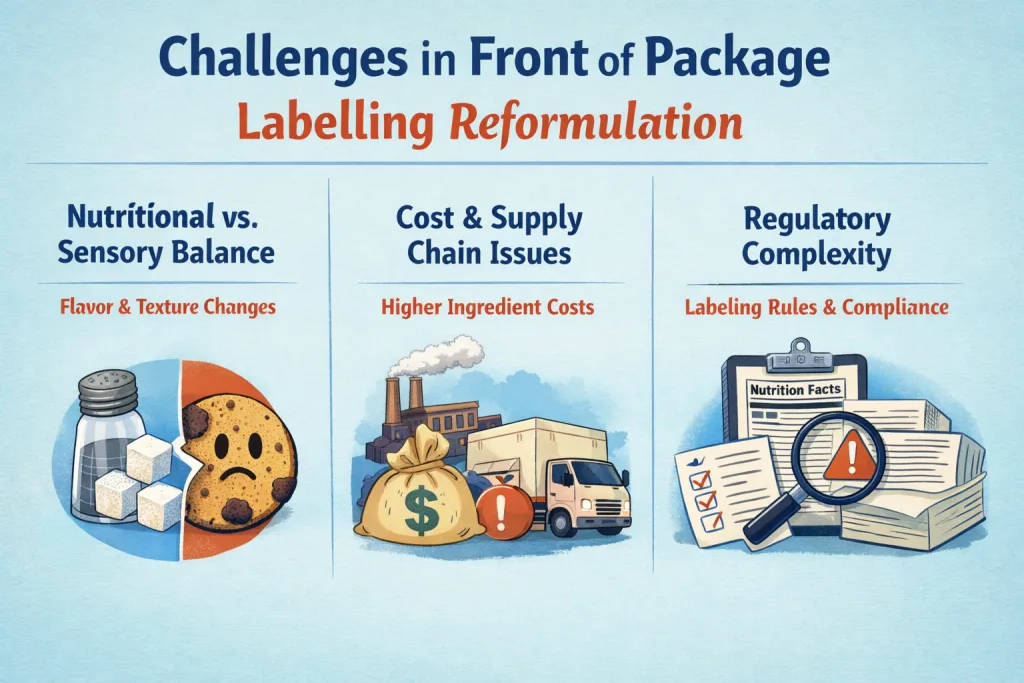
Challenges in Front of Package Labelling Reformulation
While the benefits are clear, reformulating for FOPL compliance comes with technical and operational challenges.
Balancing Nutrition and Sensory Experience
Reducing sugar or fat often leads to:
- Loss of flavor intensity
- Changes in texture
- Reduced consumer acceptance
Manufacturers must carefully balance nutritional improvements with sensory quality.
Cost and Supply Chain Considerations
Switching to alternative ingredients may:
- Increase production costs
- Require new supplier relationships
- Impact scalability
Working with experienced ingredient partners can help mitigate these risks.
Regulatory Complexity
Understanding thresholds and exemptions under Health Canada food labelling regulations requires:
- Continuous monitoring of policy updates
- Accurate nutritional analysis
- Clear documentation
Opportunities Created by FOPL Regulations
Despite the challenges, front of package labelling Canada food reformulation opens new opportunities for innovation and growth.
Product Innovation and Differentiation
Brands that successfully reformulate can:
- Avoid warning symbols
- Position products as healthier choices
- Gain competitive advantage
This is particularly relevant in categories such as:
- Functional foods
- Plant-based products
- Low-sugar snacks
Meeting Consumer Demand for Transparency
Modern consumers are increasingly looking for:
- Clean label products
- Functional benefits (e.g., fiber, protein)
- Transparent ingredient lists
Reformulation aligns with these expectations, especially when using recognizable ingredients like:
- Pea protein
- Resistant dextrin
- Natural syrups
Expanding into Global Markets
Canada’s FOPL regulations are part of a broader global trend. By adapting early, manufacturers can:
- Prepare for similar regulations in other markets
- Strengthen export readiness
- Build a future-proof product portfolio
How Satoria Nutrisentials Supports Food Reformulation
For manufacturers navigating front of package labelling Canada food reformulation, ingredient selection is critical. This is where Satoria Nutrisentials provides strategic value.
Functional Ingredient Portfolio
Satoria offers a range of ingredients designed to support reformulation:
- Resistant dextrin for fiber enrichment and sugar reduction
- Pea protein and rice protein for plant-based nutrition
- Tapioca and rice syrups for clean label sweetness and functionality
- Maltodextrin solutions for texture and stability
These ingredients are tailored for applications across:
- Beverages
- Bakery and snacks
- Dairy and plant-based alternatives
- Nutritional products
OEM and Manufacturing Capabilities
Beyond ingredients, Satoria provides:
- Spray drying capabilities
- Custom formulation support
- Scalable production solutions
This enables manufacturers to move from concept to commercialization efficiently.
Supporting Compliance and Innovation
By combining technical expertise with high-quality ingredients, Satoria helps brands:
- Meet FOPL thresholds
- Optimize product performance
- Accelerate time-to-market
Best Practices for Successful Reformulation
To succeed in front of package labelling Canada food reformulation, manufacturers should adopt a strategic approach.
1. Start with Nutritional Analysis
Identify which nutrients trigger FOPL symbols and prioritize reformulation efforts accordingly.
2. Use Multifunctional Ingredients
Choose ingredients that address multiple challenges, such as:
- Fiber that replaces sugar and improves texture
- Proteins that enhance nutrition and structure
3. Test Iteratively
Reformulation requires multiple rounds of testing to achieve the right balance of:
- Taste
- Texture
- Stability
4. Collaborate with Ingredient Experts
Working with partners like Satoria Nutrisentials ensures access to:
- Technical knowledge
- Customized solutions
- Reliable supply chains
The Future of Food Reformulation in Canada
As regulations continue to evolve, front of package labelling Canada food reformulation will remain a key focus for the food industry.
Emerging trends include:
- Increased demand for functional ingredients Canada
- Growth of plant-based and high-protein products
- Expansion of clean label and natural formulations
Manufacturers that invest in reformulation today will be better positioned to meet future regulatory and consumer demands.
Build Smarter Formulations with Functional Ingredients
Front of package labelling Canada food reformulation is more than a compliance exercise—it’s an opportunity to create better products that resonate with modern consumers.
With the right ingredient strategy, manufacturers can reduce sugar, sodium, and saturated fat while enhancing nutritional value and maintaining product quality.
Satoria Nutrisentials is your partner in this journey—offering innovative ingredient solutions, technical expertise, and scalable manufacturing capabilities to help you succeed in the Canadian market and beyond.
Ready to reformulate with confidence? Explore Satoria Nutrisentials’ ingredient solutions and request your sample today.
Reference
- Health Canada. (2022). Front-of-package nutrition symbol labelling. Retrieved from https://www.canada.ca/en/health-canada/services/food-labelling-changes/front-package.html
- Government of Canada. (2022). Regulations Amending the Food and Drug Regulations (Nutrition Symbols, Other Labelling Provisions). Retrieved from https://gazette.gc.ca/rp-pr/p2/2022/2022-07-20/html/sor-dors168-eng.html
- World Health Organization. (2020). Front-of-pack nutrition labelling policies. Retrieved from https://www.who.int/publications/i/item/9789240001705
- Campos, S., Doxey, J., & Hammond, D. (2011). Nutrition labels on pre-packaged foods: A systematic review. Public Health Nutrition. Retrieved from https://www.cambridge.org/core/journals/public-health-nutrition
- Food and Agriculture Organization. (2021). Food reformulation and nutrition. Retrieved from https://www.fao.org/3/cb4477en/cb4477en.pdf
- Drewnowski, A., & Rehm, C. D. (2013). Energy intakes of US children and adults by food purchase location and by specific food source. Nutrition Journal. Retrieved from https://nutritionj.biomedcentral.com
- Mintel Group Ltd. (2023). Global food and drink trends. Retrieved from https://www.mintel.com
- International Food Information Council. (2022). Food and Health Survey. Retrieved from https://foodinsight.org
- European Commission. (2020). Front-of-pack nutrition labelling. Retrieved from https://food.ec.europa.eu
- GlobalData. (2023). Consumer trends in clean label products. Retrieved from https://www.globaldata.com
Featured News
Category
Get a Promo and Keep Updated