
Rice Protein Isolate for Non-Dairy Sports Recovery RTD Shakes: A Formulator’s Guide
The Gut-Brain Axis Food Ingredient Revolution: What Food & Beverage Brands Need to Know in 2026
May 8, 2026
General - Articles
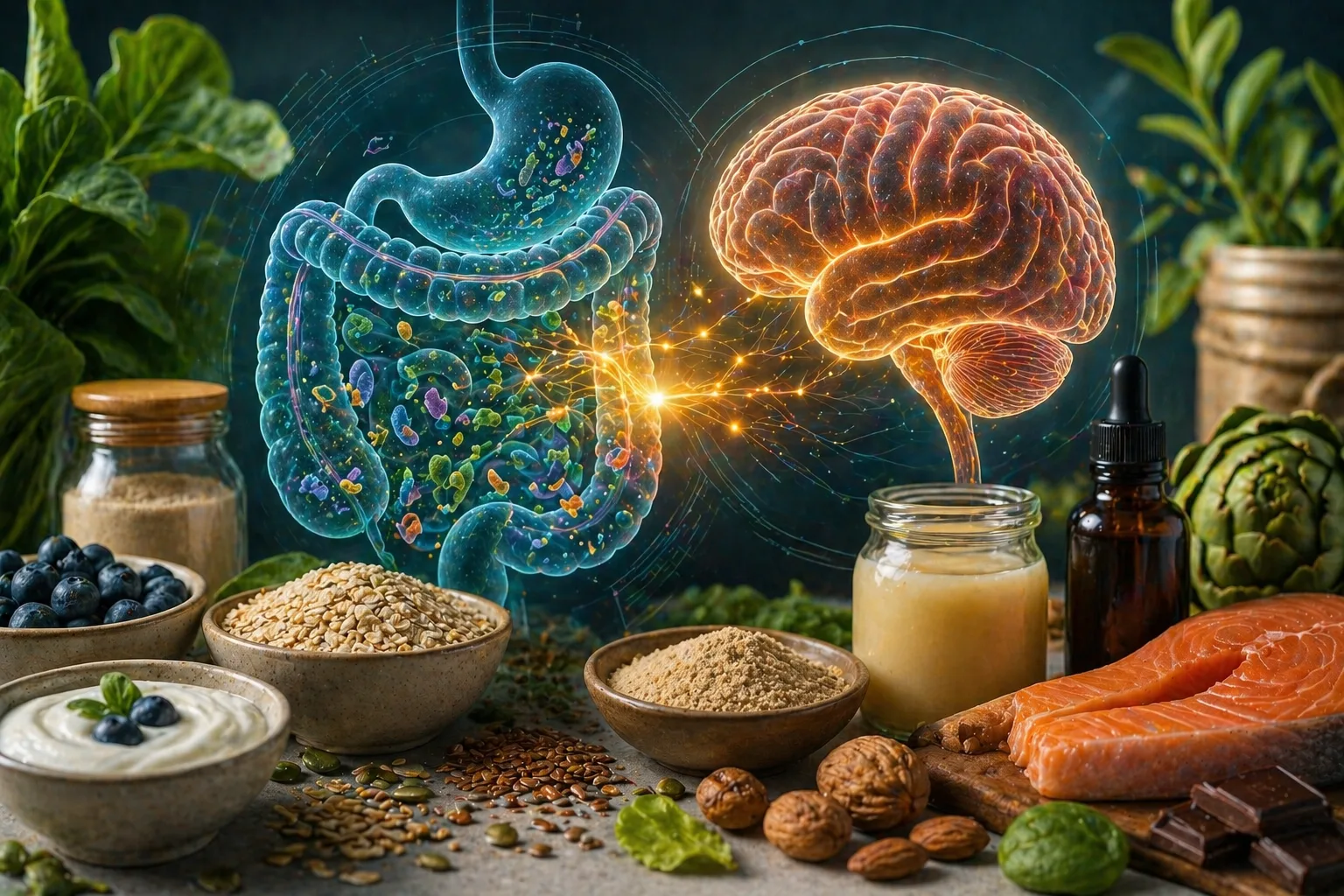
What if the secret to a better mood was sitting in your gut? It sounds almost too simple — but the science backing this idea has grown dramatically over the past decade. Researchers, clinicians, and food innovators are now talking seriously about the gut-brain axis: the complex, bidirectional communication network linking your digestive system to your central nervous system.
For food and beverage brands, this isn’t just a scientific curiosity. It’s a market opportunity with real commercial legs. As consumer awareness of gut-brain wellness CPG innovation accelerates, manufacturers and CPG companies are racing to understand which ingredients can make a meaningful difference — and how to formulate them effectively.
This article breaks down the gut-brain axis, explains why it matters for modern product development, and highlights the ingredient category gaining the most traction in 2026.
Understanding the Gut-Brain Axis: More Than Just a Buzzword
The gut-brain axis refers to the biochemical signalling that happens between the gastrointestinal tract and the brain. This isn’t a one-way street. The gut sends signals upward to the brain through the vagus nerve, neurotransmitter pathways, and the immune system — and the brain, in turn, influences gut motility, permeability, and microbial composition.
What makes this so fascinating from a nutrition standpoint is that an estimated 90% of the body’s serotonin — the neurotransmitter most associated with mood regulation — is produced in the gut. Your microbiome, the trillions of bacteria living in your digestive tract, plays a direct role in producing and modulating these neurochemicals.
The implications for food formulation are significant. If gut health shapes mood, cognitive function, stress resilience, and even sleep quality, then ingredients that support the gut microbiome become far more than digestive aids — they become mood food formulation tools. This reframing is at the core of what’s driving the gut-brain axis market 2026 is expected to see surge forward.
Why the Gut-Brain Axis Market Is Booming Right Now
The global functional food and nutraceutical market has been growing steadily, but the gut-brain connection is emerging as one of its most dynamic subsegments. Consumer demand for products that support mental wellness through diet has surged — accelerated in part by the post-pandemic focus on holistic health.
Several trends are converging at once to make 2026 a pivotal year:
- Rising awareness of psychobiotics — live bacteria or prebiotic compounds that support the gut-brain connection — is pushing demand for clean-label psychobiotic food products.
- Personalized nutrition gut microbiome testing services are helping consumers understand their unique microbial profiles, creating appetite for targeted food solutions.
- CPG companies investing in gut-brain wellness innovation are finding receptive audiences among millennials and Gen Z who actively seek functional benefits beyond basic nutrition.
- Healthcare professionals are increasingly recommending dietary interventions as part of holistic mental health support, adding credibility to the food-as-medicine framing.
For manufacturers looking at gut-brain axis food product development, the window of competitive advantage is now. Brands that move early — with credible ingredients, strong science, and clean labels — will be the ones defining the category.
What Makes a Great Gut-Brain Axis Food Ingredient?
Not every fiber or probiotic qualifies as a true gut-brain axis food ingredient. The distinction matters, especially as regulatory bodies scrutinize health claims more carefully. An effective gut-brain ingredient needs to meet several criteria simultaneously.
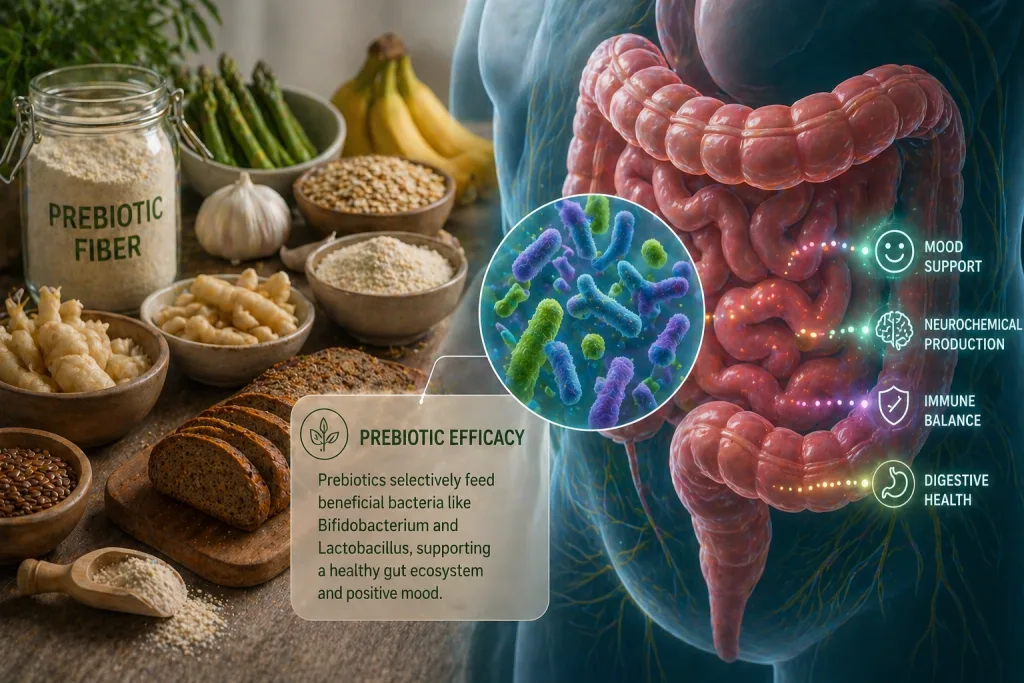
Prebiotic Efficacy
The ingredient must selectively feed beneficial bacteria — particularly strains like Bifidobacterium and Lactobacillus — that are associated with positive neurochemical output. Prebiotics are the foundation: without them, the microbial ecosystem that produces mood-supporting compounds simply can’t thrive.
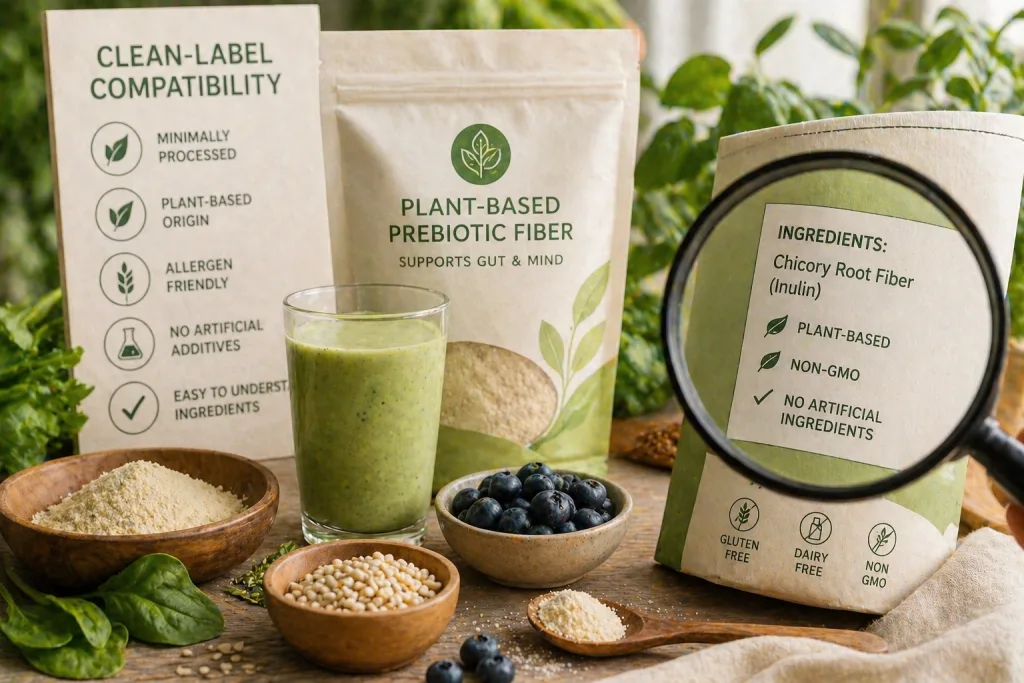
Clean-Label Compatibility
Today’s health-conscious consumer reads ingredient labels carefully. The ideal gut-brain ingredient should be minimally processed, free from allergens, and easily described in plain language. The clean-label psychobiotic food movement is growing fast, and ingredients with complicated chemical names or synthetic origins face consumer skepticism.
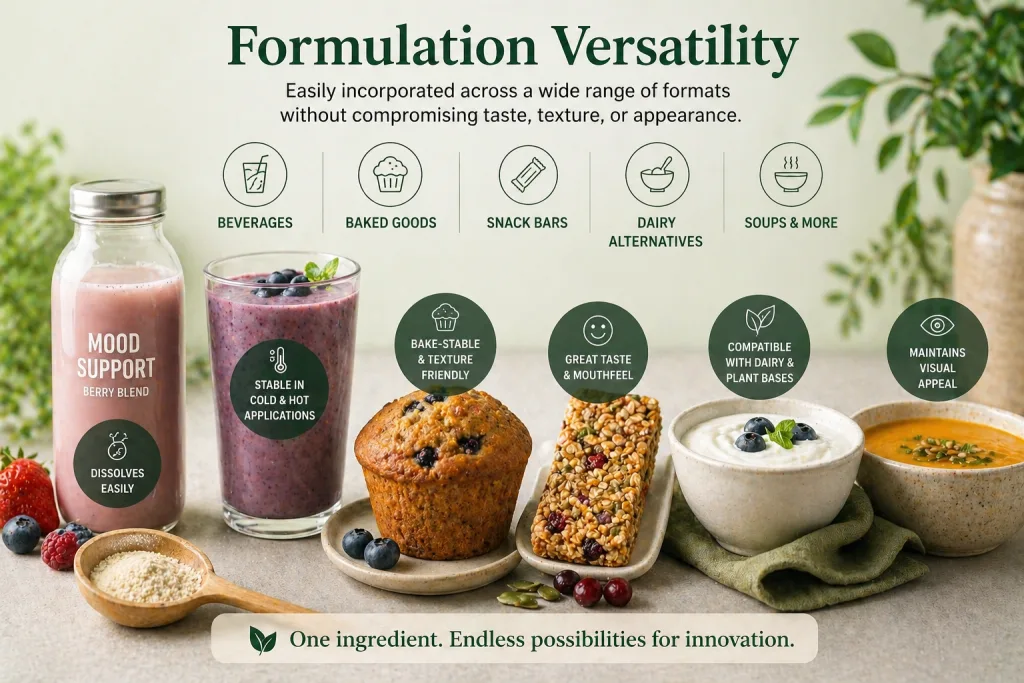
Formulation Versatility
For food manufacturers, an ingredient that only works in one format has limited commercial potential. The best gut-brain axis ingredients are those that can be incorporated into beverages, baked goods, dairy alternatives, snack bars, and more — without compromising taste, texture, or appearance.
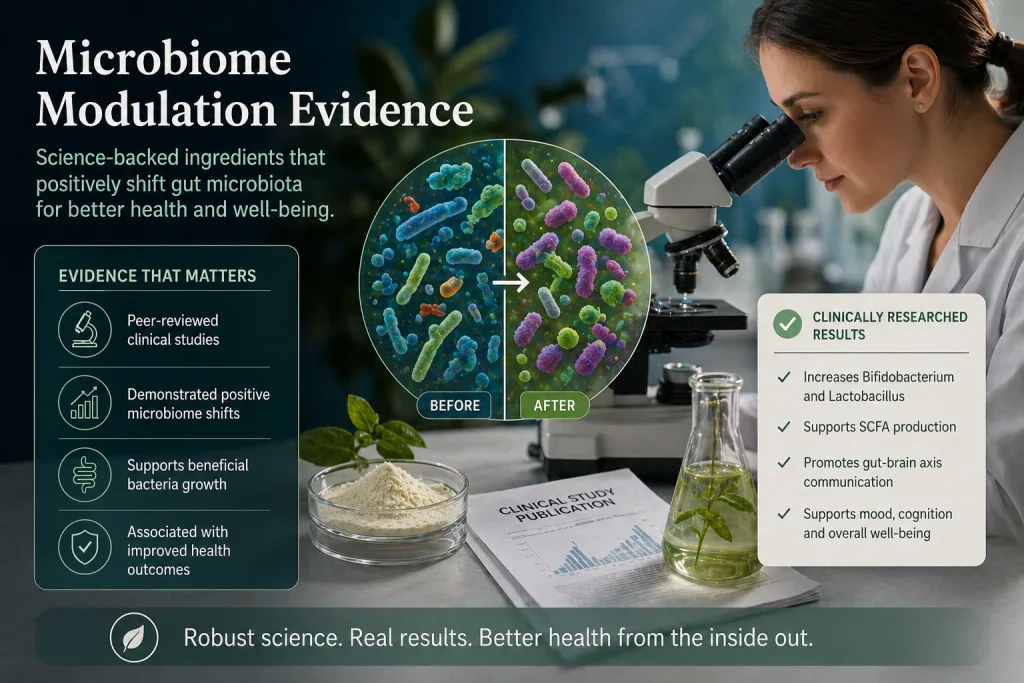
Microbiome Modulation Evidence
The science behind microbiome ingredient food manufacturing is evolving rapidly. Reputable gut-brain ingredients should be supported by peer-reviewed research demonstrating their ability to positively shift gut microbiota composition. This evidence base is what separates credible functional ingredients from wellness trend-chasing.
Resistant Dextrin: A Prebiotic Fiber at the Crossroads of Gut and Brain
Among the ingredients gaining traction in gut-brain formulations, resistant dextrin stands out for both its scientific profile and its practical formulation advantages. Derived from natural starch sources such as tapioca or corn, resistant dextrin is a soluble dietary fiber that passes through the small intestine undigested and reaches the colon, where it feeds beneficial gut bacteria.
What makes resistant dextrin particularly interesting in the context of the gut-brain axis is its prebiotic activity. Research has shown it selectively stimulates the growth of Bifidobacterium and other beneficial microbes — the same strains involved in producing short-chain fatty acids (SCFAs) and influencing neurotransmitter precursors like tryptophan. In other words, it feeds the microbes that may help feed your mood.
Why It Works for Functional Beverage Formulation
Resistant dextrin is tasteless, colorless, and heat-stable at temperatures up to 200°C, making it a natural fit for functional beverage gut-brain axis applications. Whether you’re developing a mood-support drink, a prebiotic sparkling water, or a fiber-enriched coffee alternative, resistant dextrin blends invisibly — preserving taste and texture while delivering meaningful fiber content.
Its pH stability across a range of 2 to 7 means it performs reliably in acidic drinks like juices and kombucha-style beverages, where many other fibers would break down or precipitate.
Clean Label, Non-GMO, and Globally Certified
For brands prioritizing the clean-label psychobiotic food positioning, resistant dextrin checks every box. It is non-GMO, gluten-free, vegan-friendly, and carries no artificial additives. For a gut-brain health ingredient supplier delivering to international CPG clients, these certifications aren’t optional — they’re baseline requirements.
Satoria Nutrisentials’ Resistant Dextrin by Fiberfit™, manufactured at a certified FSSC 22000 and Halal facility in Indonesia, meets these standards across industrial bulk formats and retail-ready packaging. For food manufacturers exploring microbiome ingredient food manufacturing partnerships in Asia, this combination of quality certification and formulation flexibility is particularly valuable.
Building a Gut-Brain Product: Formulation Considerations for Brands
So how does a brand actually translate the gut-brain science into a market-ready product? It starts with understanding that gut-brain axis food product development isn’t just about picking an ingredient — it’s about building a coherent formulation strategy.
Here are the key considerations for food and beverage companies exploring this space:
- Dosage matters: Prebiotic fibers like resistant dextrin typically show measurable microbiome effects at doses of 5–10g per serving. Your formulation needs to accommodate these amounts without affecting palatability.
- Combination plays: Pairing a prebiotic fiber with fermented ingredients or live cultures can amplify gut-brain benefits. Think of resistant dextrin as the foundation layer that supports whatever microbial ecosystem you’re trying to cultivate.
- Labelling strategy: Terms like ‘supports gut health,’ ‘prebiotic fiber,’ and ‘feeds beneficial bacteria’ are well-established and regulatorily defensible in most markets. Avoid overclaiming on mood or cognitive benefits without supporting clinical data.
- Personalized nutrition angles: As personalized nutrition gut microbiome testing becomes mainstream, brands can develop product lines targeting specific microbiome profiles — and resistant dextrin, as a broadly beneficial prebiotic, fits comfortably into most formulations regardless of individual microbiome variation.
The mood food formulation B2B opportunity is growing not just in finished goods but in ingredient supply. Retailers, foodservice operators, and health brands are all looking for ingredient partners who understand the science, can supply at scale, and can support product development with technical expertise.
The Competitive Edge: Why Sourcing Matters for Gut-Brain Ingredients
In a space where consumer trust is paramount, the integrity of your ingredient supply chain is non-negotiable. A gut-brain health ingredient supplier isn’t just selling a physical material — they’re lending their quality systems, certifications, and R&D capability to your brand’s claims.
This is especially true for companies developing gut-brain wellness CPG innovation products in regulated markets like the EU, North America, and Australia. Import compliance, allergen declarations, batch traceability, and documentation of prebiotic activity are all essential. Working with a supplier who operates under FSSC 22000, Good Manufacturing Practice (GMP), and Halal certification removes significant risk from the development process.
The Asia-Pacific region — and Indonesia specifically — has become an increasingly important source of high-quality functional food ingredients. With robust manufacturing infrastructure, competitive pricing on bulk orders, and improving logistics networks, Southeast Asian suppliers are stepping into the role once dominated exclusively by European and North American ingredient houses.
For brands navigating the gut-brain axis market 2026 landscape, securing reliable supply from a certified regional partner is both a cost strategy and a resilience strategy. Supply chain disruptions of the early 2020s made it clear that ingredient diversity in sourcing is good business sense.
Ready to Formulate the Future of Gut-Brain Nutrition?
The gut-brain axis isn’t a future trend — it’s a present opportunity. Consumers are already seeking products that support their mental and digestive health together, and the ingredient science to deliver on those expectations exists right now.
If you’re a food manufacturer, brand developer, or CPG innovator exploring gut-brain axis food ingredient solutions, the starting point is finding a partner who combines scientific credibility with formulation expertise and supply reliability.
Satoria Nutrisentials’ Resistant Dextrin by Fiberfit™ is available in industrial bulk quantities for large-scale manufacturing and in retail-ready formats for emerging consumer brands. Whether you’re building a functional beverage, a prebiotic snack, or a health-forward dairy alternative, our team is ready to support your formulation journey — from technical specifications to product development consultation.
Explore how Satoria Nutrisentials can power your next gut-brain innovation. Contact our team today to request samples, access technical data sheets, or discuss your formulation requirements.
References
- Cryan, J. F., O’Riordan, K. J., Cowan, C. S. M., et al. (2019). The microbiota-gut-brain axis. Physiological Reviews, 99(4), 1877–2013. https://doi.org/10.1152/physrev.00018.2018
- Dinan, T. G., Stanton, C., & Cryan, J. F. (2013). Psychobiotics: a novel class of psychotropic. Biological Psychiatry, 74(10), 720–726. https://doi.org/10.1016/j.biopsych.2013.05.001
- Yano, J. M., Yu, K., Donaldson, G. P., et al. (2015). Indigenous bacteria from the gut microbiota regulate host serotonin biosynthesis. Cell, 161(2), 264–276. https://doi.org/10.1016/j.cell.2015.02.047
- Dahl, W. J., & Stewart, M. L. (2015). Position of the Academy of Nutrition and Dietetics: health implications of dietary fiber. Journal of the Academy of Nutrition and Dietetics, 115(11), 1861–1870. https://doi.org/10.1016/j.jand.2015.09.003
- National Institutes of Health (NIH). (2022). The gut-brain connection. NIH MedlinePlus Magazine. https://magazine.medlineplus.gov/article/the-gut-brain-connection
- Gibson, G. R., Hutkins, R., Sanders, M. E., et al. (2017). Expert consensus document: The International Scientific Association for Probiotics and Prebiotics (ISAPP) consensus statement on the definition and scope of prebiotics. Nature Reviews Gastroenterology & Hepatology, 14(8), 491–502. https://doi.org/10.1038/nrgastro.2017.75
- Clapp, M., Aurora, N., Herrera, L., et al. (2017). Gut microbiota’s effect on mental health: The gut-brain axis. Clinics and Practice, 7(4), 987. https://doi.org/10.4081/cp.2017.987
- Tan, J., McKenzie, C., Potamitis, M., et al. (2014). The role of short-chain fatty acids in health and disease. Advances in Immunology, 121, 91–119. https://doi.org/10.1016/B978-0-12-800100-4.00003-9
Featured News
Category
Get a Promo and Keep Updated