
Rice Protein Isolate for Non-Dairy Sports Recovery RTD Shakes: A Formulator’s Guide
Halal Food Ingredient Europe: The Manufacturer’s Guide to a Booming 2026 Market
May 28, 2026
General - Articles
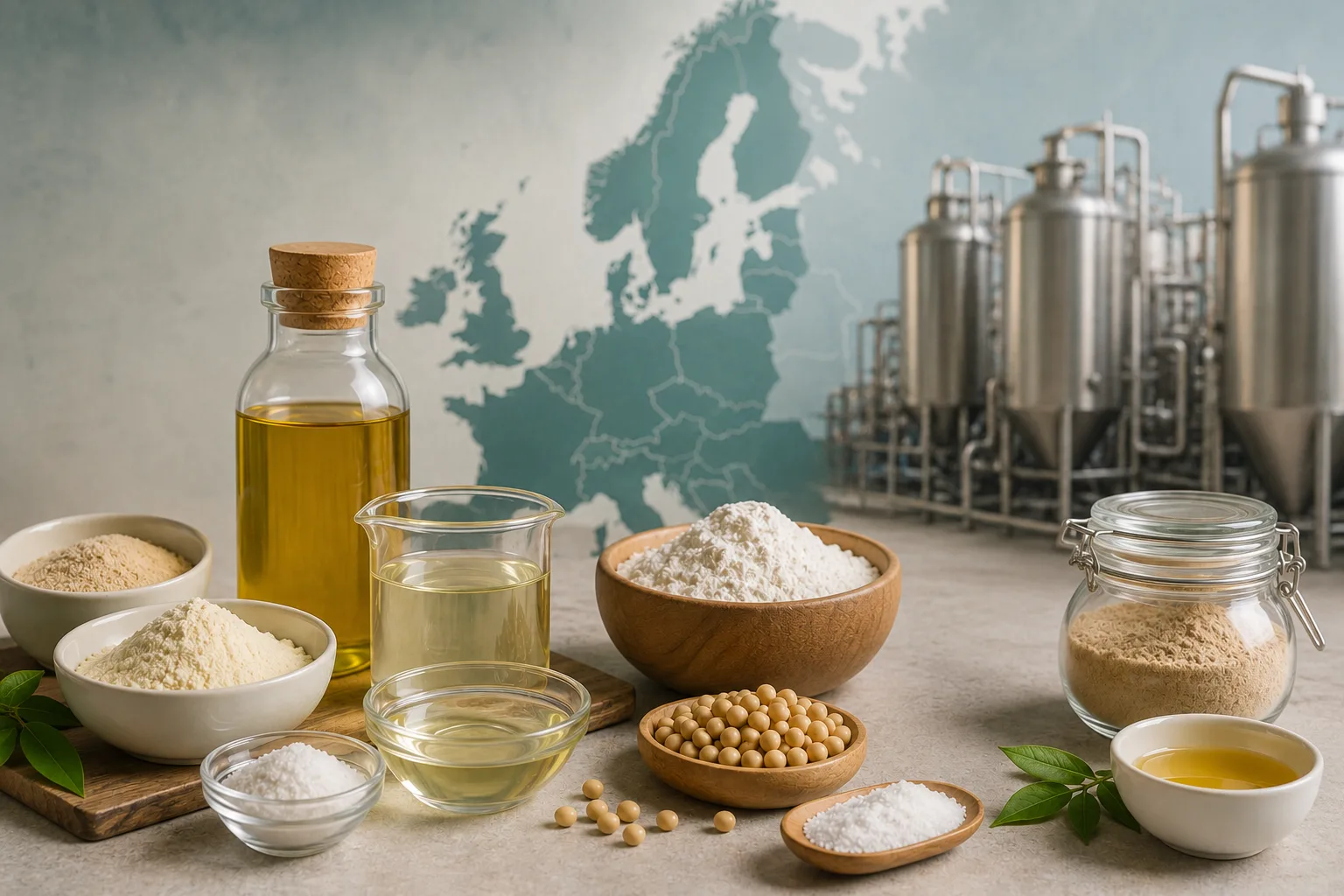
Europe is not the first market that comes to mind when people think of halal food. Yet it is quietly becoming one of the most important. With a Muslim population of over 53 million and mainstream consumers increasingly drawn to ethical, transparent sourcing, the demand for halal certified ingredients EU food manufacturers can rely on has never been stronger.
For food producers, contract manufacturers, and ingredient buyers across the continent, this shift raises a practical question: what does it actually take to build a halal-compliant product in Europe today? The answer touches on certification, formulation choices, consumer trends — and above all, the quality of the ingredients you source.
The Halal Food Market in Europe Is Growing Fast — Here’s Why That Matters
The numbers are hard to ignore. The European halal food and beverages market stood at an estimated USD 93 billion in 2025 and is forecast to reach nearly USD 135 billion by 2030, growing at a compound annual rate of around 7.8%. That is not niche territory — that is a mainstream market opportunity hiding in plain sight.
What is driving it? Several forces are converging at once. The European Muslim population is young — roughly two-thirds are under 30 — and increasingly brand-conscious. This generation expects the same level of product sophistication and ingredient transparency as any other health-conscious consumer. At the same time, non-Muslim consumers are discovering halal food, associating it with cleanliness, ethical sourcing, and quality standards.
Retailers are responding. Tesco, Sainsbury’s, Carrefour, and Lidl now carry certified halal lines in dedicated aisles. Germany and France are particularly dynamic markets, with halal food moving rapidly from specialist ethnic stores into mainstream retail. For ingredient suppliers and food manufacturers, this creates a compelling window of opportunity — but only if the supply chain is genuinely compliant, not just labelled as such.
Understanding Halal Certification for Food Ingredients in the EU
Here is where things get genuinely complex. Unlike organic certification, which has a unified EU framework, there is no single pan-European halal standard. More than 50 certification bodies operate across the continent, each interpreting Islamic dietary law slightly differently. This fragmentation creates real headaches for manufacturers trying to distribute products across multiple countries.
What does halal certification actually require for food ingredients? It goes well beyond simply avoiding pork and alcohol. When it comes to non-meat products — which includes most functional food ingredients — certifiers typically assess:
- The source of each ingredient (plant-based, synthetic, or animal-derived)
- The processing aids and solvents used during extraction or refinement
- The risk of cross-contamination with non-halal materials in the production facility
- The alcohol content of any carrier solvents or flavour solutions
- Cleaning and sanitation procedures between production runs
In Europe, food additives are governed by Regulation EC 1333/2008, which assigns E-numbers to approved additives. While the EU framework ensures safety and technical compliance, it does not address the halal status of these additives. An ingredient with a recognised E-number can still use processing aids that are impermissible under Islamic law — which is why independent halal food additives Europe certification remains essential for any manufacturer targeting this market.
What ‘Halal’ Means for Processing Additives
Halal food processing additives are a common source of confusion. Take emulsifiers, for example. Lecithin (E322) can be derived from soy — completely halal — or from egg yolk, which is permissible but requires verified sourcing. Mono- and diglycerides (E471) can be plant-derived or tallow-based; the latter is not halal unless from a properly slaughtered animal. Even seemingly innocent ingredients like gelatin, certain carriers, and some enzyme preparations require scrutiny.
The safest approach for clean label halal food formulation is to begin with plant-derived, minimally processed ingredients and source them from facilities that hold credible halal certification backed by regular audits. This matters both for regulatory compliance and for building consumer trust in markets where halal authenticity is increasingly scrutinised.
The Rise of Halal Plant-Based and Protein Ingredients in European Formulations
One of the most significant developments reshaping halal food manufacturing Europe right now is the convergence of two trends: the plant-based movement and the halal consumer base. Halal plant-based ingredients offer a rare win-win — they are inherently free from animal-derived concerns, align with clean-label preferences, and carry strong environmental credentials that appeal to European consumers broadly.
Halal protein ingredients are particularly in demand. Pea protein and rice protein have both emerged as leading options for sports nutrition, meal replacements, fortified beverages, and alternative meat formulations. Pea protein, derived from yellow split peas, delivers a well-balanced amino acid profile and outstanding emulsification properties, making it ideal for both savoury and sweet applications. Rice protein isolate, meanwhile, is hypoallergenic and exceptionally digestible — a key advantage in products targeting sensitive consumers or the growing elderly nutrition segment.
Why Plant Proteins Are a Natural Fit for Halal Compliance
Plant-derived proteins are inherently halal from a source perspective — they contain no animal derivatives, no slaughter considerations, and no intrinsic risk of contamination from haram materials. However, the extraction process still matters. Protein isolation typically involves pH adjustment with acids or alkalis, and the processing facility must be certified to ensure no cross-contamination with non-compliant materials occurs between production runs.
This is why sourcing halal protein ingredients from a dedicated certified facility is not a formality — it is a genuine quality assurance measure. Research published in peer-reviewed literature confirms that pea and rice proteins also demonstrate excellent functional properties as natural emulsifiers, supporting clean-label formulation goals without the need for synthetic additives.
Key Ingredient Categories for Halal Food Manufacturing in Europe
If you are formulating or reformulating for the European halal market, certain ingredient categories carry particular relevance. Understanding the halal considerations across each category helps you build a more robust supply chain from the outset.
Dietary Fibre and Digestive Health Ingredients
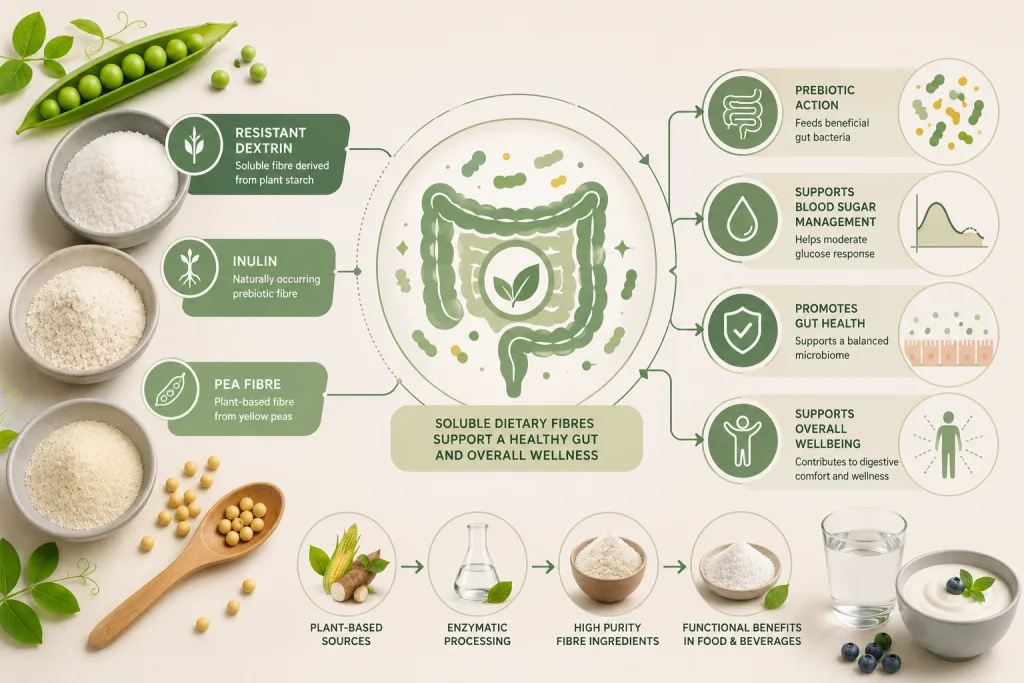
Soluble dietary fibres — including resistant dextrin, inulin, and pea fibre — are foundational ingredients in functional food and beverage products. Resistant dextrin, produced by modifying starch through enzymatic processes, qualifies as a halal food processing additive when derived from plant starch (typically tapioca or wheat) and processed without alcohol-based solvents or non-halal enzymes. It functions as a prebiotic fibre, helps stabilise blood sugar, and has been shown to support gut microbiome health — all hugely relevant to European consumers prioritising wellness.
Natural Sweeteners and Sugar Alternatives
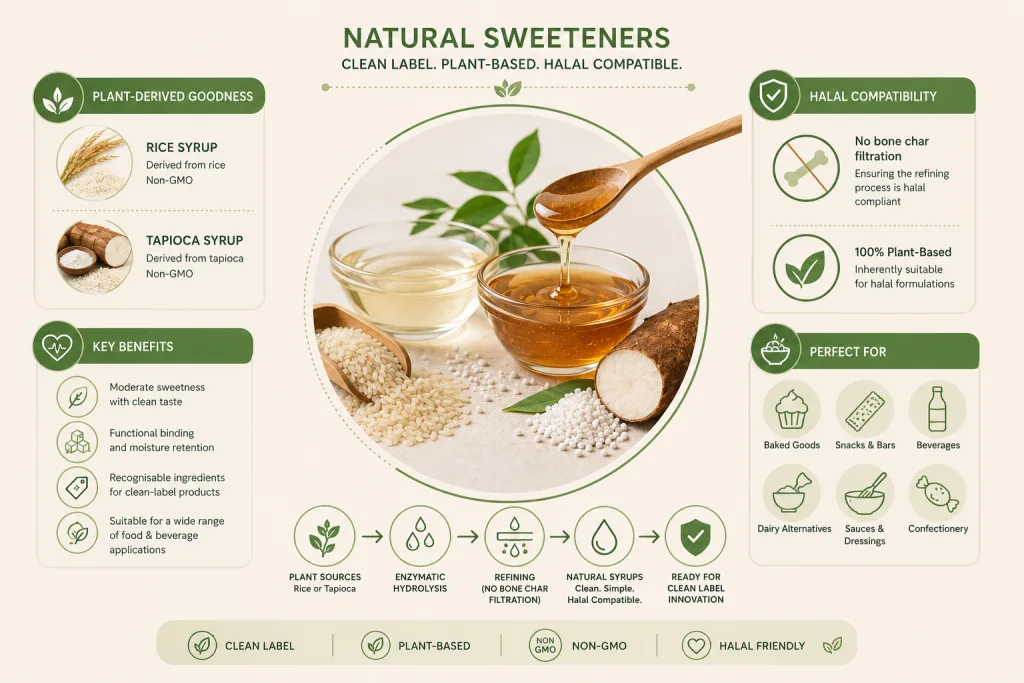
The clean label halal food trend has elevated demand for natural sweeteners that avoid both refined sugar and artificial alternatives. Rice syrup and tapioca syrup are both plant-derived, non-GMO, and inherently compatible with halal formulations — provided the refining process does not use bone char filtration, which is not halal. These syrups offer moderate sweetness, functional binding properties, and a recognisable ingredient name that sits well on a European clean-label product.
Functional Starches and Carbohydrates
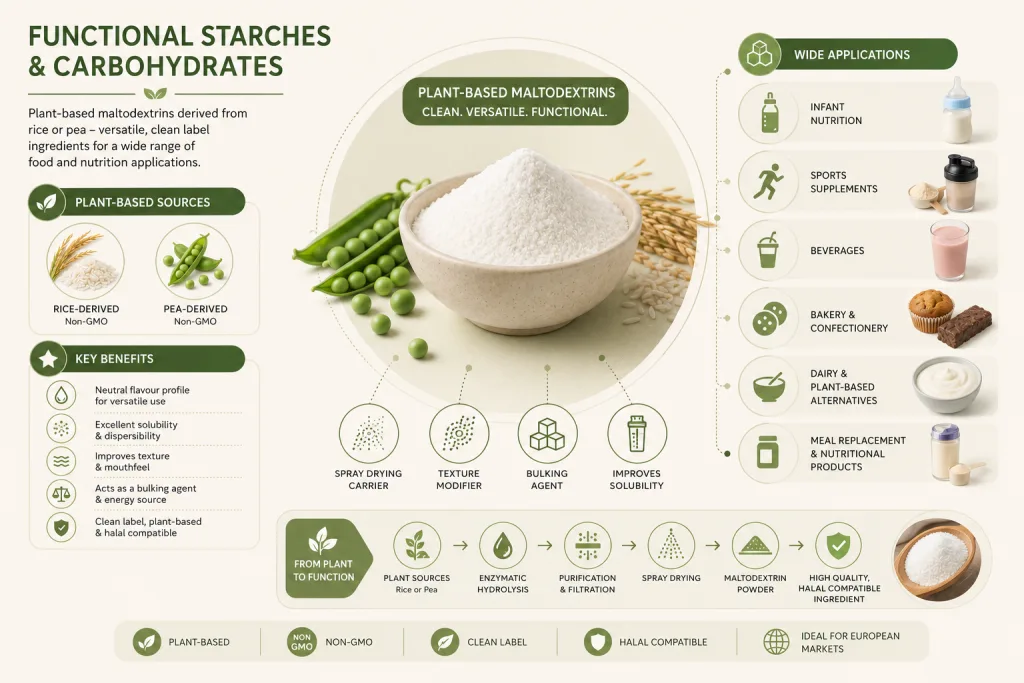
Maltodextrins derived from rice or pea are widely used as spray drying carriers, texture modifiers, and bulking agents. In halal food ingredients Europe formulation contexts, plant-sourced maltodextrins offer a clear advantage over corn-derived alternatives in markets where non-GMO positioning is valued. Their neutral flavour profile and excellent solubility make them versatile across categories from infant nutrition to sports supplements.
What to Look for in a Halal Ingredients Supplier for Europe
Choosing the right halal ingredients supplier Europe represents is more nuanced than simply requesting a certificate. Given the lack of unified EU standards, the rigour of the certification body matters as much as the certificate itself. Here is what experienced procurement managers consider:
- Certification from a recognised body: Look for suppliers certified by internationally credible bodies such as MUI (Indonesia), JAKIM (Malaysia), IFANCA, or UK-based HMC — and check that the certificate covers both the ingredient and the production facility.
- On-site audit history: Regular third-party audits of the manufacturing facility provide far stronger assurance than a certificate alone.
- Segregated production: Dedicated halal production lines — or clear documented cleaning validation between runs — prevent cross-contamination.
- Full ingredient traceability: Suppliers should be able to trace every processing aid, enzyme, and carrier back to its halal-verified source.
- Complementary certifications: Non-GMO, FSSC 22000, HACCP, ISO 22000, and organic certifications speak to broader quality management systems that complement halal compliance.
- Transparency and responsiveness: A trustworthy supplier answers technical questions promptly and provides batch-level documentation without friction.
Indonesia has one of the most rigorous national halal frameworks in the world, administered by BPJPH and backed by the Majelis Ulama Indonesia (MUI). Suppliers certified under this framework often meet or exceed the expectations of European buyers, making Indonesian-certified ingredients a credible and well-documented source for the EU market.
Formulation Strategies for Clean Label Halal Food Products
Building a clean label halal food product in Europe is not about limitation — it is about intentional ingredient selection. The good news is that the clean label trend and halal requirements are highly complementary. Both favour plant-based sourcing, minimal processing, and transparent ingredient declarations.
Some practical principles for halal-compliant formulation in the European context:
- Start with plant-derived bases: pea or rice protein for protein fortification, tapioca or rice-based starches for texture and carrier applications, and plant-sourced fibres for functional fibre enrichment.
- Verify enzyme sources: Proteases, amylases, and lipases used in processing can be microbial (halal-permissible) or animal-derived (requiring scrutiny). Always confirm with your supplier.
- Avoid alcohol-based flavour carriers: Where flavour systems are involved, request water-based or glycerine-based carriers, both of which are halal-compatible.
- Document everything: For multi-country EU distribution, maintain a dossier of ingredient specifications, certification copies, and allergen statements for each component.
- Lean into the overlap: Ingredients that are simultaneously halal certified, non-GMO, organic, and clean label are not rare — they are increasingly the norm among quality-focused ingredient suppliers.
The intersection of halal food market growth Europe 2025 projections and clean label demand creates a significant opportunity for manufacturers who build this compliance into their formulation strategy from the start, rather than retrofitting it later.
Ready to Source Halal-Certified Ingredients for Your European Formulations?
If you are a food manufacturer or brand looking to meet European demand for halal-certified, clean-label functional ingredients, the quality of your ingredient sourcing is where compliance begins — and where competitive advantage is built.
Satoria Nutrisentials is an integrated food ingredient manufacturer based in Indonesia, operating a 14-hectare certified facility that holds halal certification alongside FSSC 22000, ISO 22000, HACCP, Non-GMO, and USDA Organic credentials. Their ingredient portfolio is built around the most relevant functional categories for modern food formulation:
- Resistant Dextrin — a prebiotic soluble fibre for gut health, blood sugar stabilisation, and fibre enrichment in beverages, baked goods, and functional foods
- Rice Protein Isolate — a hypoallergenic, highly digestible halal plant-based protein ideal for sports nutrition, infant formula support, and alternative protein products
- Pea Protein & Pea Protein Isolate — a complete amino acid profile from a clean, non-GMO plant source, suited for meat alternatives, protein drinks, and bakery fortification
- Rice Maltodextrin and Pea Maltodextrin — versatile, plant-sourced functional carbohydrates for spray drying, texture modification, and bulking applications
- Rice Syrup and Tapioca Syrup — natural, plant-derived sweeteners for clean-label sugar reduction
- SweetSentials — a halal-certified sugar alternative for brands reformulating away from refined sugar
Every product in the Satoria Nutrisentials range is produced under strict halal manufacturing standards, with full documentation available for buyers navigating European market compliance requirements. Whether you are building a new product line or reformulating an existing one to meet growing halal food ingredients Europe demand, their team can support you from ingredient specification through to bulk supply.
Explore Satoria Nutrisentials’ full product range at satorianutrisentials.com/products — and get in touch to request product specifications, samples, or a catalogue download.
References
- Mordor Intelligence. (2025). Europe halal food and beverages market size & share analysis — Growth trends & forecasts 2025–2030. https://www.mordorintelligence.com/industry-reports/europe-halal-food-and-beverages-market
- IMARC Group. (2025). Europe halal food market size, share, industry report 2034. https://www.imarcgroup.com/europe-halal-food-market
- Future Market Insights. (2025). Halal ingredient market size, demand & trends 2025–2035. https://www.futuremarketinsights.com/reports/halal-ingredients-market
- Market Data Forecast. (2024). Europe halal ingredients market size, share and trends, 2033. https://www.marketdataforecast.com/market-reports/europe-halal-ingredients-market
- European Commission — Food Safety. (2024). EU rules on food additives. European Union. https://food.ec.europa.eu/food-safety/food-improvement-agents/additives/eu-rules_en
- Centre for the Promotion of Imports from developing countries (CBI). (2025). What requirements must natural food additives comply with to be allowed on the European markets? https://www.cbi.eu/market-information/natural-food-additives/what-requirements-must-your-product-comply
- FoodNavigator. (2024, February 12). Halal certification process in Europe. https://www.foodnavigator.com/Article/2024/02/12/Halal-certification-process-in-Europe/
- Różańska, M., et al. (2025). Plant proteins as alternative natural emulsifiers in food emulsions. National Center for Biotechnology Information, PubMed Central. https://www.ncbi.nlm.nih.gov/pmc/articles/PMC12732156/
- Pew Research Center. (2017). Europe’s growing Muslim population. Pew Research Center. https://www.pewresearch.org/religion/2017/11/29/europes-growing-muslim-population/
Featured News
Category
Get a Promo and Keep Updated