
Rice Protein Isolate for Non-Dairy Sports Recovery RTD Shakes: A Formulator’s Guide
High Protein High Fiber Yogurt Formulation: A Practical Guide for Modern Functional Dairy Products
July 27, 2026
General - Articles
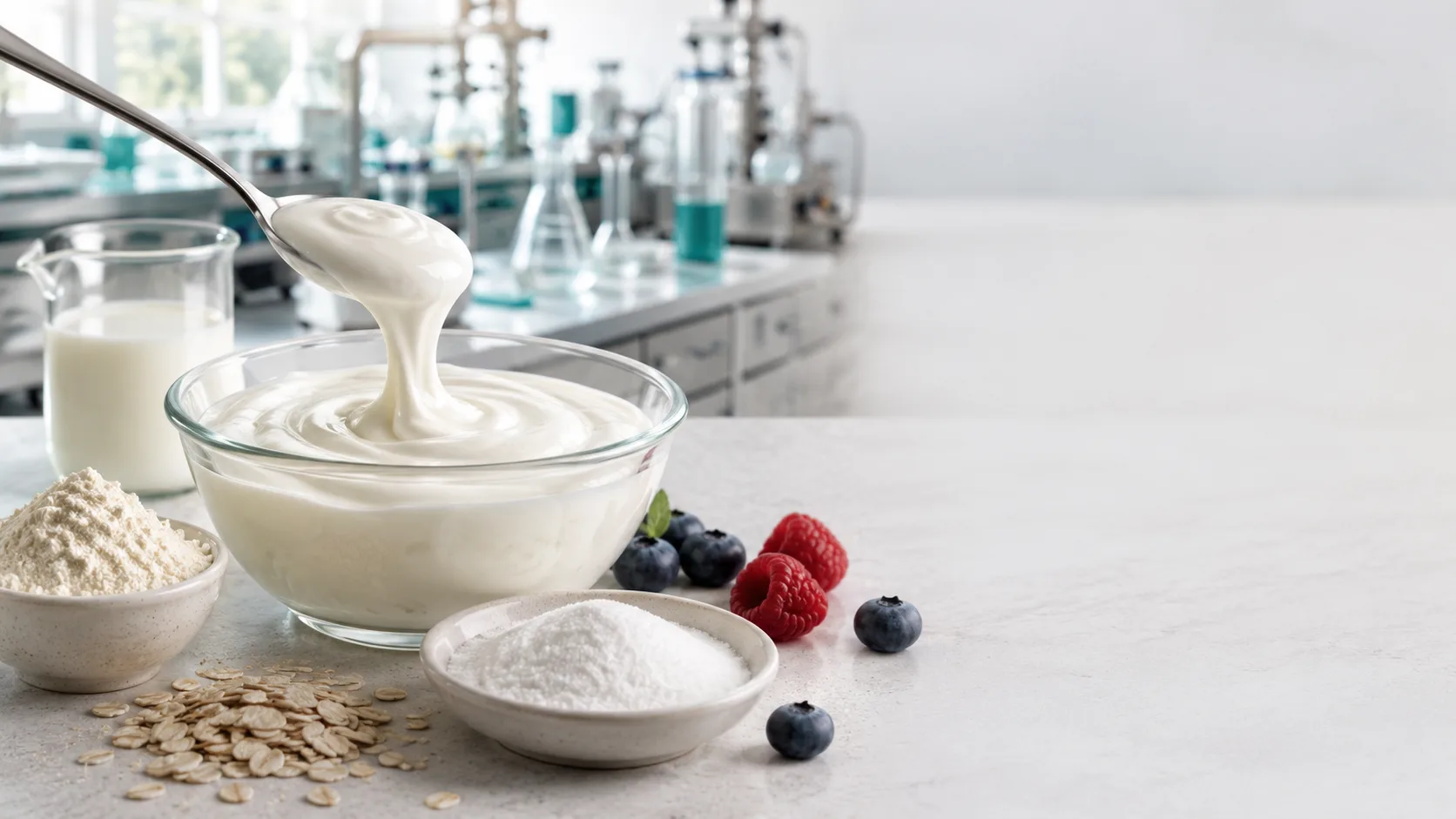
Consumers increasingly expect more from yogurt than great taste alone. Today’s shoppers want products that support digestive wellness, provide lasting satiety, and fit into high-protein lifestyles without sacrificing texture or flavor. As a result, manufacturers are moving beyond simple protein enrichment toward more balanced formulations that combine protein with dietary fiber and other functional ingredients.
Creating a successful high protein high fiber yogurt formulation is not as straightforward as adding extra whey protein or mixing in fiber. Every ingredient influences viscosity, fermentation, water binding, mouthfeel, sweetness, and shelf stability. Protein can create excessive firmness or chalkiness, while fiber may alter viscosity or interact with starter cultures if not carefully selected.
The most successful formulations balance functionality, nutrition, and sensory performance from the very beginning. By combining complementary proteins, carefully selected fibers, and stabilizing systems, manufacturers can produce yogurts that deliver both nutritional value and an enjoyable eating experience.
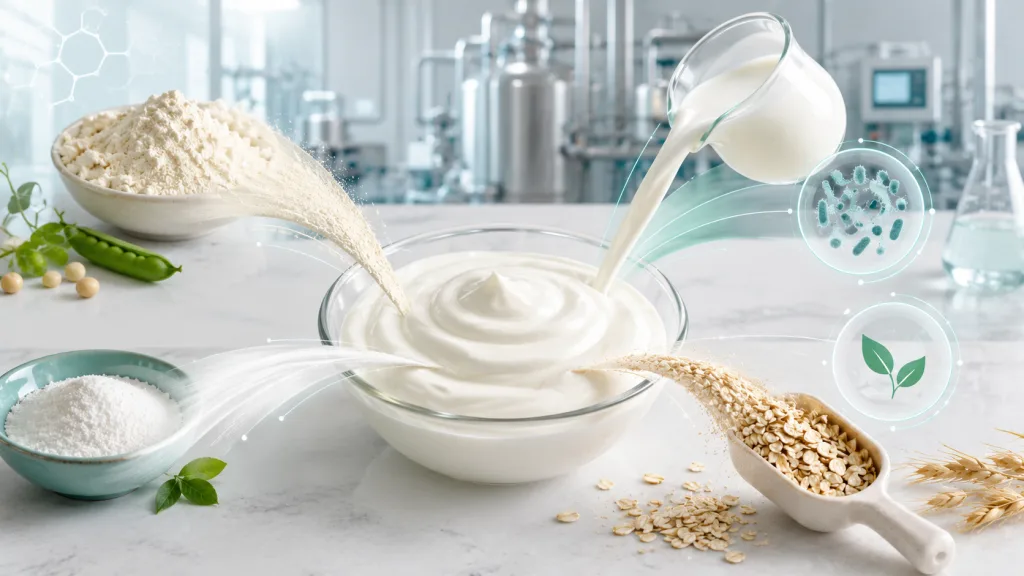
Why High-Protein, High-Fiber Yogurt Is Becoming a Market Standard
High-protein yogurt has already become one of the fastest-growing categories in dairy. Greek yogurt, skyr, drinkable yogurts, and cultured dairy snacks continue to gain popularity as consumers seek foods that fit active lifestyles, weight management goals, and higher daily protein intake.
The next stage of innovation is adding fiber without compromising product quality. Consumers increasingly understand the importance of digestive wellness, and products that combine protein with fiber offer multiple benefits in a single serving.
Manufacturers are also responding to clean-label trends by replacing artificial texture modifiers with multifunctional ingredients that contribute nutritional value. Instead of simply increasing solids, developers are looking for dietary fiber dairy ingredient solutions that improve texture while supporting health claims.
This shift has created strong demand for advanced fiber enriched yogurt formulation strategies that optimize both nutrition and processing efficiency.
Understanding the Challenges of Protein Fortification
Increasing protein concentration changes much more than the nutrition panel. As protein solids increase, yogurt typically becomes firmer, less creamy, and more prone to chalky textures or whey separation.
These changes become even more pronounced in Greek yogurt protein fortification, where naturally strained products already contain elevated protein levels.
Common formulation challenges include:
- Excessive viscosity
- Grainy or sandy mouthfeel
- Increased astringency
- Whey syneresis
- Reduced flavor release
- Difficult processing during filling
Selecting the right protein fortified yogurt ingredients therefore requires balancing functionality alongside nutritional targets.
Many manufacturers combine dairy proteins with carefully selected plant proteins or soluble fibers to improve overall texture while reducing formulation challenges.
Why Fiber Selection Matters More Than Fiber Quantity
Not all fibers behave the same way during yogurt fermentation. Some insoluble fibers create gritty textures, while certain soluble fibers may significantly increase viscosity or interact with starter cultures.
For yogurt applications, highly soluble fibers generally provide better sensory performance. They dissolve completely, contribute minimal flavor, and maintain a smooth mouthfeel.
One of the most versatile options is prebiotic fiber for yogurt based on resistant dextrin. Because it has low viscosity even at relatively high inclusion rates, it allows formulators to increase dietary fiber without dramatically changing processing behavior.
A successful fiber enriched yogurt formulation should prioritize fibers that:
- Dissolve completely
- Remain stable during pasteurization
- Tolerate fermentation
- Maintain neutral flavor
- Support digestive health
- Preserve creamy texture
Choosing fiber based on functionality rather than nutrition alone often produces better commercial outcomes.
How Resistant Dextrin Supports Better Yogurt Formulation
Among soluble fibers available today, resistant dextrin in yogurt offers several practical formulation advantages beyond digestive health benefits.
Because resistant dextrin contributes very little viscosity, it can increase fiber content without creating overly thick products. This makes it particularly valuable in drinkable yogurts, stirred yogurt, Greek yogurt, and high-protein cultured dairy beverages.
Additional formulation benefits include:
- Excellent water solubility
- Heat stability during processing
- Neutral taste
- Low sweetness
- Good compatibility with dairy proteins
- Potential prebiotic functionality
Its excellent processing stability also makes resistant dextrin suitable for large-scale high protein yogurt manufacturing, where consistency between production batches is essential.
When combined with quality protein systems, resistant dextrin helps manufacturers create yogurts that are both nutritionally enhanced and enjoyable to consume.
Selecting the Right Protein System
Protein selection determines not only nutritional value but also processing characteristics.
Traditional dairy proteins remain widely used, including:
- Milk protein concentrate (MPC)
- Milk protein isolate (MPI)
- Whey protein concentrate (WPC)
- Whey protein isolate (WPI)
However, growing interest in sustainability and plant-forward products has increased demand for plant protein for yogurt fortification.
Pea protein isolate has become particularly attractive due to its strong amino acid profile and relatively neutral taste compared with many other plant proteins.
Rice protein isolate can also complement dairy proteins by contributing smoother mouthfeel and helping diversify protein sources.
Rather than replacing dairy entirely, hybrid protein systems often provide the best balance between nutrition, sensory quality, and processing performance.
Improving Texture Without Sacrificing Clean Labels
Texture remains one of the biggest purchasing drivers for yogurt consumers. Even highly nutritious products struggle if they feel gritty, rubbery, or overly thick.
Developers increasingly seek clean label yogurt formulation strategies that reduce dependence on synthetic stabilizers while maintaining excellent eating quality.
Successful texture optimization often combines several approaches:
- Optimizing total solids
- Balancing protein ratios
- Selecting appropriate soluble fibers
- Managing fermentation conditions
- Controlling homogenization pressure
- Optimizing incubation endpoints
Selecting the appropriate yogurt texture stabilizer high protein strategy does not necessarily require adding more gums. Functional fibers and optimized protein interactions often provide natural improvements in water retention and creaminess.
This creates products that align better with consumer expectations for simple ingredient lists.
Reducing Astringency and Improving Sensory Quality
As protein concentration increases, yogurt can develop dryness or slight bitterness that negatively affects consumer acceptance.
Developers therefore pay increasing attention to yogurt astringency reducing ingredients that improve overall sensory balance.
Several formulation strategies can help:
- Combining multiple protein sources
- Using soluble fibers to improve lubrication
- Optimizing fat content
- Fine-tuning acidity
- Selecting natural flavor systems
- Improving fermentation control
Functional carbohydrates and soluble fibers can also soften mouthfeel while allowing protein levels to remain high.
The result is a yogurt that delivers nutritional benefits without the harsh texture sometimes associated with heavily fortified products.
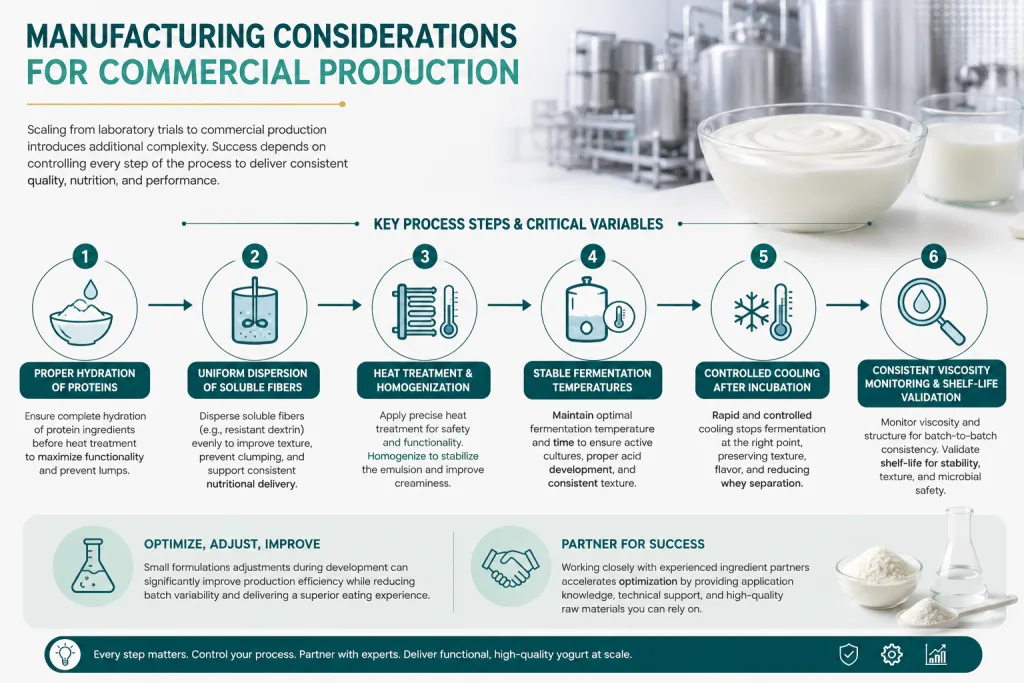
Manufacturing Considerations for Commercial Production
Scaling from laboratory trials to commercial production introduces additional complexity.
Successful high protein yogurt manufacturing requires close attention to ingredient hydration, mixing order, heat treatment, homogenization, fermentation, and filling conditions.
Critical process variables include:
- Proper hydration of proteins before pasteurization.
- Uniform dispersion of soluble fibers.
- Stable fermentation temperatures.
- Controlled cooling after incubation.
- Consistent viscosity monitoring.
- Shelf-life validation.
Small formulation adjustments during development can significantly improve production efficiency while reducing batch variability.
Working closely with experienced ingredient partners often accelerates optimization by providing application knowledge alongside raw materials.
Choosing Functional Ingredients That Work Together
No single ingredient creates an ideal functional yogurt. Instead, success comes from combining complementary ingredients that each solve different formulation challenges.
A comprehensive ingredient system may include:
- Protein ingredients for nutrition
- Soluble fiber for digestive health
- Natural sweetening systems
- Texture optimization ingredients
- Stabilizing solutions
For manufacturers developing next-generation functional dairy products, suppliers offering multiple ingredient categories simplify formulation development.
A knowledgeable functional yogurt ingredients supplier can recommend ingredient combinations rather than isolated raw materials, helping reduce development time and improve commercial performance.
Companies such as Satoria Nutrisentials offer a portfolio including Resistant Dextrin, Pea Protein Isolate, Pea Protein, Rice Protein Isolate, Rice Maltodextrin, and other specialty ingredients that can support protein fortification dairy products while maintaining desirable texture and processing characteristics.
This integrated approach is especially valuable for manufacturers seeking gut health yogurt ingredients alongside protein enhancement within a single formulation strategy.
Partner with the Right Functional Dairy Ingredient Manufacturer
Developing a successful high protein high fiber yogurt formulation requires more than selecting ingredients with impressive nutritional specifications. It demands a deep understanding of how proteins, fibers, fermentation, processing, and sensory performance interact throughout production.
Manufacturers that invest in well-balanced formulations can create yogurts that satisfy consumer demand for protein, digestive wellness, clean labels, and exceptional eating quality simultaneously.
Working with an experienced functional dairy ingredient manufacturer provides access not only to high-quality raw materials but also formulation expertise that can shorten development cycles and improve commercial success. Whether your goal is enhancing Greek yogurt, developing drinkable cultured beverages, or creating next-generation functional dairy products, choosing compatible protein and fiber systems is the foundation of long-term product performance.
Explore functional ingredient solutions that support innovative dairy formulations and discover how carefully selected protein and fiber ingredients can help bring your next yogurt concept to market with confidence.
References
- AOAC International. (2023). Official Methods of Analysis. https://www.aoac.org/
- EFSA Panel on Nutrition, Novel Foods and Food Allergens. (2021). Scientific opinion on dietary fibre. https://www.efsa.europa.eu/
- FAO. (2023). Milk and Dairy Products in Human Nutrition. https://www.fao.org/
- McClements, D. J. (2020). Designing next-generation functional foods. Foods, 9(1), 74. https://doi.org/10.3390/foods9010074
- National Institutes of Health. (2023). Dietary Fiber Fact Sheet. https://ods.od.nih.gov/
- Ranadheera, C. S., Evans, C. A., Adams, M. C., & Baines, S. K. (2018). Probiotics in dairy products. International Dairy Journal. https://www.sciencedirect.com/journal/international-dairy-journal
- Slavin, J. (2013). Fiber and prebiotics: Mechanisms and health benefits. Nutrients, 5(4), 1417–1435. https://doi.org/10.3390/nu5041417
- World Health Organization. (2023). Healthy diet. https://www.who.int/news-room/fact-sheets/detail/healthy-diet
Featured News
Category
Get a Promo and Keep Updated