
Rice Protein Isolate for Non-Dairy Sports Recovery RTD Shakes: A Formulator’s Guide
Resistant Starch vs Resistant Dextrin: Which Fiber Is Right for Your Formulation?
August 17, 2026
Resistant Dextrin - Articles
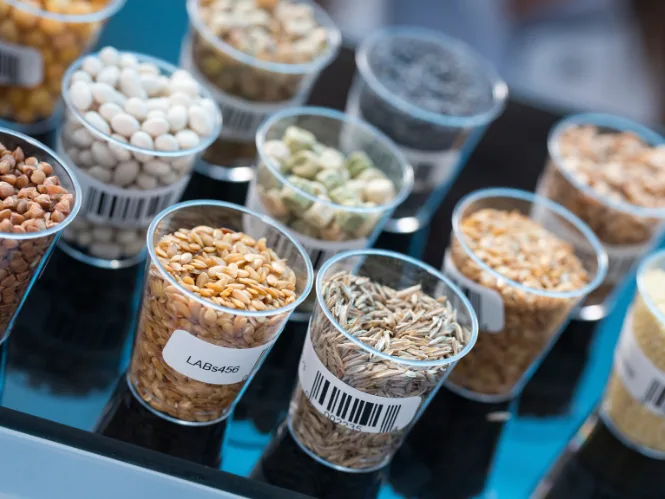
Walk into any food science conversation about dietary fiber today, and you will likely hear two terms tossed around almost interchangeably: resistant starch and resistant dextrin. They sound similar, and both resist digestion in the small intestine, but that is roughly where the similarities end.
If you are formulating a product, sourcing an ingredient, or simply trying to eat smarter, understanding the resistant starch vs resistant dextrin difference actually matters quite a bit. These two fibers behave differently in food systems and do not always deliver identical outcomes. Whether you manufacture beverages, snacks, or clinical nutrition products, or you are a health-conscious reader curious about which fiber belongs in your diet, this guide breaks down what is resistant starch, what is resistant dextrin, and how each one performs when it comes to formulation, gut health, and blood sugar management.
What Is Resistant Starch?
Resistant starch is exactly what it sounds like: a starch fraction that resists digestion in the small intestine and travels intact to the colon, where gut bacteria ferment it. Unlike ordinary starch, which breaks down quickly into glucose, resistant starch behaves more like dietary fiber, feeding beneficial bacteria along the way.
Scientists classify resistant starch into distinct types based on why it resists digestion. Understanding the types of resistant starch, commonly labeled RS1 through RS4, helps explain why not every resistant starch performs the same way in a finished product:
- RS1 is physically trapped inside plant cell walls or protein matrices, found in whole grains, seeds, and legumes.
- RS2 has a naturally resistant granular structure, as seen in raw potatoes and green bananas.
- RS3 forms when cooked starchy foods, such as rice or pasta, are cooled and the starch molecules re-crystallize.
- RS4 is chemically or physically modified starch, engineered to resist enzyme breakdown for use in processed foods and shown to meaningfully reduce post-meal glucose and insulin response (Stewart et al., 2018).
Because most resistant starch is insoluble in water, it tends to add a coarser texture to finished foods. That makes it a natural fit for baked goods, cereals, and legume-based products, but a poor fit for applications where a completely smooth, invisible fiber is required.
What Is Resistant Dextrin?
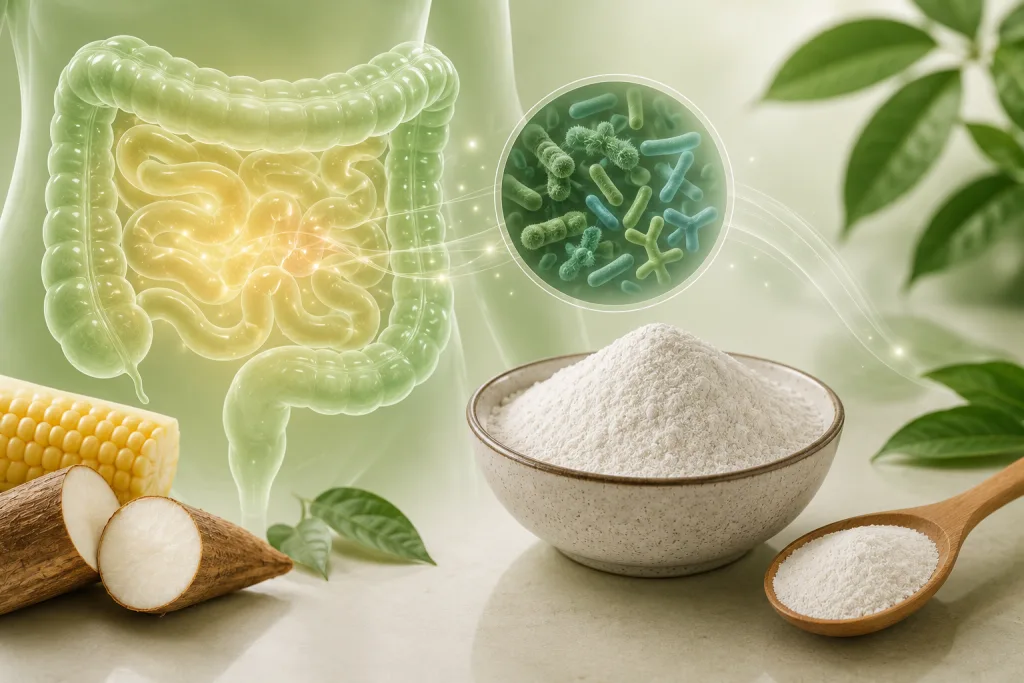
So, what is resistant dextrin, and how does it differ at a molecular level? Resistant dextrin is a soluble dietary fiber created through pyrodextrinization, a controlled heat-and-acid process that breaks starch, typically from corn, tapioca, or wheat, into shorter glucose chains with irregular, non-digestible glycosidic bonds (Wu et al., 2024). Those unusual bonds are precisely what make it resistant to human digestive enzymes.
Because it is soluble, resistant dextrin dissolves cleanly into liquids without changing color, taste, or texture. That single property is why it has become the go-to soluble fiber ingredient for functional food and beverage manufacturers who need to fortify a product without altering the eating or drinking experience.
Resistant dextrin also tends to be gentler on digestion once the body adapts to it. Clinical research on daily resistant dextrin intake found that gas production initially rose, then declined over several weeks as gut microbiota shifted toward a more fermentative, better-tolerated pattern (Barber et al., 2022). For manufacturers, this adaptation profile is one reason resistant dextrin is widely used in everyday, repeat-consumption products rather than occasional ones.
Resistant Starch vs Resistant Dextrin: The Core Differences
The resistant starch vs resistant dextrin difference comes down to three main factors: solubility, structure, and processing behavior. Resistant starch is insoluble, and some types, particularly RS2 and RS3, can lose their resistance when exposed to high heat. Resistant dextrin, by contrast, is soluble and remarkably stable across a wide pH and temperature range.
Here is a side-by-side comparison worth keeping on hand when evaluating either ingredient:
- Solubility: Resistant starch is not water-soluble; resistant dextrin dissolves fully in liquids.
- Source and production: Resistant starch occurs naturally or through processing of whole starches; resistant dextrin is manufactured through pyrodextrinization of starch.
- Texture impact: Resistant starch can add graininess or density; resistant dextrin is virtually undetectable in a finished product.
- Heat and pH stability: Certain resistant starch types lose resistance under high heat or acidic conditions; resistant dextrin generally holds up well across both.
- Structural similarity: Both fibers share comparable health benefits around gut health, glycemic control, and weight management, despite their structural differences (Dong et al., 2025).
Is resistant dextrin the same as resistant starch, then? Not exactly. They are related in that both resist small intestinal digestion, but they differ enough in origin and behavior that they are not interchangeable in formulation, nor in the physiological response they produce.
Resistant Starch vs Soluble Fiber: Where Does Resistant Dextrin Fit?
It helps to zoom out and place both fibers within the broader soluble vs insoluble fiber comparison. Insoluble fibers, including most resistant starch, add bulk and help move material through the digestive tract. Soluble fibers, like resistant dextrin, dissolve in water, slow digestion, and often have a more direct effect on post-meal blood sugar and cholesterol.
When people ask about resistant starch vs soluble fiber, they are really asking which category better suits their goals. If the priority is bulking and regularity, insoluble resistant starch sources such as legumes or cooled potatoes can help. If the goal is blood sugar support, satiety, or a fiber that blends invisibly into drinks and processed foods, resistant dextrin is the more practical soluble fiber ingredient for functional food.
Both fiber types matter in a well-rounded diet. For manufacturers, both open different formulation doors depending on a product’s required texture and processing conditions, which is exactly why so many finished goods end up using one, the other, or a blend of both.
Health Benefits, Side by Side
Gut Health and Prebiotic Effects
Both fibers act as prebiotics, but they feed gut bacteria somewhat differently. Resistant dextrin has been shown to stimulate the growth of beneficial strains such as Lactobacillus and Bifidobacterium while lowering the activity of certain enzymes linked to gut irritation (Włodarczyk et al., 2022). This combination of prebiotic support and comparatively gentle fermentation is a major reason resistant dextrin performs well in everyday gut-health products.
Blood Sugar and Glycemic Response
Both ingredients carry a low glycemic index, though the resistant starch glycemic index effect and the resistant dextrin glycemic index effect show up through slightly different mechanisms. In clinical testing, a fiber-fortified food containing RS4 significantly reduced post-meal glucose and insulin response compared to a low-fiber control (Stewart et al., 2018), while resistant dextrin’s soluble, viscosity-forming structure produces a comparable blunting effect in liquid and semi-liquid foods. For manufacturers targeting diabetic-friendly claims, either fiber can support a low glycemic index ingredient for food formulation strategy.
Weight Management and Satiety
Both fibers promote fullness, but resistant dextrin’s solubility allows it to be added into everyday beverages and snacks at meaningful doses without changing mouthfeel, which makes it easier for consumers to incorporate consistently into a weight-conscious diet.
Choosing Between Resistant Starch and Resistant Dextrin for Food Manufacturing
For manufacturers weighing resistant starch vs resistant dextrin food application, the decision usually comes down to what the finished product needs to look, taste, and feel like. Resistant starch tends to work best in dry, textured applications, such as baked goods, cereals, pasta, and legume-forward products, where a bit of density is already expected.
Resistant dextrin for food manufacturing tends to be the more versatile pick for liquid and semi-liquid categories. Because it is colorless, tasteless, and pH-stable, it integrates cleanly into beverages, dairy alternatives, sauces, soups, and confectionery without triggering a full reformulation of taste or appearance.
If you are evaluating a resistant starch food ingredient supplier or a resistant dextrin ingredient supplier in Indonesia, ask about processing stability under heat and acid, particle solubility, sourcing transparency, and documented clinical support for any health claims you intend to make. A reliable prebiotic fiber ingredient for manufacturers should also come with clear certifications, since halal, non-GMO, and food safety credentials increasingly influence purchasing decisions across export markets.
Sugar reduction is another area where the two fibers diverge in practicality. A resistant dextrin sugar reduction ingredient can replace the bulk lost when sugar is cut, without the coarser mouthfeel that resistant starch sometimes introduces. That is a major reason so many reduced-sugar beverage and dairy reformulations lean on soluble dextrin fibers rather than starch-based ones.
How Resistant Dextrin Stacks Up Against Other Functional Fibers
Resistant dextrin is not the only soluble fiber on the market, so it is worth understanding how it compares. In the resistant dextrin vs maltodextrin conversation, the key distinction is digestibility: maltodextrin is a highly digestible carbohydrate, while resistant dextrin resists digestion and functions as a fiber. We cover this comparison in more depth in our guide to resistant dextrin vs maltodextrin, if you want the full breakdown.
Resistant dextrin vs inulin is another common formulation question. Inulin ferments rapidly in the colon and can cause noticeable gas at higher doses, while resistant dextrin ferments more gradually across a longer stretch of the colon, which generally supports better tolerance over continuous use (Barber et al., 2022). Resistant dextrin vs polydextrose comes down to production method: polydextrose is made by polycondensing glucose and sorbitol rather than modifying starch, though the two share similar solubility and low-viscosity behavior in finished food systems (Dong et al., 2025).
Buyers researching a Fibersol vs Nutriose alternative are usually comparing branded resistant dextrins against one another, since both are commercial resistant dextrin products with overlapping applications. And when the question shifts to resistant starch vs prebiotic fiber more broadly, it helps to remember that resistant starch is one prebiotic fiber among several, sitting alongside resistant dextrin, inulin, and polydextrose as options with distinct functional profiles (Włodarczyk & Śliżewska, 2021).
Frequently Asked Questions
Does resistant starch help you lose weight?
Resistant starch can support weight management indirectly by increasing satiety and slowing digestion, though it works best as part of a broader calorie-conscious diet rather than as a standalone solution.
Is resistant dextrin safe for diabetics?
Resistant dextrin is widely used in diabetic-friendly formulations because of its low glycemic index and its ability to blunt post-meal blood sugar spikes, though individuals should still consult a healthcare provider before making significant dietary changes.
How much resistant dextrin per day?
Clinical studies commonly use daily doses in the range of roughly 10 to 15 grams (Barber et al., 2022), though individual tolerance varies, and manufacturers typically recommend introducing it gradually to minimize digestive discomfort.
Which fiber is better for blood sugar control?
Both fibers support blood sugar control, but resistant dextrin’s solubility and viscosity-forming behavior often make it easier to dose consistently across beverages and everyday foods, where resistant starch is harder to incorporate.
What foods contain resistant starch naturally?
Green bananas, cooked and cooled potatoes or rice, legumes, and whole grains are among the richest natural sources of resistant starch.
Source Reliable Resistant Dextrin for Your Next Formulation
If your team is exploring a soluble fiber ingredient for functional food, resistant dextrin offers a practical, well-tolerated way to add fiber, support low glycemic claims, and reduce sugar, all without disrupting taste or texture. Satoria Nutrisentials produces Fiberfit® Resistant Dextrin from carefully sourced tapioca and corn starch, backed by halal, non-GMO, and food safety certifications built for export-ready formulations.
Whether you are developing a new beverage line, reformulating a snack for a sugar-reduction claim, or simply weighing a Fiberfit® resistant dextrin option against a resistant starch approach for your next product, our team can walk you through samples, technical documentation, and application support suited to your production scale. Reach out to discuss your formulation needs and explore how resistant dextrin can fit into your next launch.
References
Barber, C., Sabater, C., Ávila-Gálvez, M. Á., Vallejo, F., Bendezu, R. A., Guérin-Deremaux, L., Guarner, F., Espín, J. C., Margolles, A., & Azpiroz, F. (2022). Effect of resistant dextrin on intestinal gas homeostasis and microbiota. Nutrients, 14(21), 4611. https://doi.org/10.3390/nu14214611
Dong, K., Perreau, C., Thabuis, C., Yu, S., & Hasjim, J. (2025). Physicochemical properties and health benefits of resistant starch, resistant dextrin, and polydextrose: Similarities and differences. Grain & Oil Science and Technology, 8(3), 221–234. https://doi.org/10.1016/j.gaost.2025.04.001
Stewart, M. L., Wilcox, M. L., Bell, M., Buggia, M. A., & Maki, K. C. (2018). Type-4 resistant starch in substitution for available carbohydrate reduces postprandial glycemic response and hunger in acute, randomized, double-blind, controlled study. Nutrients, 10(2), 129. https://doi.org/10.3390/nu10020129
Włodarczyk, M., & Śliżewska, K. (2021). Efficiency of resistant starch and dextrins as prebiotics: A review of the existing evidence and clinical trials. Nutrients, 13(11), 3808. https://doi.org/10.3390/nu13113808
Włodarczyk, M., Śliżewska, K., Barczyńska, R., & Kapuśniak, J. (2022). Effects of resistant dextrin from potato starch on the growth dynamics of selected co-cultured strains of gastrointestinal bacteria and the activity of fecal enzymes. Nutrients, 14(10), 2158. https://doi.org/10.3390/nu14102158
Wu, X. L., Zhang, J. W., Yan, X. X., Wu, X. X., Zhang, Q., & Luan, M. R. (2024). An in-depth overview of the structural properties, health benefits, and applications of resistant dextrin. Journal of Food Processing and Preservation, 2024, Article 8055063. https://doi.org/10.1155/2024/8055063
Featured News
Category
Get a Promo and Keep Updated