
Does Rice Have Protein? A Practical Guide for Food & Beverage Manufacturers
Does Rice Have Protein? A Practical Guide for Food & Beverage Manufacturers
February 24, 2026
Protein & Nutritional Enhancers - Articles
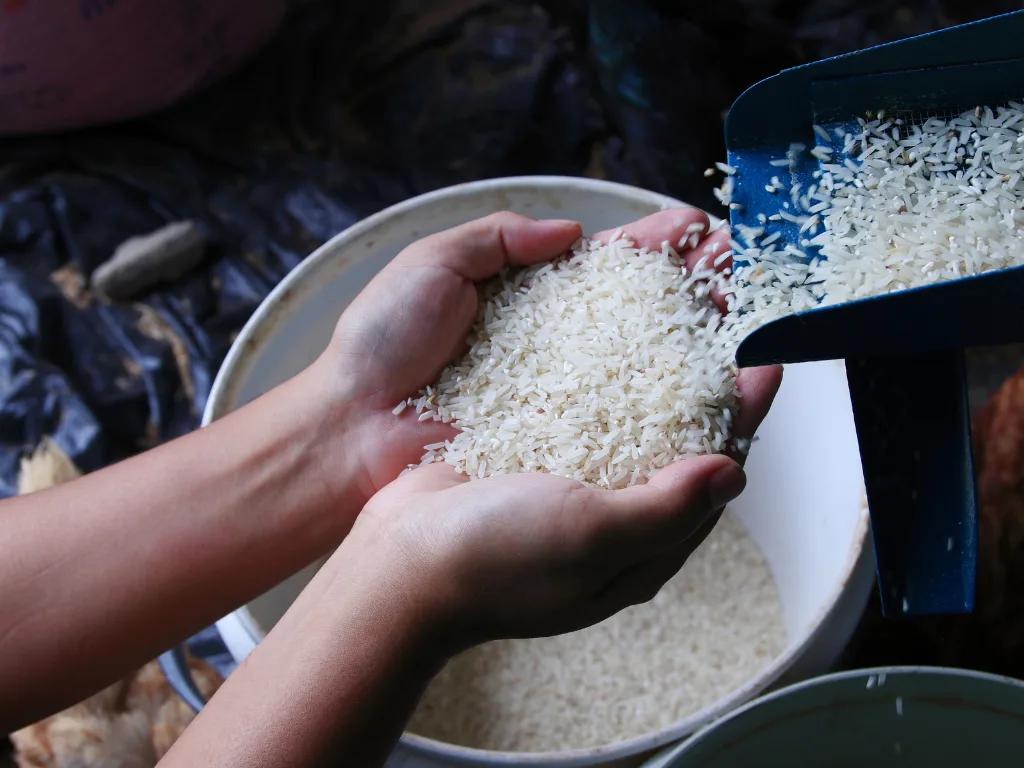
Rice feeds more than half of the global population every day. Yet in today’s nutrition-driven market, a familiar question keeps resurfacing among product developers and food scientists: does rice have protein?
For food and beverage manufacturers, this is more than a nutritional curiosity. It influences formulation decisions, labeling strategies, and the growing shift toward plant-based innovation. As consumers increasingly seek allergen-friendly, sustainable, and protein-enriched products, rice is gaining renewed relevance as both a staple ingredient and a modern functional protein source.
This article explores the nutritional reality of rice protein, how it compares with other plant proteins, and why it is becoming an increasingly valuable ingredient in contemporary product development.
Why Manufacturers Are Re-Examining Rice as a Protein Source
Global protein demand has been steadily rising, driven by multiple long-term consumer trends:
- The expansion of plant-based diet
- Increased awareness of food allergies and intolerances
- Demand for sustainable protein sources
- Growth of functional foods and active nutrition products
Within this evolving landscape, plant-derived proteins have moved from niche ingredients to mainstream formulation staples. Rice protein, in particular, has attracted attention due to its hypoallergenic nature, global availability, and compatibility with clean label product positioning.
For manufacturers aiming to create inclusive, globally marketable products, rice offers an appealing starting point.
How Much Protein Is Naturally Present in Rice?
Protein Content in Whole Rice
Rice does contain protein, though in modest amounts compared with other protein-rich foods.
On average:
- Cooked white rice provides about 2–3 grams of protein per 100 grams
- Cooked brown rice provides about 2.5–3.5 grams per 100 grams
While rice contributes to daily protein intake, it is not considered a high-protein food in its whole form.
A simple comparison illustrates this clearly:
- White rice: ~2.7 g protein per 100 g
- Brown rice: ~3 g protein per 100 g
- Lentils: ~9 g protein per 100 g
- Chicken breast: ~31 g protein per 100 g
For manufacturers developing high-protein products, whole rice alone rarely delivers the protein density required for modern product claims. However, rice becomes significantly more valuable once its protein is concentrated into a functional ingredient.
From Staple Grain to Functional Ingredient
Through advanced processing, rice protein can be isolated and concentrated into rice protein isolate, typically containing 80–90% protein. This transformation allows manufacturers to retain the benefits of rice while achieving meaningful protein fortification.

Understanding the Amino Acid Profile of Rice Protein
Protein quality depends not only on quantity but also on amino acid composition.
Essential Amino Acids in Rice Protein
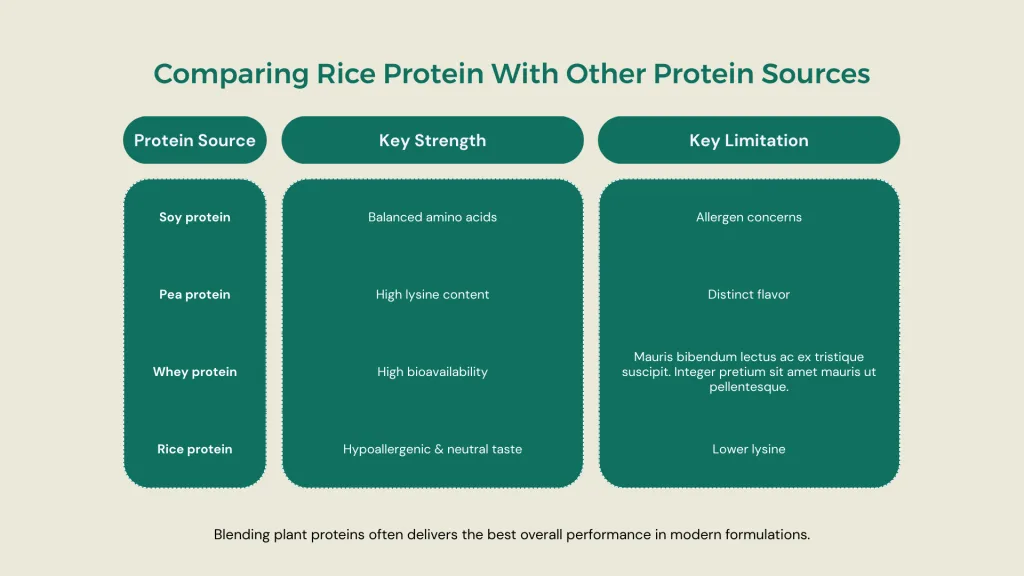
Rice protein contains all nine essential amino acids, which technically makes it a complete protein. However, it contains lower levels of lysine compared with some other protein sources.
This is a common characteristic of cereal proteins and can be easily addressed through thoughtful formulation.
Complementary Protein Strategies
Blending rice protein with other plant proteins—particularly pea protein—creates a more balanced amino acid profile. This approach is widely used to achieve nutritional quality comparable to animal protein.
Protein blending is now standard practice in:
- Plant-based beverages
- Protein powders
- Nutritional snacks
- Meat alternatives
When combined strategically, rice and pea proteins complement each other and deliver strong nutritional performance.
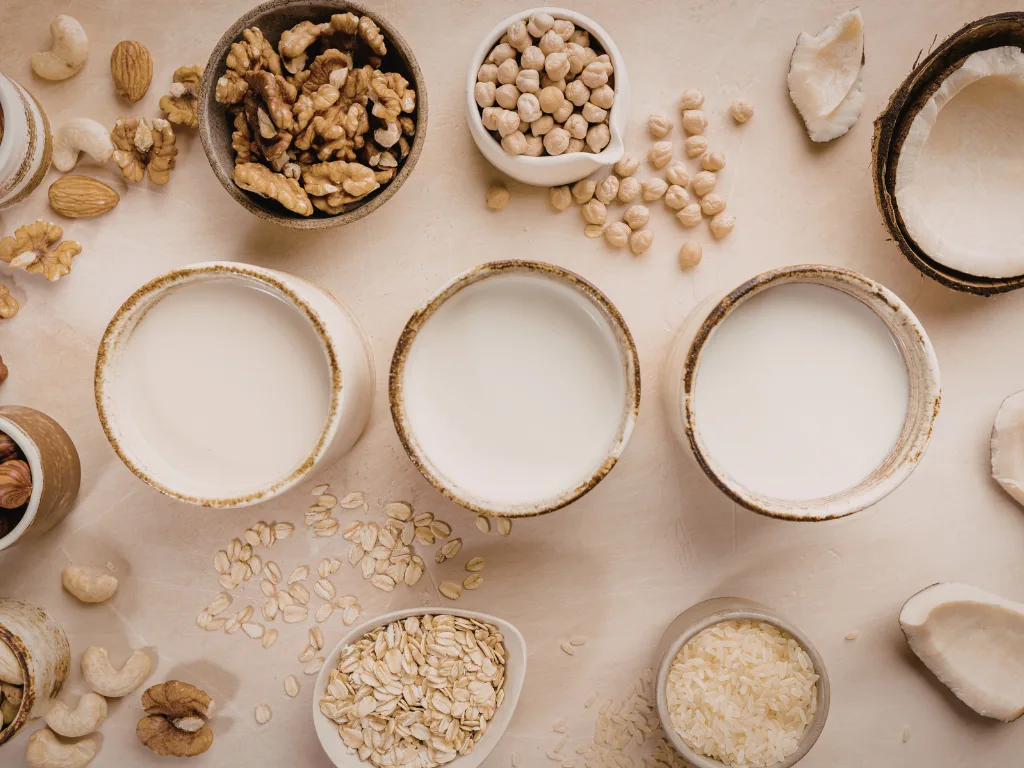
What Makes Rice Protein So Attractive for Plant-Based Products?
Hypoallergenic by Nature
Unlike soy, dairy, or wheat, rice protein is rarely associated with food allergies. This makes it especially valuable for:
- Infant and toddler nutrition
- Medical nutrition products
- Allergen-friendly food ranges
This broad compatibility allows manufacturers to reach wider consumer groups without compromising formulation flexibility.
Naturally Gluten-Free and Clean Label Friendly
Rice protein aligns perfectly with gluten-free product positioning and supports simple ingredient labeling. Its familiar origin also helps build consumer trust, which is increasingly important in global markets.
Mild Flavor and High Digestibility
Rice protein has a neutral taste and smooth texture, making it easier to incorporate into beverages and snacks compared with some other plant proteins. This reduces the need for flavor masking and simplifies product development.
Functional Benefits Beyond Nutrition
Rice protein contributes not only to nutritional value but also to product performance.
Texture and Mouthfeel Enhancement
Rice protein can improve:
- Structure in baked goods
- Creaminess in beverages
- Texture in snack products
These functional benefits make it a versatile ingredient across categories.
Emulsification and Stability
Rice protein supports emulsification and water binding, helping improve shelf life and consistency in:
- Dairy alternatives
- Sauces and dressings
- Plant-based meat products
These technical advantages are often just as important as its nutritional profile.
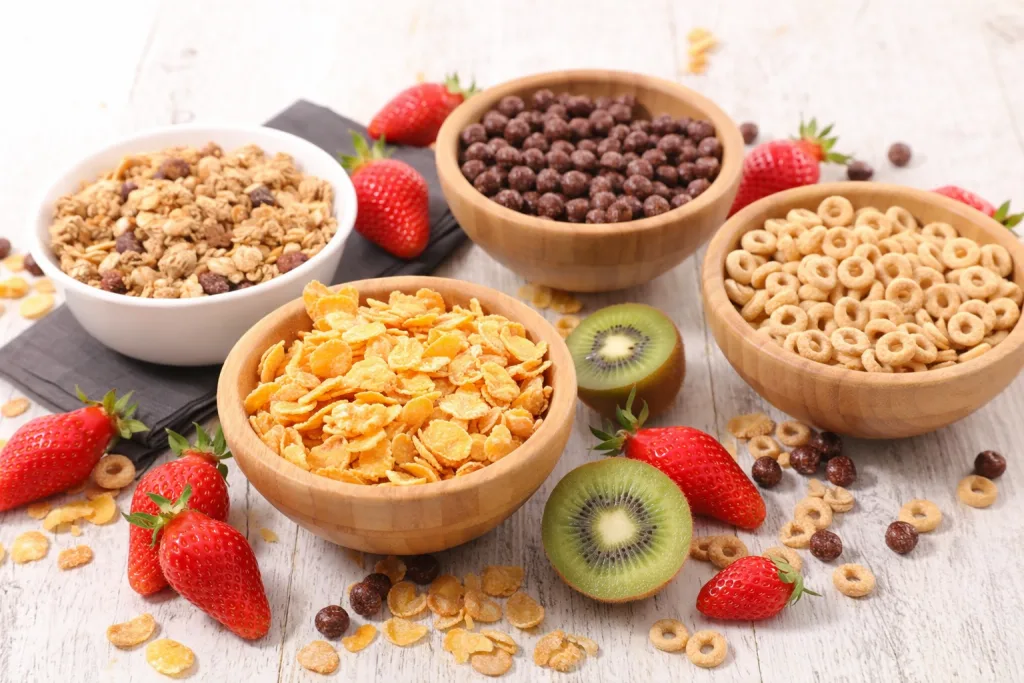
Key Applications Across Food & Beverage Categories
Plant-Based Beverages
Rice protein is widely used in ready-to-drink nutrition products, dairy alternatives, and meal replacement beverages due to its smooth texture and neutral flavor.
Sports and Active Nutrition
Demand for vegan protein continues to grow in sports nutrition. Rice protein supports:
- Post-workout recovery products
- Protein shakes and powders
- Functional hydration beverages
Bakery and Snack Innovation
Rice protein enables protein enrichment in:
- Breakfast cereals
- Cookies and biscuits
- Granola and snack bars
Protein-fortified snacks are one of the fastest-growing segments in the global food market.
Sustainability and Global Supply Advantages
Environmental considerations are increasingly shaping ingredient choices.
Rice protein offers several sustainability benefits:
- Lower environmental impact compared with animal protein
- Efficient agricultural production
- Reliable global supply chains
These factors support long-term product scalability and sustainability claims.
Aligning With Modern Consumer Expectations
Protein Fortification Across Everyday Foods
Consumers now expect protein in more than just shakes and bars. Demand is growing in:
- Breakfast products
- Ready meals
- Snacks and desserts
- Functional beverages
Rice protein helps manufacturers meet this demand without compromising taste or texture.
Clean Label and Ingredient Transparency
Consumers increasingly prefer recognizable ingredients and simple formulations. Rice protein supports both trends while maintaining flexibility across product categories.
Ingredient Solutions for Next-Generation Product Development
Today’s food innovation requires ingredients that deliver nutrition, functionality, and consumer appeal simultaneously.
Satoria Nutrisentials offers plant-based ingredient solutions designed to support manufacturers in developing competitive, forward-looking products, including:
- Rice protein isolate for protein enrichment
- Pea protein for complementary amino acid balance
- Resistant dextrin for fiber fortification
- Functional clean label ingredients for modern formulations
These ingredients help manufacturers develop products aligned with global nutrition and sustainability trends.
Build Your Next Plant-Based Innovation With Confidence
Rice has long been a staple food, but its role in modern product development continues to evolve. As a functional protein ingredient, rice protein offers manufacturers a versatile and consumer-friendly solution for protein fortification, plant-based innovation, and clean label formulation.
Explore how Satoria Nutrisentials can support your next product launch with high-quality plant-based ingredients designed for performance, scalability, and market success.
Reference
- United States Department of Agriculture. (2020). FoodData Central: Rice, white, cooked. https://fdc.nal.usda.gov/
- Food and Agriculture Organization. (2013). Dietary protein quality evaluation in human nutrition. https://www.fao.org/3/i3124e/i3124e.pdf
- World Health Organization. (2007). Protein and amino acid requirements in human nutrition. https://www.who.int/publications/i/item/9789241209359
- Tang, C. H. (2017). Rice protein: extraction, properties, and food applications. https://doi.org/10.1016/j.foodchem.2017.02.001
- Schaafsma, G. (2012). Advantages and limitations of the protein digestibility-corrected amino acid score (PDCAAS). https://doi.org/10.3945/ajcn.111.013623
Featured News
Category
Get a Promo and Keep Updated