
Rice Protein Isolate for Non-Dairy Sports Recovery RTD Shakes: A Formulator’s Guide
Sarcopenia Nutrition Ingredient: A Formulator’s Guide to Muscle Health Innovation
August 28, 2026
General - Articles
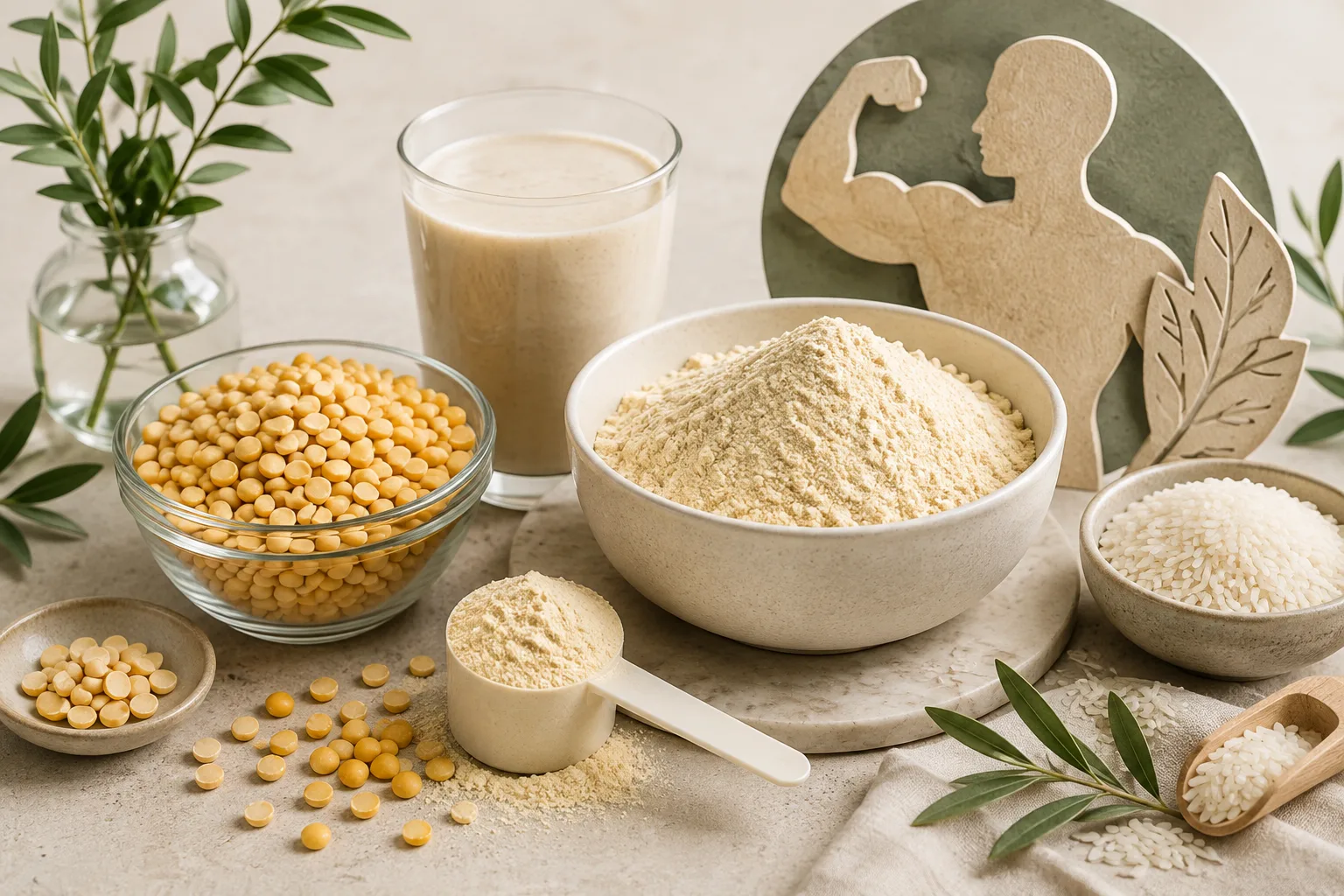
Muscle loss used to be treated as a quiet, inevitable part of getting older — something people mentioned to their doctor almost in passing. That has changed. Sarcopenia, the progressive loss of skeletal muscle mass and strength, is now recognized as a distinct clinical condition, and the food and beverage industry has taken notice.
For ingredient manufacturers and product developers, this shift represents a genuine formulation opportunity rather than just a marketing angle. This guide walks through what a sarcopenia nutrition ingredient actually needs to deliver, how plant-based proteins compare with whey, and what to look for in a muscle health ingredient supplier before committing to a supply partner.
Understanding Sarcopenia: The Silent Threat to Healthy Aging
Sarcopenia is the gradual loss of muscle mass, strength, and physical function that begins earlier than most people assume — often starting around age 40, long before it becomes noticeable. It was formally recognized with its own diagnostic code in 2016, which reflects just how seriously the medical community now treats it as a distinct health condition rather than a vague symptom of aging.
Estimates vary depending on the diagnostic criteria used, but sarcopenia is thought to affect roughly 10% to 16% of older adults worldwide, with far higher rates among hospitalized and nursing home populations. Left unaddressed, it raises the risk of falls, fractures, loss of independence, and a general decline in quality of life.
For manufacturers, this is exactly the kind of well-documented, high-stakes health concern that consumers and healthcare providers alike are actively seeking ingredients for — not a fringe wellness trend. That makes ingredients for sarcopenia a genuinely durable formulation category rather than a passing fad.
Muscle Protein Synthesis, Anabolic Resistance, and Why Protein Needs Change With Age
Muscle protein synthesis is the process by which the body rebuilds and maintains muscle tissue, and it’s the mechanism every effective muscle health ingredient ultimately has to support. In younger adults, this process responds efficiently to relatively modest amounts of dietary protein. In older adults, something called anabolic resistance sets in — muscle tissue becomes less responsive to the same protein dose, so it takes more to get the same effect.
This is where the science gets genuinely useful for formulators. The PROT-AGE Study Group’s widely cited position paper recommends that older adults consume 25 to 30 grams of high-quality protein per meal, delivering roughly 2.5 to 2.8 grams of leucine, to meaningfully stimulate muscle protein synthesis. That’s noticeably higher than the standard RDA of 0.8 grams of protein per kilogram of body weight, which most researchers now consider inadequate for this population.
So how much protein per meal for elderly muscle maintenance actually works? The consistent answer across the literature is: more than younger adults need, delivered with attention to leucine content, and ideally spread across three to four meals a day rather than loaded into one. That’s a formulation target, not just a nutrition footnote — it shapes serving size, protein density, and amino acid fortification decisions from the outset.
The Ingredient Innovation Race: Why Muscle Health Is the Next Big Formulation Opportunity
Muscle health has quietly moved out of the sports nutrition aisle and into the center of the healthy aging conversation. Industry analysts now point to three distinct consumer groups driving demand: adults over 50 who want to stay mobile and independent, women experiencing accelerated muscle loss during menopause, and a newer group — people using GLP-1 medications, who are losing lean muscle mass alongside fat at a pace that has caught formulators’ attention.
That last group deserves a closer look. As GLP-1 medication use has grown, so has clinical concern about the muscle loss that often accompanies rapid weight loss on these drugs. It’s created fast-moving demand for a genuinely new category: GLP-1 muscle loss nutrition ingredient solutions designed to help preserve lean mass during and after treatment.
For a protein ingredient supplier healthy aging brands can rely on, this convergence of trends — an aging population, a growing menopause-health category, and a brand-new GLP-1-adjacent market — adds up to sustained, diversified demand rather than a single narrow use case. It’s a rare situation where the science, the demographics, and the market are all pointing the same direction at once.
What to Look for in a Sarcopenia Nutrition Ingredient
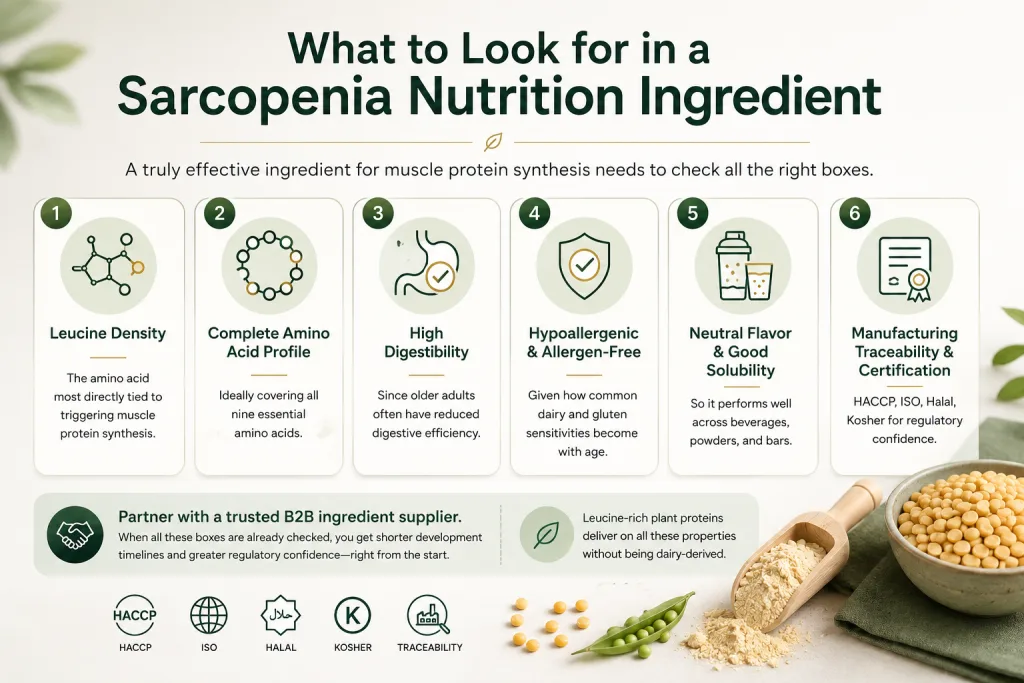
Not every protein source is equally suited to muscle health formulation. A genuinely effective functional ingredient for muscle protein synthesis needs to check several boxes at once, and it’s worth being deliberate about each one before locking in a formulation.
- Leucine density — the amino acid most directly tied to triggering muscle protein synthesis
- Complete amino acid profile, ideally covering all nine essential amino acids
- High digestibility, since older adults often have reduced digestive efficiency
- Hypoallergenic and allergen-free status, given how common dairy and gluten sensitivities become with age
- Neutral flavor and good solubility, so it performs well across beverages, powders, and bars
- Manufacturing traceability and certification (HACCP, ISO, Halal, Kosher) for regulatory confidence
Working with an established B2B ingredient supplier muscle wasting prevention formulators trust means these boxes are already checked before a single sample ships — which shortens development timelines considerably. It’s also worth remembering that a leucine-rich plant protein ingredient doesn’t have to sacrifice any of these properties just because it isn’t dairy-derived.
Plant-Based Protein vs Whey Protein for Sarcopenia Formulation
Whey protein has long been the reference standard in muscle health formulation, largely because of its naturally higher leucine content — studies put plant proteins at around 7% leucine by weight compared to roughly 8.8% for whey. That gap has traditionally made whey the go-to choice for fast-acting anabolic response.
But the plant-based protein vs whey protein for sarcopenia conversation has shifted meaningfully in recent years. A 2024 study measuring blood amino acid response after pea versus whey protein consumption in both younger and older adults found that, despite whey producing a sharper leucine spike, pea protein triggered comparable muscle protein synthesis activity at the cellular level. The researchers concluded pea protein isolates are a genuinely solid option for older adults who don’t consume enough animal-based protein.
This matters enormously for formulators. Demand for allergen-free, vegan, and lactose-free muscle health products keeps climbing, particularly across Asian and plant-forward Western markets. A well-formulated pea protein amino acid profile for muscle health — especially when paired with a complementary plant protein to round out limiting amino acids — can deliver a genuinely competitive alternative to dairy-based options without asking consumers to compromise on efficacy.
Pea Protein Isolate for Elderly Nutrition
Satoria Nutrisentials’ Pea Protein & Pea Protein Isolate is derived from yellow peas and offers a naturally complete amino acid profile, including a strong concentration of branched-chain amino acids that support muscle growth and recovery. It’s hypoallergenic, non-GMO, and easily digestible — properties that matter just as much for an 80-year-old with sensitive digestion as they do for a younger athlete.
For manufacturers building a pea protein isolate for elderly nutrition formulation, the isolate form is particularly useful: it concentrates protein content while lowering fat and carbohydrate levels, giving formulators more flexibility to hit that 25-to-30-gram per-meal protein target without bulking up a product unnecessarily.
Rice Protein Isolate for Sarcopenia Formulation
Rice protein plays a complementary role. Satoria’s Rice Protein Isolate is extracted from brown rice and delivers over 80% protein content with a neutral flavor and strong digestibility. It’s slightly lower in lysine on its own, but that’s exactly where it shines — paired with a lysine-rich protein like pea, it rounds out into a genuinely complete amino acid profile.
A rice protein isolate sarcopenia formulation blended with pea protein isolate gives formulators a fully plant-based, dual-source protein system that’s hypoallergenic across the board — dairy-free, soy-free, and gluten-free — which broadens the addressable consumer base considerably for products aimed at older adults with multiple dietary restrictions.
Formulating for OEM Protein Powders, Clinical Nutrition, and Beyond
The applications for a well-designed sarcopenia nutrition ingredient extend well past the protein powder tub. Ready-to-drink shakes, fortified dairy alternatives, protein-enriched bars, and clinical nutrition formats — including enteral feeding and medical nutrition products — all depend on the same underlying protein quality, but each format brings its own solubility, viscosity, and taste requirements.
This is where working with an OEM protein powder for seniors manufacturer that already understands healthy-aging formulation pays off. Getting a vegan protein ingredient for medical nutrition to perform well in a clinical-format beverage, for instance, requires a different processing approach than a consumer-facing shake — solubility and mouthfeel matter more when a product needs to be easy to consume for someone with reduced appetite or swallowing difficulty.
There’s also a natural overlap with meal replacement formulation, an area many of the same B2B buyers are already exploring — Satoria’s guide on high protein meal replacement formulation covers many of the same protein-density and digestibility considerations that apply directly to muscle-health-focused products. Whether you’re chasing the protein ingredient for enteral and clinical nutrition aging category or simply asking what makes the best protein for sarcopenia in a mainstream protein shakes for seniors ingredient lineup, the fundamentals — leucine density, digestibility, and allergen profile — stay consistent.
Muscle Health Across Life Stages: Connecting Sarcopenia to Broader Nutrition Trends
Sarcopenia doesn’t begin the day someone turns 65 — muscle mass decline can start decades earlier, and certain life stages accelerate it. Menopause is one of the clearest examples: the drop in estrogen during this transition is linked to a faster rate of lean muscle loss, which is why a menopause muscle health ingredient angle is gaining real traction among formulators targeting women’s health products.
This connects naturally to broader nutrition strategy. Satoria’s earlier guide on women’s health nutrition across every life stage explores how ingredient needs shift from one hormonal stage to the next, and muscle-supportive protein fits squarely into that framework, particularly for products targeting women in their 40s and beyond. Building a product line with this kind of layered life-stage thinking — rather than treating muscle health as an isolated, over-65 category — tends to resonate with a wider and more loyal customer base.
Partner With a Muscle Health Ingredient Supplier You Can Trust
Formulating for sarcopenia isn’t about chasing a trend — it’s about meeting a well-documented nutritional need with ingredients that actually perform. Satoria Nutrisentials brings world-class integrated manufacturing to exactly this kind of challenge, combining Pea Protein Isolate and Rice Protein Isolate with the food safety credentials — HACCP, ISO, Halal, and GMP — that formulators and their compliance teams need to see.
Whether you’re developing a new healthy-aging protein line, exploring OEM and toll manufacturing for a clinical nutrition format, or simply want to talk through amino acid profiles with a food scientist, the team is ready to help. Consult your needs with Satoria Nutrisentials and start building a muscle health formulation that’s backed by real manufacturing capability, not just a claim on a label.
References
- Anker, S. D., Morley, J. E., & von Haehling, S. (2016). Welcome to the ICD-10 code for sarcopenia. Journal of Cachexia, Sarcopenia and Muscle, 7(5), 512–514. https://doi.org/10.1002/jcsm.12147
- Bauer, J., Biolo, G., Cederholm, T., Cesari, M., Cruz-Jentoft, A. J., Morley, J. E., Phillips, S., Sieber, C., Stehle, P., Teta, D., Visvanathan, R., Volpi, E., & Boirie, Y. (2013). Evidence-based recommendations for optimal dietary protein intake in older people: A position paper from the PROT-AGE Study Group. Journal of the American Medical Directors Association, 14(8), 542–559. https://doi.org/10.1016/j.jamda.2013.05.021
- Petermann-Rocha, F., Balntzi, V., Gray, S. R., Lara, J., Ho, F. K., Pell, J. P., & Celis-Morales, C. (2022). Global prevalence of sarcopenia and severe sarcopenia: A systematic review and meta-analysis. Journal of Cachexia, Sarcopenia and Muscle, 13(1), 86–99. https://doi.org/10.1002/jcsm.12783
- Shafiee, G., Keshtkar, A., Soltani, A., Ahadi, Z., Larijani, B., & Heshmat, R. (2023). Epidemiology of sarcopenia: Prevalence, risk factors, and consequences. Metabolism, 142, 155533. https://www.metabolismjournal.com/article/S0026-0495(23)00136-1/fulltext
- Berrazaga, I., Bianchi, F., Guillet, C., Neveux, N., Sardou, M. L., Buffière, C., Dardevet, D., Migné, C., Blot, A., Remond, D., & Walrand, S. (2024). Circulating amino acid concentration after the consumption of pea or whey proteins in young and older adults affects protein synthesis in C2C12 myotubes. Nutrients, 16(17), 2870. https://doi.org/10.3390/nu16172870
- Wilkinson, D. J., Bukhari, S. S. I., Phillips, B. E., Limb, M. C., Cegielski, J., Brook, M. S., Rankin, D., Mitchell, W. K., Kobayashi, H., Williams, J. P., Lund, J., Greenhaff, P. L., Smith, K., & Atherton, P. J. (2018). Effects of leucine-enriched essential amino acid and whey protein bolus dosing upon skeletal muscle protein synthesis at rest and after exercise in older women. Clinical Nutrition, 37(6), 2011–2021. https://www.ncbi.nlm.nih.gov/pmc/articles/PMC6208353/
- Nutraceuticals World. (2026, March 26). Muscles and mobility: Setting a foundation for performance and healthy aging. https://www.nutraceuticalsworld.com/muscles-and-mobility-setting-a-foundation-for-performance-and-healthy-aging/
- National Institute on Aging. (2022). Sarcopenia with aging. U.S. Department of Health and Human Services. https://www.nia.nih.gov/health/sarcopenia-muscle-loss-and-aging
Featured News
Category
Get a Promo and Keep Updated