
Toll Manufacturing Biscuit Indonesia: A Strategic Guide for Brands Scaling Production with Functional Ingredients
Sugar Alternative for Weight Loss: How Modern Ingredients Are Transforming Better-For-You Formulations
January 26, 2026
Natural Sweeteners - Articles

In the rapidly evolving health and wellness market, consumer demand for low-calorie, low-sugar, and weight-management products continues to surge. Brands across beverages, snacks, bakery, supplements, and ready-to-eat meals are actively seeking a reliable sugar alternative for weight loss that supports clean-label positioning while improving nutritional profiles.
For B2B manufacturers, formulators, and product developers, the challenge is balancing taste, texture, stability, and regulatory compliance—without compromising on cost efficiency or product performance. This is where innovative functional ingredients such as resistant dextrin, SweetSentials™ blended sweeteners, and pea protein from Satoria Nutrisentials play a transformative role in modern food and beverage development.
This article explores the science behind weight-management sweeteners, the growing market trends, why sugar alternatives are essential today, and how Satoria Nutrisentials’ clean-label ingredient solutions can help companies formulate products that consumers trust.
Understanding the Demand for Sugar Alternatives in Weight-Loss Products
The global food and beverage sector is shifting toward healthier consumption habits. Consumers are reading labels, counting calories, and prioritizing metabolic health. As obesity, insulin resistance, and lifestyle-related conditions rise, brands are looking for ingredient systems that provide sweetness without excessive energy intake.
Several factors are driving this change:
- Rising awareness of obesity and metabolic health
- Growing interest in “no added sugar” and “low sugar” claims
- Government regulations on sugar taxes
- Shift toward long-term sustainable weight management
- Increasing demand for functional, clean-label ingredients
For weight-focused consumers, controlling sugar intake is not only about calories—it is also about managing blood sugar response, cravings, energy levels, and hormonal balance.
This creates an enormous opportunity for brands that can effectively replace sugar without compromising sensory appeal.
Why Sugar Reduction Matters for Weight Loss
Reducing sugar is one of the most effective strategies for supporting weight management. High sugar consumption often contributes to fat storage, hunger spikes, and excessive caloric intake. By choosing sugar alternatives for weight loss, manufacturers can help consumers stay satisfied while avoiding metabolic fluctuations.
Key benefits of lowering sugar in formulations
- Reduced calorie density, enabling lower-calorie products
- Improved glycemic response, supporting metabolic stability
- Lower risk of cravings thanks to stable blood sugar levels
- Better satiety, especially when paired with fiber or protein
- Support for long-term sustainable weight health
When sugar is reduced or removed, however, product developers must address challenges such as bulking, mouthfeel, aftertaste, browning, and stability. This is why ingredient innovation is central to next-generation low-sugar formulation.
Types of Sugar Alternatives Used in Weight-Management Products
Not all sweeteners behave the same. Each category offers unique functionalities, benefits, and formulation considerations. Below are the most commonly used sugar alternatives in weight-loss-oriented manufacturing.
Natural Low-Calorie Sweeteners
These offer sweetness without high caloric load:
- Stevia
- Monk fruit
- Allulose
They are suitable for beverages, confectionery, and bakery, but can sometimes introduce aftertaste or require blending.
Sugar Alcohols
Sugar alcohols such as erythritol or xylitol provide sweetness at fewer calories but may cause digestive discomfort at high levels.
Functional Carbohydrates
This category includes resistant dextrin, a low-glycemic, low-calorie fiber that provides mild sweetness plus bulking, solubility, and stability.
Blended Systems
Sweetener blends like SweetSentials™ combine various sweeteners and bulking agents to create sugar-like taste and performance with reduced calories.
These categories allow brands to tailor sweetness, stability, and nutritional benefits depending on the product application.
Resistant Dextrin as a Sugar Alternative for Weight Loss
One of the most promising functional carbohydrates in modern low-sugar formulations is resistant dextrin. Unlike traditional sugars, resistant dextrin behaves as a soluble dietary fiber with minimal caloric impact.
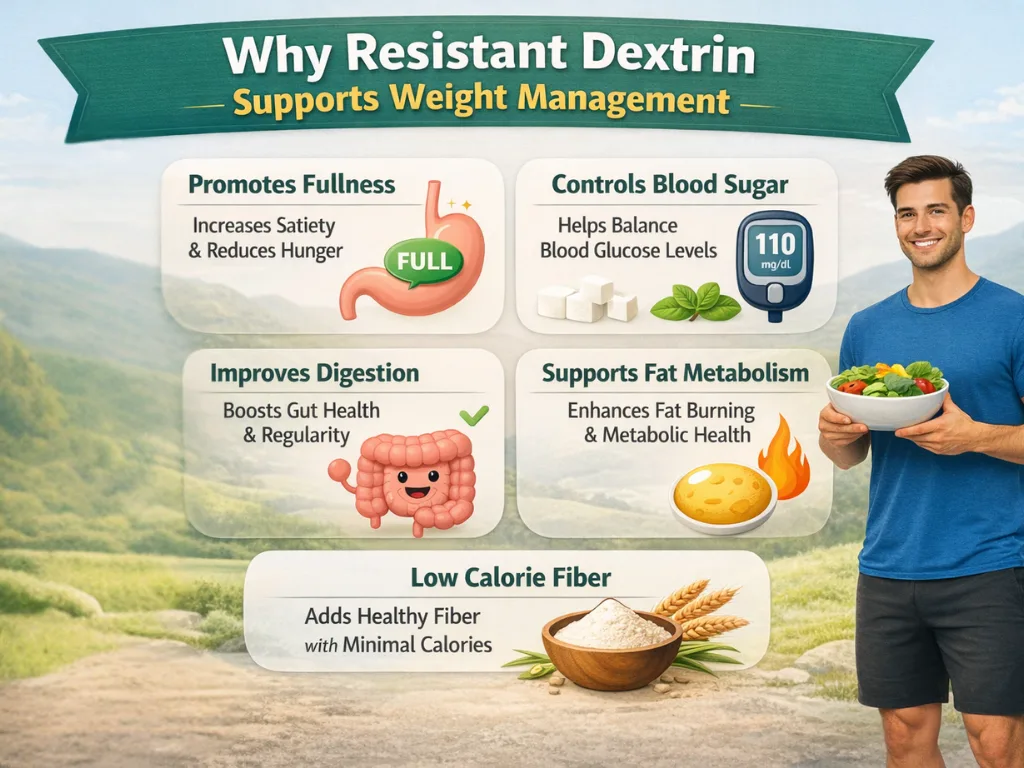
Why Resistant Dextrin Supports Weight Management
Resistant dextrin is highly valued for weight-management applications because:
- It has a very low glycemic impact
- It contributes minimal calories
- It improves satiety by slowing digestion
- It supports gut health through prebiotic activity
- It helps reduce post-meal glucose spikes
For product developers, resistant dextrin is an exceptional multi-functional ingredient that enhances nutritional value while supporting clean-label messaging.
Functional Benefits in Formulations
Resistant dextrin provides:
- Excellent solubility in hot and cold applications
- Clear transparency in beverages
- Heat and pH stability
- Neutral taste
- Bulking capabilities
- Improved mouthfeel
- Reduced sugar load without compromising sweetness when combined with other ingredients
It can replace sugar partially or entirely, depending on formulation needs.
SweetSentials™: Tailored Sugar Alternative Systems for Better-For-You Formulations
While single-ingredient sweeteners have limitations, blended systems such as SweetSentials™ offer balanced sweetness and performance. These blends can be customized for caloric reduction, glycemic control, bulking, and improved sensory experience.
Advantages of SweetSentials™ Blends
- Sugar-like sweetness profile
- Clean aftertaste
- Heat-stable for baking and beverages
- Ideal for “no added sugar” and “low calorie” claims
- Synergistic combinations that optimize cost and functionality
- Customizable depending on product category
For brands targeting the weight-loss and better-for-you markets, SweetSentials™ helps bridge the gap between consumer health expectations and product performance.
How Pea Protein Enhances Weight-Loss-Focused Formulations
Although not a direct sweetener, pea protein plays a crucial role in low-sugar product development. Weight-loss consumers often seek higher protein intake for metabolic support, satiety, and muscle preservation.
Benefits of Pea Protein in Weight Management
- Helps maintain lean muscle mass
- Increases satiety and reduces hunger
- Supports stable blood sugar
- Works synergistically with high-fiber, low-sugar systems
- Enables “high protein” or “protein fortified” claims
Pea protein is particularly valuable for plant-based, dairy-free, and clean-label products.
Functional Applications
Pea protein is widely used in:
- Protein bars
- RTD beverages
- Meal replacements
- Weight-management shakes
- High-protein snacks
- Plant-based bakery items
Combining pea protein with resistant dextrin and SweetSentials™ creates the ideal foundation for weight-management product lines.
Key Product Applications Using Sugar Alternatives for Weight Loss
B2B food manufacturers can apply these sugar alternatives across numerous categories. Below are examples of commercially viable applications.
Beverages
- Low-sugar RTD teas
- Functional sodas
- Electrolyte drinks
- Meal replacement beverages
- Protein shakes
Resistant dextrin provides clarity, body, and stability, while SweetSentials™ enhances taste.
Bakery
- Low-sugar cookies
- High-protein muffins
- Fiber-boosted pastries
SweetSentials™ improves browning and sweetness, while resistant dextrin acts as a bulking agent.
Snacks
- Weight-loss granola
- Protein chips
- High-fiber crackers
Resistant dextrin reduces net carbs and adds crunch.
Supplements
- Fiber powders
- Weight-management shakes
- Satiety blends
- Digestive health products
Pea protein and resistant dextrin together create better satiety profiles.
Why Satoria Nutrisentials Is a Leading Partner in Sugar Reduction and Weight-Management Innovation
Satoria Nutrisentials specializes in functional ingredients designed for the next generation of better-for-you product innovation. Its portfolio offers scientifically backed, premium-quality ingredients that help manufacturers reduce sugar while enhancing nutrition.
What Sets Satoria Nutrisentials Apart
- High purity raw materials
- Reliable supply and consistent quality
- Clean-label solutions suitable for global markets
- Technical support for formulation challenges
- Ingredients backed by literature and application research
- Bulk, B2B-focused supply chain capabilities
With a strong commitment to research, innovation, and manufacturer support, Satoria Nutrisentials is a trusted partner for brands developing low-sugar, high-functionality products.
Market Trends: Why Sugar Alternatives Are the Future of Weight-Management Formulation
The weight-management market is expected to grow significantly in the next decade due to the rise of diabetes, obesity, and health-conscious consumers. Products that offer sweetness and satisfaction—without sugar—will continue to dominate retail shelves.
Key trends include:
- “No added sugar” becoming a baseline consumer expectation
- Increased demand for gut-friendly ingredients
- Rising popularity of high-fiber beverages and snacks
- Growth of plant-based proteins
- Surge in functional drinks for metabolism and energy
- Preference for clean-label, simple ingredient lists
Brands that can innovate fast and formulate smartly will capture market share more easily.
How Manufacturers Can Formulate Effective Sugar-Reduced Products
To successfully develop low-sugar products that support weight management, manufacturers should consider the following formulation strategies:
Combine Fiber + Sweetener Blends
Using resistant dextrin for bulk and SweetSentials™ for sweetness mimics sugar’s sensory qualities.
Add Protein for Satiety
Pea protein increases fullness and enhances nutritional value.
Optimize Mouthfeel
A combination of fibers and proteins replicates the smooth texture typically driven by sugar.
Ensure Regulatory Compliance
Claims such as “low calorie,” “reduced sugar,” and “high fiber” must meet regulatory thresholds.
Validate Stability and Shelf Life
Testing pH, heat stability, and solubility ensures product quality across applications.
Partner With Satoria Nutrisentials for Smarter Weight-Loss Product Development
If your brand is exploring sugar reduction, fiber enhancement, or weight-management product launches, Satoria Nutrisentials offers ingredient solutions that improve functionality, nutritional value, and cost efficiency.
Whether you are formulating beverages, snacks, supplements, or bakery products, Satoria Nutrisentials can support you with:
- Resistant Dextrin for fiber enrichment and sugar reduction
- SweetSentials™ Sweetener Blends for clean, balanced sweetness
- Pea Protein for satiating, high-protein applications
- Technical formulation support to help you innovate faster
Ready to Develop Your Next Low-Sugar Innovation With Satoria Nutrisentials?
Let Satoria Nutrisentials help you create better-for-you products that align with today’s weight-management, clean-label, and functional nutrition demands. Whether you need guidance on selecting the right ingredient system or require tailored support for product development, the Satoria team is ready to collaborate with your brand.
Connect with Satoria Nutrisentials today to elevate your product line with science-backed, high-performance sugar alternatives and functional ingredients.
Reference
- Harvard T.H. Chan School of Public Health. (n.d.). The sweet danger of sugar. https://www.hsph.harvard.edu/nutritionsource/carbohydrates/added-sugar-in-the-diet/
- World Health Organization. (2023). Guideline: Sugars intake for adults and children. https://www.who.int/publications/i/item/9789241549028
- U.S. Food & Drug Administration. (2022). Low and no calorie sweeteners. https://www.fda.gov/food/food-additives-petitions/low-and-no-calorie-sweeteners
- International Food Information Council. (2022). Consumer perceptions of sweeteners and sugar reduction. https://foodinsight.org
- Benedict, M., & Zhang, X. (2017). Resistant starch and health outcomes. Journal of Functional Foods. https://doi.org/10.1016/j.jff.2017.04.032
- Zhao, L., Zhang, F., et al. (2018). Gut microbiota and obesity: The role of probiotics and prebiotics. Nutrients. https://doi.org/10.3390/nu10081073
Featured News
Category
Get a Promo and Keep Updated