
Rice Protein Isolate for Non-Dairy Sports Recovery RTD Shakes: A Formulator’s Guide
Why Choosing a Kosher Certified Food Ingredient Manufacturer Matters More Than Ever
May 21, 2026
General - Articles
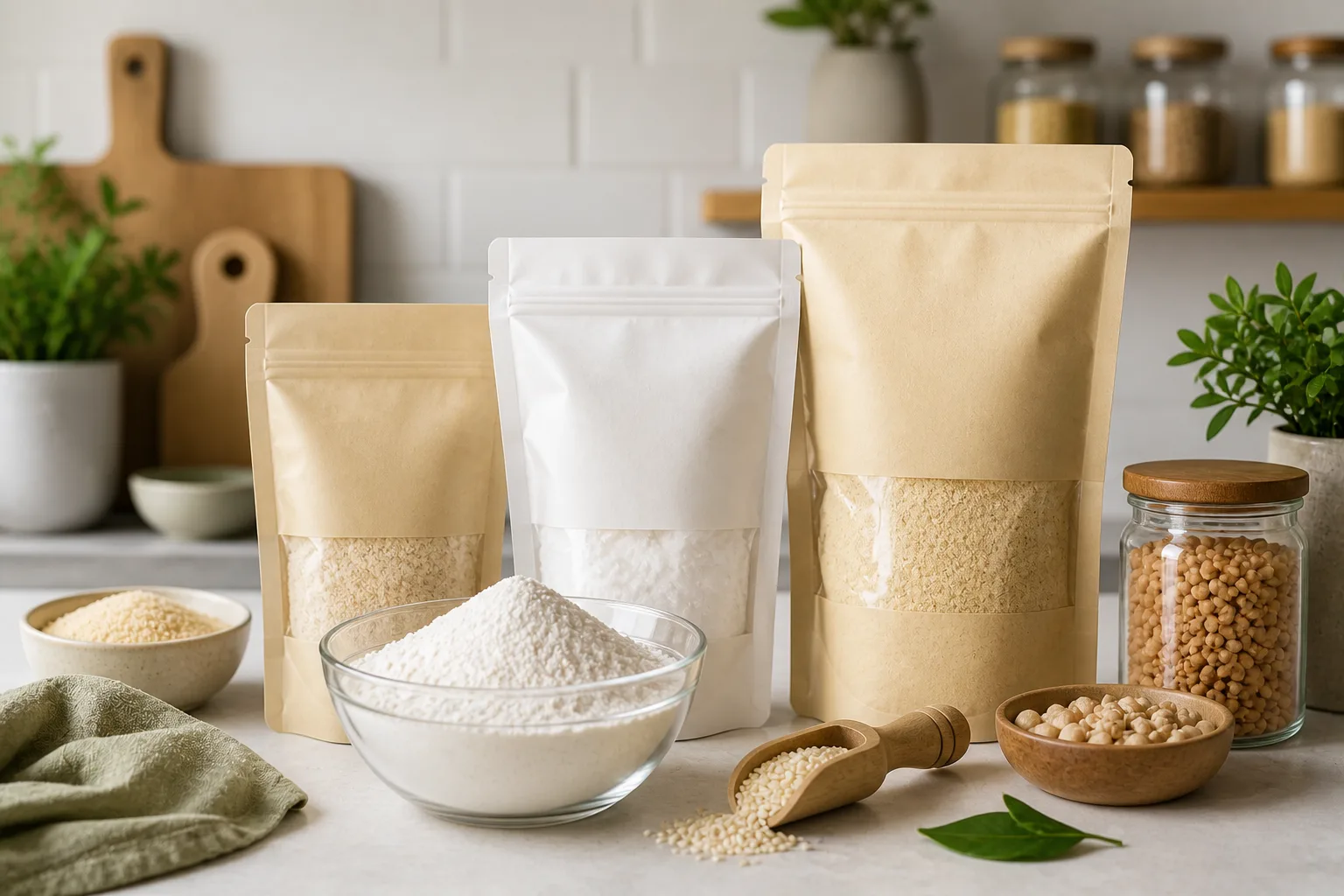
Food transparency has never been more important. Consumers are reading labels, researching brands, and asking harder questions about where their ingredients come from — and how they were made. In this environment, the certifications a manufacturer holds aren’t just bureaucratic badges. They’re powerful signals of quality, accountability, and trust.
Kosher certification is one of those signals — and it’s one that many food businesses still underestimate. Whether you’re a product developer sourcing ingredients, a contract manufacturer building a client roster, or a brand looking to expand into new markets, working with a kosher certified food ingredient manufacturer can open doors you may not have considered.
So why does kosher certification matter more now than it did a decade ago? And what should you look for when choosing a kosher food ingredient supplier? Let’s break it down.
What Kosher Certification Actually Means — And Why It Goes Beyond Religion
Most people associate kosher certification with Jewish dietary law, and that’s accurate as a starting point. But the functional value of kosher certification extends well beyond its religious roots. At its core, kosher certification means that a product has been produced according to a stringent, independently verified set of standards — covering everything from ingredient sourcing and production equipment to facility cleanliness and cross-contamination controls.
To earn and maintain kosher status, a manufacturer must undergo regular audits by a recognized kosher certifying authority. Inspectors examine ingredient lists, supplier documentation, production line procedures, and cleaning protocols. Nothing is taken on good faith — it must be documented and verified.
The result? A production process that is inherently more transparent and traceable than standard manufacturing. This is why kosher ingredient traceability has become a selling point not just for religiously observant consumers, but for health-focused brands, clean-label advocates, and global buyers who want full visibility into their supply chain.
The Growing Global Demand for Certified Ingredients
Here’s a market reality worth paying attention to: the global kosher food market has been growing steadily for years, and the majority of kosher product consumers aren’t buying for religious reasons. Studies consistently show that health consciousness, ingredient purity, and a general distrust of vague sourcing claims are the primary drivers behind the demand for certified foods.
At the same time, premium and functional food segments are booming. Sports nutrition, gut health, infant formula, clinical nutrition, and plant-based categories are all markets where buyers scrutinize ingredient credentials closely. A kosher non-GMO food ingredient, for example, carries a dual assurance — one that appeals to both health-driven consumers and ethically minded buyers.
For food businesses looking to export or expand internationally, kosher certification is often a prerequisite for entering markets in the United States, Canada, Europe, and Australia. It’s not a nice-to-have — it’s a market access requirement. Partnering with a bulk kosher food ingredient supplier from the start means you’re building on a foundation that scales.
Kosher Certification as a Mark of Ingredient Integrity
One of the most compelling reasons to prioritise a kosher certified food ingredient manufacturer is what the certification implicitly communicates about ingredient quality. Kosher standards are precise about what goes into a product — every ingredient must be verified, every supplier vetted, and every processing aid accounted for. There is no room for ambiguity.
This level of scrutiny means that kosher certified ingredients tend to have cleaner, more transparent profiles by default. For product developers working in sensitive categories — infant nutrition, clinical food products, premium supplements, or allergen-controlled formulations — sourcing from a kosher food ingredient supplier adds a meaningful layer of ingredient assurance that’s difficult to replicate through internal QA alone.
Beyond the process, there’s the consumer perception angle. Shoppers who prioritise food purity — whether they’re health-conscious, label-savvy, or simply cautious about what they consume — increasingly recognise the kosher mark as a proxy for quality. It signals that someone, outside the manufacturer, has checked the work. In a market where trust is earned slowly and lost quickly, that independent verification carries real weight.
What to Look for in a Kosher Certified Contract Food Manufacturer
Not all kosher certifications are equal, and not all manufacturers who hold kosher status operate to the same standard. When evaluating a kosher certified contract food manufacturer, there are several key criteria worth examining closely.
Recognised Certifying Authority
Look for certification from an internationally recognised kosher certifying body — such as the Orthodox Union (OU), KA Kosher, or in the case of Oceania, a body with Australian recognition. The certifying authority matters because it determines how broadly your products can be marketed as kosher.
Full Ingredient Traceability
A credible manufacturer should be able to trace every ingredient back to its source. Kosher certification requires this documentation as a matter of course, which means kosher ingredient traceability is baked into the process — not tacked on after the fact.
Integration with Other Quality Standards
Kosher certification alone is a good sign. Kosher certification alongside ISO 22000, FSSC 22000, HACCP, and non-GMO verification is an excellent sign. Look for manufacturers who maintain a comprehensive quality framework — not just a single credential.
Experience with Private Label
If you’re building your own brand, private label kosher food ingredients give you the flexibility to bring certified products to market without building manufacturing infrastructure yourself. A good kosher certified manufacturer will have established private label programs with confidentiality protections built in.
The Traceability Advantage: Why Kosher Sets a Higher Bar
Ingredient traceability has become a hot topic in food safety circles — and for good reason. Contamination events, mislabelled allergens, and undisclosed ingredient substitutions have shaken consumer confidence in recent years. Regulatory bodies around the world are tightening requirements for supply chain documentation, and brands are increasingly held responsible for the integrity of their entire ingredient chain — not just their finished product.
This is where the importance of kosher certification in food production becomes practically indisputable. Because kosher audits require documented traceability at every stage — from raw material sourcing to final packaging — manufacturers who hold kosher status are already operating at a level of supply chain visibility that many competitors are still working to achieve.
For food businesses, this means lower compliance risk, easier audit preparation, and a stronger position when responding to customer or retailer inquiries about ingredient sourcing. Working with a supplier that already operates at this level of transparency is simply good risk management.
Kosher Non-GMO Ingredients: Meeting the Clean Label Moment
The clean label movement shows no signs of slowing. Shoppers want shorter ingredient lists, recognisable ingredients, and assurance that what’s in their food hasn’t been genetically modified. For product developers, this creates a formulation challenge — you need ingredients that perform well technically while also meeting increasingly demanding label requirements.
Kosher non-GMO food ingredients solve a significant portion of this puzzle. The combination of kosher certification and non-GMO verification provides a layered assurance that resonates with health-conscious consumers across a wide demographic range. It’s particularly relevant in functional food and beverage categories, where the ingredient story is often as important as the nutrient profile.
Ingredients like resistant dextrin, pea protein isolate, rice protein, and tapioca-based sweeteners are all naturally well-suited to kosher non-GMO formulation. These are ingredients with clean, plant-based profiles that perform across categories — from protein supplements and meal replacements to baked goods, beverages, and gut health products.
How Kosher Certification Supports Market Expansion
If your brand has ambitions beyond your home market, kosher certification is a strategic asset. In the United States — the world’s largest market for functional and specialty foods — kosher labelling is recognised and trusted by millions of shoppers, regardless of religious affiliation. In Canada, Australia, and across Europe, similar dynamics apply.
For brands sourcing from a bulk kosher food ingredient supplier in Asia, the ability to obtain kosher-certified ingredients at scale is a significant competitive advantage. It allows you to manufacture at lower cost while still meeting the certification requirements of high-value export markets.
The economics work both ways. Why choose a kosher food supplier? Because it lets you access premium markets without premium manufacturing costs — especially when you’re working with a manufacturer who holds multiple certifications and can support private label production.
Satoria Nutrisentials: Certified Ingredients for Serious Food Brands
If you’re looking for a kosher food ingredient supplier that combines rigorous certification with a broad product range, Satoria Nutrisentials is worth a close look. Based in Indonesia, Satoria operates a fully integrated manufacturing facility and holds an impressive stack of credentials — including Australian Kosher certification, Halal certification, FSSC 22000, ISO 22000, HACCP, Non-GMO, USDA Organic, FDA, and BPOM compliance.
This makes Satoria a genuine kosher and halal certified manufacturer — one of relatively few in Southeast Asia capable of supporting both certifications simultaneously across its full product range. And the product range itself is broad.
Their industrial ingredient catalogue includes:
- Resistant Dextrin — a prebiotic soluble fibre with applications across beverages, baked goods, and gut health products
- Rice Protein Isolate and Pea Protein Isolate — plant-based protein sources with clean label appeal
- Rice Maltodextrin and Pea Maltodextrin — functional carbohydrates for sports nutrition and texture management
- Rice Syrup and Tapioca Syrup — natural sweeteners suited to clean label formulation
- SweetSentials — an erythritol-based sugar alternative with low glycaemic impact
All of these are available in bulk quantities for industrial use, with OEM and private label kosher food ingredients options available for brands that want to bring finished products to market under their own name. Satoria’s confidentiality commitments mean your formulations stay yours.
Ready to Source Certified Ingredients That Open Global Doors?
If you’re building a food brand that needs to compete on quality, transparency, and market access — the ingredient decisions you make now will shape everything that follows. Working with a kosher certified food ingredient manufacturer isn’t just a compliance decision. It’s a strategic one.
Satoria Nutrisentials offers world-class integrated food manufacturing solutions built on a foundation of rigorous certification, traceability, and innovation. Whether you need bulk kosher food ingredients for large-scale production, or private label support to bring a new product line to market, their team is ready to help you build something that stands out on any shelf, in any market.
Explore Satoria Nutrisentials’ full range of certified ingredients and manufacturing solutions — and take the first step toward a supply chain you can be proud of.
References
- Mintel. (2022). Kosher food global trends and consumer demand. Mintel Group. https://www.mintel.com/food-and-drink-market-news/
- Regenstein, J. M., Chaudry, M. M., & Regenstein, C. E. (2003). The kosher and halal food laws. Comprehensive Reviews in Food Science and Food Safety, 2(3), 111–127. https://doi.org/10.1111/j.1541-4337.2003.tb00018.x
- Food and Agriculture Organization of the United Nations. (2021). Understanding food labelling. FAO. https://www.fao.org/food-labelling/en/
- World Health Organization. (2020). Food safety: Key facts. WHO. https://www.who.int/news-room/fact-sheets/detail/food-safety
- U.S. Food and Drug Administration. (2023). Food traceability rule. FDA. https://www.fda.gov/food/food-safety-modernization-act-fsma/fsma-final-rule-food-traceability
- Codex Alimentarius Commission. (2020). General principles of food hygiene (CXC 1-1969). FAO/WHO. https://www.fao.org/fao-who-codexalimentarius/thematic-areas/food-hygiene/en/
- Grand View Research. (2023). Kosher food market size, share and trends analysis report. Grand View Research. https://www.grandviewresearch.com/industry-analysis/kosher-food-market
- Lim, H., & Lim, S. (2021). Trends in clean label and natural food ingredient demand. Journal of Food Science and Technology, 58(4), 1225–1234. https://doi.org/10.1007/s13197-020-04814-3
Featured News
Category
Get a Promo and Keep Updated