
Rice Protein Isolate for Non-Dairy Sports Recovery RTD Shakes: A Formulator’s Guide
Is Dextrin Bad for You? A Science-Based Guide for Health-Conscious Consumers
September 27, 2025
Resistant Dextrin - Articles

Introduction: Understanding the Dextrin Debate
When people search “is dextrin bad for you,” they are often confused by the conflicting information online. Dextrin is a carbohydrate derived from starches such as corn, wheat, or tapioca, and it is used in everything from processed foods to supplements. Some sources highlight its use as a stabilizer or thickener, while others raise concerns about blood sugar spikes, digestion, and long-term health impacts.
This article unpacks the question in detail: what dextrin is, when it may be beneficial, and when it could raise health concerns. Most importantly, we will explore why resistant dextrin — a specific type recognized by Health Canada dietary fiber guidelines — is not only safe but also beneficial for gut health, blood glucose management, and functional foods.
By the end, you’ll have a clear, evidence-based perspective and know how to evaluate dextrin in your diet or product formulations.
What Is Dextrin?
Dextrin is a group of low-molecular-weight carbohydrates formed when starch is broken down through hydrolysis.
Types of Dextrin
- White dextrin – often used as a food additive in sauces, coatings, or adhesives.
- Yellow dextrin – primarily used in industrial applications.
- Resistant dextrin – an indigestible form that functions as dietary fiber.
The key difference lies in digestibility. Standard dextrin is quickly broken down into glucose, making it a high glycemic index ingredient. In contrast, resistant dextrin Canada is classified as a dietary fiber, offering metabolic and digestive benefits.
Is Dextrin Bad for You? Context Matters
Whether dextrin is “bad” depends largely on the type, the amount consumed, and individual health goals.
Potential Concerns with Standard Dextrin
- Blood Sugar Spikes
- Standard dextrin is absorbed rapidly, which can raise blood glucose levels. For people with diabetes or insulin resistance, frequent consumption may be problematic.
- Standard dextrin is absorbed rapidly, which can raise blood glucose levels. For people with diabetes or insulin resistance, frequent consumption may be problematic.
- Empty Calories
- Because it digests quickly, it provides energy without fiber or micronutrients, which can contribute to poor satiety.
- Because it digests quickly, it provides energy without fiber or micronutrients, which can contribute to poor satiety.
- Processed Food Association
- Dextrin is often added to ultra-processed foods, which may align poorly with clean-label or whole-food dietary patterns.
Resistant Dextrin: A Better Alternative
Unlike standard dextrin, resistant dextrin Health Canada recognizes this ingredient as a legitimate dietary fiber source. It resists digestion in the small intestine and reaches the colon, where it provides multiple benefits.
Resistant Dextrin Prebiotic Benefits
- Stimulates beneficial gut microbiota growth.
- Supports bowel regularity.
- Enhances production of short-chain fatty acids (SCFAs), which play a role in immunity and inflammation control.
Resistant Dextrin Blood Glucose Canada Research
Several insulin resistance resistant dextrin study findings show that resistant dextrin helps blunt post-meal glucose spikes, making it suitable for people managing type 2 diabetes or metabolic syndrome.
Resistant Dextrin Cholesterol Reduction
Clinical evidence supports reductions in LDL cholesterol and triglycerides with consistent resistant dextrin intake.
Health Canada’s Role: Defining Fiber and Approving Ingredients
In Canada, fiber classification is carefully regulated to ensure accuracy in product labeling and consumer health protection. According to the official dietary fibre definition Canada, dietary fiber refers to carbohydrate polymers that are resistant to digestion and absorption in the small intestine. To qualify, they must also demonstrate beneficial physiological effects such as supporting gut health, regulating blood glucose, or lowering cholesterol. This definition provides the foundation for how ingredients like resistant dextrin Canada are evaluated and recognized under Health Canada dietary fiber guidelines, ensuring that only science-backed fibers can carry food labeling dietary fibre claims Canada.
Dietary Fibre Definition Canada
Health Canada defines dietary fibre as carbohydrate polymers that resist digestion and absorption in the small intestine, passing into the colon where they deliver measurable health benefits. To be officially recognized, these fibres must demonstrate beneficial physiological effects, such as promoting bowel regularity, improving blood glucose control, lowering cholesterol, or supporting healthy gut microbiota. This definition ensures that only science-backed ingredients — like resistant dextrin Canada — qualify under the Health Canada dietary fiber guidelines, allowing manufacturers to make compliant food labeling dietary fibre claims Canada that give consumers confidence in product integrity.
Health Canada Novel Fiber Sources
Resistant dextrin is listed under the list of accepted dietary fibres Canada as an approved novel fiber. Manufacturers can use it to make food labeling dietary fibre claims Canada, such as “source of fibre” or “high in fibre,” as long as the product meets the novel fibre labelling policy Canada standards.
Approved Fibers Health Canada
- Resistant dextrin
- Inulin
- Psyllium husk
- Beta-glucan
This framework ensures consumers get accurate, science-backed information when evaluating products.
Comparing Dextrin vs Resistant Dextrin: Canadian Nutritionist’s Guide
For clarity, let’s compare standard dextrin with resistant dextrin.
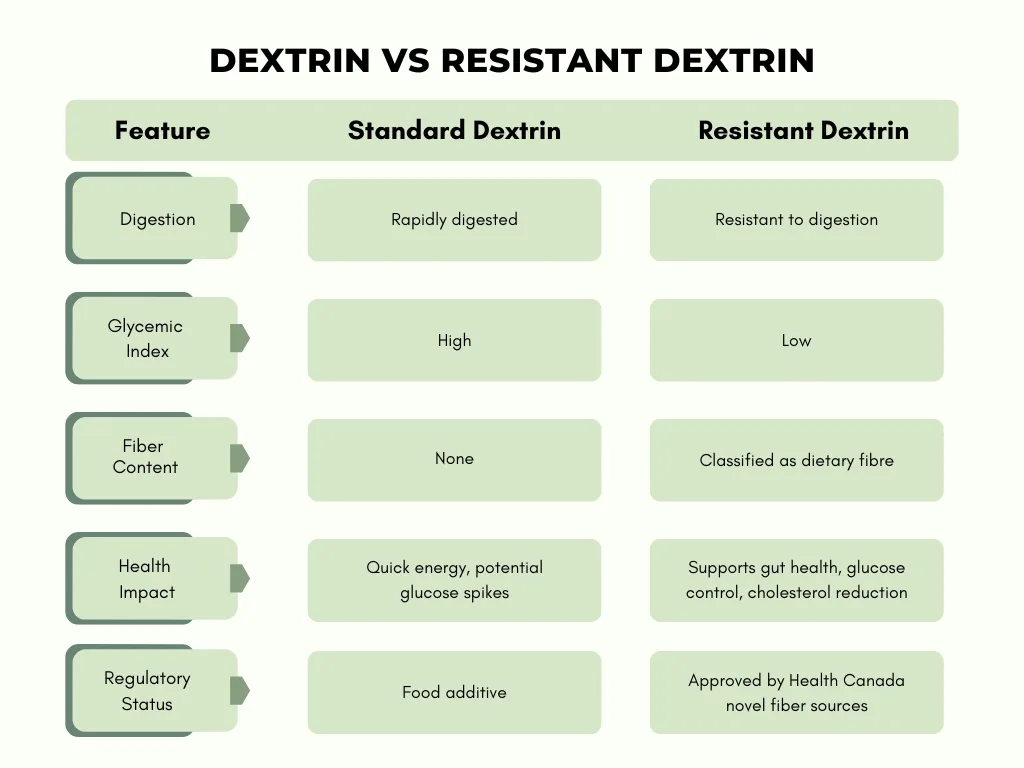
In short, resistant dextrin is a functional food ingredient with clear health benefits, while standard dextrin is neutral to potentially negative depending on dietary context.
Resistant Maltodextrin Canada: A Functional Ingredient
While often confused with resistant dextrin, resistant maltodextrin Canada refers to a similar ingredient derived from starch but processed differently. Both are included in the approved fibers Health Canada list and are valuable for manufacturers targeting clean label fibre resistant dextrin positioning.
Why Resistant Dextrin Aligns with Clean Label Trends
Today’s consumers want transparency and functionality in their foods.
Key Advantages
- Minimal processing – derived from starch without heavy modification.
- Supports clean labels – enables “source of fibre claim Canada.”
- Science-backed – aligns with Health Canada dietary fiber guidelines.
For brands, resistant dextrin represents a way to meet both regulatory requirements and consumer expectations for resistant dextrin in functional foods.
Is Dextrin Bad for You? Final Verdict
- Yes, standard dextrin can be problematic when consumed in large amounts, particularly for individuals with blood sugar management concerns.
- No, resistant dextrin is not bad for you — in fact, it offers multiple benefits including improved gut microbiota, cholesterol reduction, and blood glucose control.
So, the answer depends on the form of dextrin and its use. For health-conscious consumers and food manufacturers, resistant dextrin food ingredient Canada is a safe, effective, and approved option.
Final Insights and Next Steps
As you’ve seen, the question “is dextrin bad for you” doesn’t have a one-size-fits-all answer. Standard dextrin may contribute to glucose spikes and poor nutritional value, while resistant dextrin stands out as a science-backed, regulatory-approved ingredient that enhances wellness and product innovation.
At Satoria Nutrisentials, we specialize in supplying resistant dextrin Canada and other functional ingredients that align with Health Canada dietary fiber guidelines. Our solutions help brands innovate with confidence, from resistant dextrin prebiotic benefits to clean label fibre resistant dextrin claims.
👉 Ready to explore how resistant dextrin can support your next product launch? Visit Satoria Nutrisentials today and connect with our team of experts.
Featured News
Category
Get a Promo and Keep Updated