
Rice Protein Isolate for Non-Dairy Sports Recovery RTD Shakes: A Formulator’s Guide
Explanation About Prebiotic: A Practical Guide for Food & Beverage Manufacturers
February 26, 2026
General - Articles
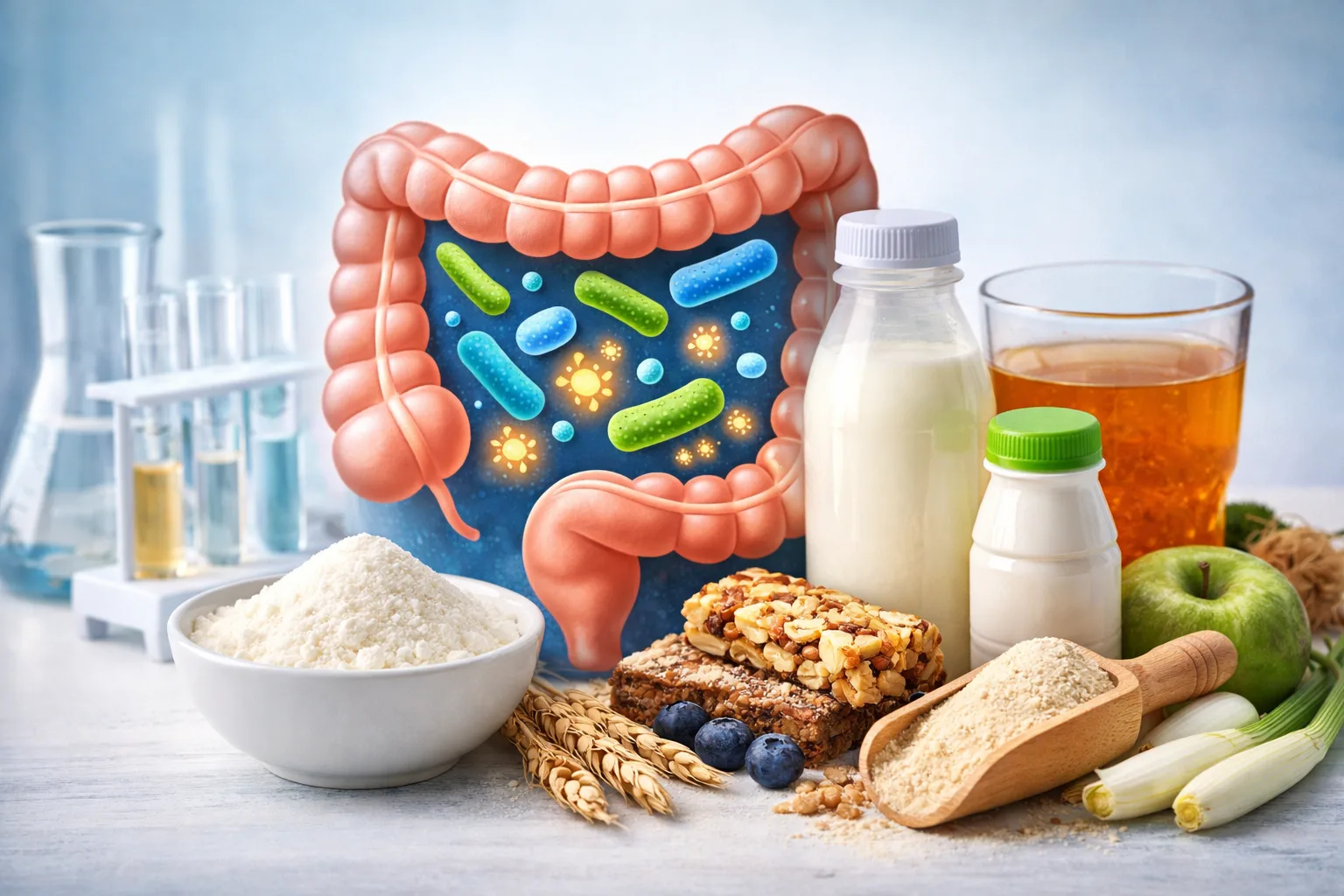
The global demand for gut-health products has shifted from a niche wellness trend into a mainstream product development priority. Today’s consumers expect foods and beverages that deliver measurable functional benefits, clean labels, and scientifically supported ingredients. This explanation about prebiotic is designed specifically for food, beverage, and nutraceutical manufacturers looking to formulate products that meet these expectations.
For B2B manufacturers, prebiotics are more than a buzzword — they represent a strategic ingredient category that enables fiber fortification, sugar reduction, digestive health positioning, and regulatory-friendly health claims. This article explains what prebiotics are, how they work, how they differ from other gut-health ingredients, and how Satoria Nutrisentials’ functional fibers can help manufacturers build the next generation of health-focused products.
What Is a Prebiotic and Why It Matters in Modern Product Development
A prebiotic is a type of non-digestible dietary fiber that selectively feeds beneficial gut bacteria, helping them grow and thrive. Unlike probiotics, which introduce live microorganisms, prebiotics work as the fuel that supports a balanced gut microbiome.
In simple terms:
- Probiotics = beneficial bacteria
• Prebiotics = food for beneficial bacteria
• Synbiotics = combination of both
For manufacturers exploring microbiome-focused innovation, prebiotics often work hand-in-hand with probiotic strains in synbiotic formulations. This complementary relationship is explored in depth in our article:
Explanation About Probiotic: From Strain Science to Scalable Commercialization for Modern F&B Brands
For manufacturers, prebiotics provide an opportunity to add functional fiber, support digestive health, and enhance the nutritional value of products without compromising taste or texture.
Key Characteristics of Prebiotic Ingredients
To qualify as a prebiotic, an ingredient must:
- Resist digestion in the upper gastrointestinal tract
- Be fermented by gut microbiota
- Selectively stimulate beneficial bacteria
- Deliver measurable health benefits
These characteristics make prebiotic fibers highly valuable in functional foods, functional beverages, dietary supplements, and sports nutrition.
Understanding the Science: How Prebiotics Work in the Gut Microbiome
The gut microbiome contains trillions of microorganisms that play a crucial role in digestion, metabolism, and immune function. Prebiotics nourish beneficial bacteria, producing short-chain fatty acids (SCFAs) such as acetate, propionate, and butyrate.
These compounds help:
- Maintain gut barrier integrity
• Support immune function
• Improve mineral absorption
• Regulate blood sugar levels
When paired with clinically studied probiotic strains, these benefits can be amplified through synbiotic formulations.
Types of Prebiotic Fibers Used in Food & Beverage Manufacturing
Common prebiotic ingredients include:
Inulin and FOS
Popular but may cause digestive discomfort at higher doses.
GOS
Common in infant and dairy nutrition.
Resistant Starch
Provides fermentation benefits but has formulation limitations.
Resistant Dextrin — Next-Generation Prebiotic Fiber
Increasingly preferred because it offers:
- Excellent solubility
• Neutral taste
• High digestive tolerance
• Heat and pH stability
• Low viscosity
Resistant dextrin is particularly effective when used alongside probiotic cultures in beverages and supplements.
Why Resistant Dextrin Is a Strategic Prebiotic Solution
Satoria Nutrisentials offers advanced resistant dextrin fiber solutions that align with global formulation needs.
Functional Advantages for Manufacturers
Resistant dextrin supports:
- Sugar reduction and calorie reduction
- Fiber enrichment claims
- Clean label formulation
- Low glycemic index products
- Improved mouthfeel in reduced-sugar beverages
Unlike traditional fibers, resistant dextrin integrates seamlessly into beverage, dairy, and supplement formulations without compromising sensory quality.
Application Versatility
Ideal applications include:
- Functional beverages and RTD drinks
- Powdered supplements and meal replacement
- Dairy and plant-based alternatives
- Bakery and confectionery
- Sports nutrition products
This aligns with broader industry movement toward functional fiber fortification and gut health positioning.
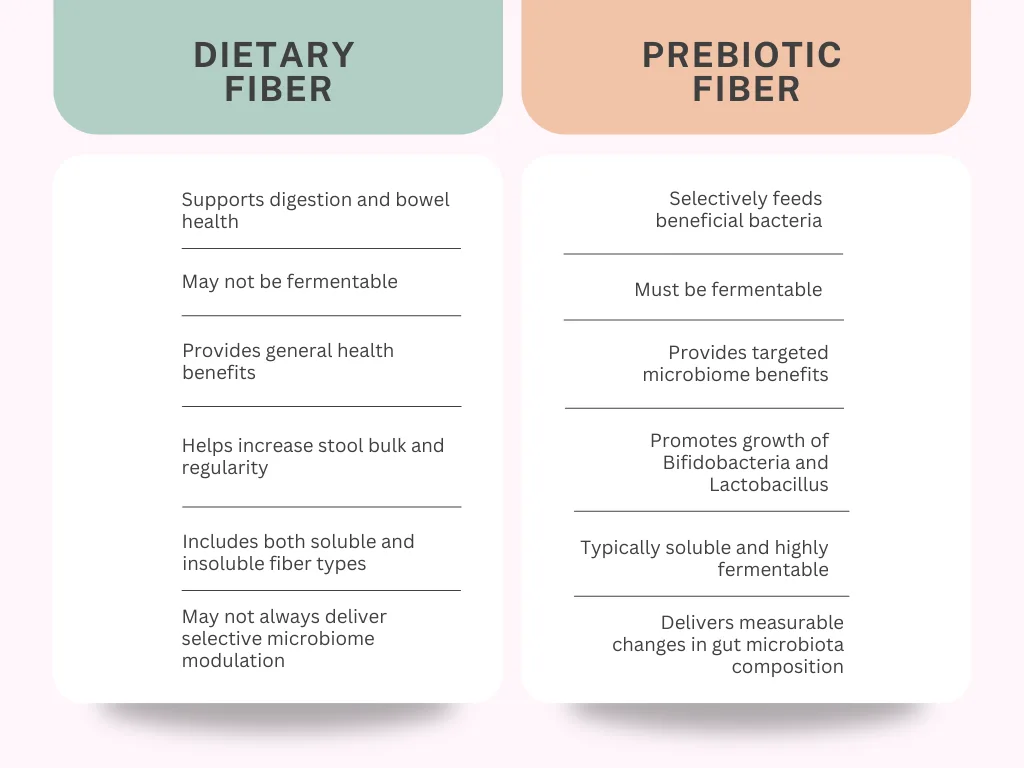
Prebiotics vs Dietary Fiber: Understanding the Difference
All prebiotics are fiber, but not all fiber is prebiotic.
Key Differences
Important Note for Manufacturers:
Advanced functional fibers such as resistant dextrin bridge both categories. Resistant dextrin qualifies as a dietary fiber while also exhibiting prebiotic effects due to its fermentability and ability to support beneficial gut bacteria. This dual functionality makes it particularly attractive for B2B product development — enabling fiber claims alongside digestive health positioning.
Formulation Benefits of Prebiotic Fibers in Product Development
Beyond health benefits, prebiotics deliver significant technical advantages during formulation.
Sugar Reduction Without Compromising Taste
Prebiotic fibers can replace sugar bulk while maintaining:
- Mouthfeel
- Sweetness balance
- Texture
This is critical for reduced-sugar beverages and snacks.
Calorie Reduction
Resistant dextrin offers lower caloric value compared to sugar, supporting low-calorie product development.
Improved Texture and Stability
Prebiotics help improve:
- Body and viscosity in beverages
- Shelf stability
- Freeze-thaw stability
These attributes are especially valuable in dairy alternatives and RTD beverages.
Regulatory and Labeling Advantages of Prebiotic Ingredients
Regulatory acceptance is a major factor for B2B manufacturers.
Prebiotic fibers like resistant dextrin are widely recognized as:
- Dietary fiber in many markets
- GRAS-recognized ingredients
- Suitable for clean label claims
- Compatible with low-GI and keto positioning
This regulatory flexibility simplifies global product launches.
How Prebiotics Support Emerging Consumer Trends
Modern consumers prioritize:
- Digestive health
- Immune support
- Sugar reduction
- Plant-based diets
- Functional beverages
Prebiotics sit at the intersection of all these trends, making them one of the most strategic ingredients for future product pipelines.
Integrating Prebiotics With Other Functional Ingredients
Prebiotics combine well with:
- Plant proteins
- Natural sweeteners
- Electrolytes
- Probiotic strains
Together, these ingredients enable the creation of multi-benefit functional products designed for modern consumers.
Future Outlook: The Role of Prebiotics in Next-Generation Functional Foods
Industry forecasts show that microbiome-focused nutrition will continue to grow rapidly.
Key future trends include:
- Personalized nutrition
- Synbiotic products
- Fiber-fortified beverages
- Functional hydration products
- Digestive health supplements
Prebiotic ingredients will play a central role in these innovations.
Partner With Satoria Nutrisentials to Develop Prebiotic-Powered Products
Manufacturers looking to stay competitive need ingredient partners who understand both science and formulation.
Satoria Nutrisentials provides:
- High-quality resistant dextrin fiber solutions
- Technical formulation support
- Regulatory expertise
- Application guidance across categories
By integrating advanced prebiotic fiber ingredients, brands can create products that meet evolving consumer expectations while maintaining excellent sensory performance.
Ready to Create Next-Generation Gut Health Products?
If your team is exploring fiber fortification, sugar reduction, or functional product innovation, Satoria Nutrisentials is ready to help you accelerate development with scientifically backed prebiotic solutions.
Discover how our ingredient portfolio can support your next product launch and help your brand lead the future of functional nutrition.
Reference
- Gibson, G. R., et al. (2017). The concept of prebiotics revisited. Nature Reviews Gastroenterology & Hepatology. https://doi.org/10.1038/nrgastro.2017.75
- Slavin, J. (2013). Fiber and prebiotics: Mechanisms and health benefits. Nutrients. https://doi.org/10.3390/nu5041417
- Scott, K. P., et al. (2015). The influence of diet on the gut microbiota. Pharmacological Research. https://doi.org/10.1016/j.phrs.2015.04.008
- Roberfroid, M. (2007). Prebiotics: The concept revisited. Journal of Nutrition. https://doi.org/10.1093/jn/137.3.830S
- Bindels, L. B., et al. (2015). Towards a more comprehensive concept of prebiotics. Nature Reviews Gastroenterology & Hepatology. https://doi.org/10.1038/nrgastro.2015.47
- Davani-Davari, D., et al. (2019). Prebiotics: Definition, types, sources, mechanisms, and clinical applications. Foods. https://doi.org/10.3390/foods8030092
- Markowiak, P., & Śliżewska, K. (2017). Effects of probiotics, prebiotics, and synbiotics. Nutrients. https://doi.org/10.3390/nu9091021
Featured News
Category
Get a Promo and Keep Updated