
Pea Protein Isolate Foaming/Whipping Functionality: A Formulator’s Guide to Stable Plant-Based Foams
How to Import Food Ingredients to Canada: A Complete Guide for Manufacturers and Distributors
April 6, 2026
General - Articles
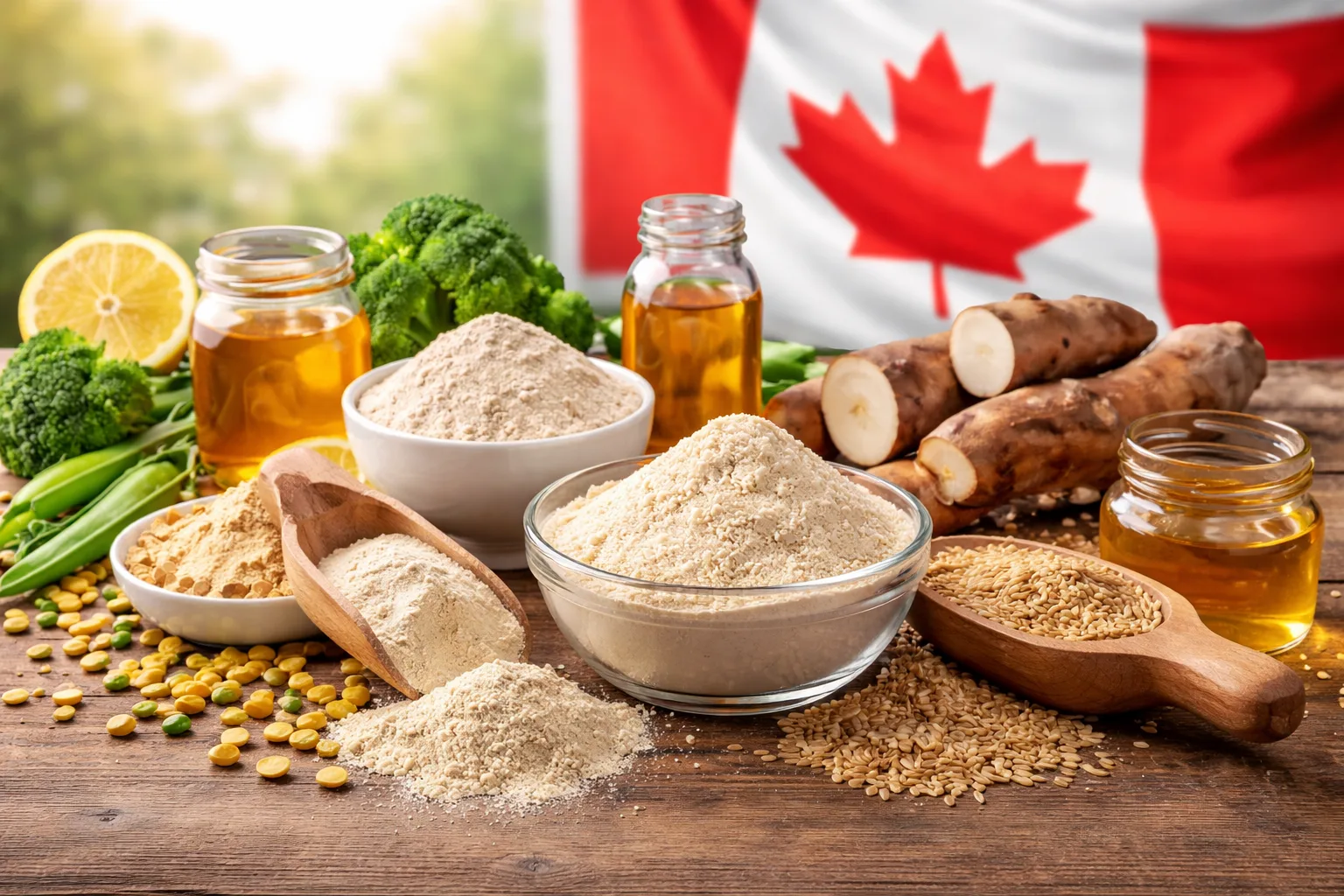
Importing food ingredients into Canada is a highly regulated yet rewarding opportunity for global suppliers and manufacturers. With increasing demand for clean-label, plant-based, and functional ingredients, Canada presents strong growth potential—especially for products like resistant dextrin, pea protein, rice protein, and tapioca-based solutions.
This guide breaks down how to import food ingredients to Canada, covering regulations, documentation, compliance, and strategic considerations—while highlighting how suppliers like Satoria Nutrisentials can support your sourcing needs.
Understanding Canada’s Food Import Regulations
Canada maintains strict food safety standards to protect consumers. The primary regulatory body overseeing food imports is the Canadian Food Inspection Agency (CFIA), supported by Health Canada.
To import food ingredients legally, businesses must comply with the Safe Food for Canadians Regulations (SFCR).
Key Regulatory Requirements
- Importers must hold a Safe Food for Canadians (SFC) license
- Products must meet Canadian food safety standards
- Proper traceability and documentation systems must be in place
- Ingredients must comply with Health Canada’s food ingredient approvals
Failure to comply can result in shipment rejection, delays, or penalties—making it essential to understand the regulatory framework before importing.
Step-by-Step Process: How to Import Food Ingredients to Canada
1. Obtain a Safe Food for Canadians License
Before importing, businesses must apply for an SFC license through the CFIA. This license ensures that importers are accountable for food safety and compliance.
2. Verify Ingredient Compliance
Not all ingredients are automatically approved in Canada. Importers must ensure:
- The ingredient is permitted under Health Canada regulations
- It meets food additive or novel food requirements if applicable
- It aligns with clean label and functional claims regulations
For example, ingredients like resistant dextrin and pea protein are widely accepted but must still meet compositional and labeling standards.
3. Prepare Import Documentation
Proper documentation is essential for smooth customs clearance. Key documents include:
- Commercial invoice
- Bill of lading
- Certificate of analysis (COA)
- Product specifications
- Import declaration
Accurate and consistent documentation reduces the risk of delays.
4. Ensure Proper Labeling
Canada has strict labeling requirements. Imported food ingredients must include:
- Bilingual labeling (English and French)
- Ingredient list and allergen declarations
- Nutritional information (if applicable)
- Country of origin
Even for bulk ingredients, labeling compliance is critical—especially if the product will be repackaged or sold further downstream.
5. Work with a Licensed Customs Broker
A customs broker can streamline the import process by handling:
- Tariff classification
- Duty and tax calculations
- Submission of import documentation
- Communication with border authorities
This is particularly helpful for first-time importers navigating Canadian regulations.
Key Compliance Considerations for Food Ingredient Imports
Food Safety and Traceability
Canada requires full traceability across the supply chain. Importers must be able to track:
- Supplier origin
- Production batch
- Distribution channels
Suppliers like Satoria Nutrisentials support this by providing transparent sourcing and documentation, ensuring compliance with Canadian traceability standards.
Allergen and Contaminant Control
Ingredients must meet strict limits for:
- Microbial contamination
- Heavy metals
- Allergen cross-contact
Certificates of analysis and third-party testing are often required to demonstrate compliance.
Clean Label and Functional Claims
Canada has specific rules regarding claims such as:
- “High fiber”
- “Plant-based protein”
- “Low sugar”
Ingredients like tapioca syrup, rice protein, and resistant dextrin are increasingly used to meet these claims—but labeling must remain accurate and substantiated.
Importing Functional Ingredients: Opportunities in Canada
Consumer demand in Canada is shifting toward healthier, more transparent food products. This creates strong opportunities for functional ingredients.
High-Fiber Ingredients
Resistant dextrin is widely used in:
- Functional beverages
- Nutritional bars
- Low-sugar formulations
It supports digestive health while maintaining taste and texture—making it attractive for Canadian manufacturers.
Plant-Based Proteins
Pea protein and rice protein are in high demand due to:
- Growth in vegan and flexitarian diets
- Demand for allergen-friendly alternatives
- Sustainability considerations
These proteins are commonly used in dairy alternatives, snacks, and sports nutrition.
Clean Label Sweeteners and Binders
Tapioca syrup and related ingredients offer:
- Natural sweetness
- Binding functionality
- Improved shelf life
They are ideal for manufacturers looking to replace artificial additives with clean-label alternatives.
Common Challenges When Importing Food Ingredients to Canada
Regulatory Complexity
Understanding CFIA and Health Canada requirements can be challenging, especially for new importers. Regulations may vary depending on the ingredient category.
Documentation Errors
Incomplete or inconsistent documentation is one of the most common causes of shipment delays.
Supply Chain Transparency
Canadian regulations require full traceability, which can be difficult without reliable suppliers.
Labeling Compliance
Even small labeling errors—such as missing bilingual information—can lead to product rejection.
Best Practices for a Smooth Import Process
To successfully navigate how to import food ingredients to Canada, consider the following strategies:
- Work with experienced suppliers who understand export compliance
- Ensure all documentation is complete and consistent
- Conduct pre-import regulatory checks on ingredients
- Partner with a licensed customs broker
- Stay updated on Canadian food regulations
Building a strong compliance foundation reduces risks and ensures long-term success in the Canadian market.
Why Choosing the Right Supplier Matters
Selecting the right ingredient supplier is critical when importing into Canada. A reliable partner can help you:
- Meet Canadian regulatory requirements
- Provide complete and accurate documentation
- Ensure consistent product quality
- Support clean label and functional product development
Satoria Nutrisentials offers a range of ingredients—including resistant dextrin, pea protein, rice protein, and tapioca-based solutions—designed to meet global standards and support food manufacturers targeting markets like Canada.
Partner with a Trusted Ingredient Supplier for the Canadian Market
Expanding into Canada starts with the right ingredients and the right partner.
Whether you’re developing high-fiber snacks, plant-based beverages, or clean-label formulations, sourcing compliant, high-quality ingredients is essential. With growing demand for functional and health-focused products, now is the time to position your brand for success.
Explore Satoria Nutrisentials’ ingredient solutions and discover how we can support your expansion into Canada with reliable supply, technical expertise, and globally compliant products.
Reference
- Canadian Food Inspection Agency. (2023). Safe Food for Canadians Regulations Overview. Retrieved from https://inspection.canada.ca
- Government of Canada. (2023). Importing food into Canada: A step-by-step guide. Retrieved from https://www.canada.ca
- Health Canada. (2023). Food and Nutrition Regulations. Retrieved from https://www.canada.ca/en/health-canada/services/food-nutrition.html
- Food and Agriculture Organization. (2022). International Food Safety Standards. Retrieved from https://www.fao.org
- World Health Organization. (2023). Food Safety and International Trade. Retrieved from https://www.who.int
- Global Affairs Canada. (2023). Tariffs and Import Regulations for Food Products. Retrieved from https://www.international.gc.ca
- Agriculture and Agri-Food Canada. (2023). Canadian Food Market Trends. Retrieved from https://agriculture.canada.ca
- International Trade Centre. (2022). Exporting Food Products to Canada. Retrieved from https://www.intracen.org
- U.S. Department of Agriculture. (2023). Canada Food and Agricultural Import Regulations. Retrieved from https://www.usda.gov
- European Commission. (2022). Guidelines on Food Ingredient Trade and Compliance. Retrieved from https://ec.europa.eu
Featured News
Category
Get a Promo and Keep Updated