
High-Protein Pancake & Waffle Mix Using Pea Protein Isolate: A Formulator’s Guide to Fluffy, Plant-Powered Breakfasts
High-Protein Pancake & Waffle Mix Using Pea Protein Isolate: A Formulator’s Guide to Fluffy, Plant-Powered Breakfasts
October 13, 2026
Protein & Nutritional Enhancers - Articles
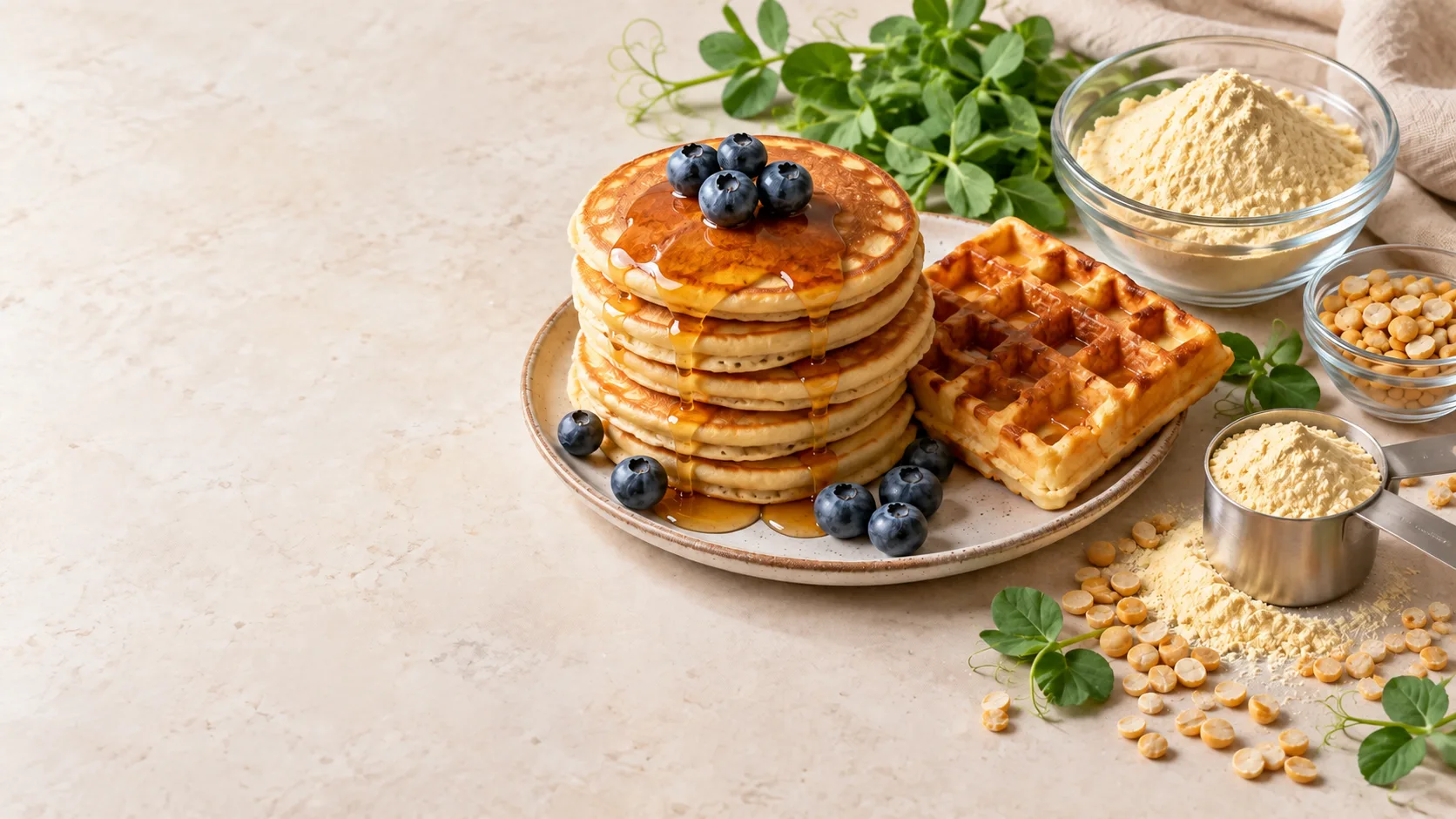
Pancakes have a reputation problem. They are comforting, quick, and loved by almost everyone, yet a typical boxed mix delivers little more than refined flour and sugar. That gap is exactly why a high-protein pancake & waffle mix using pea protein isolate has become one of the more interesting formulation briefs landing on R&D desks today.
The opportunity is real, but so are the challenges. Pea protein behaves very differently from wheat flour or whey in a batter, and getting texture, flavor, and rise right takes deliberate choices. This guide walks through the science, the formulation logic, and the sourcing questions that matter, whether you are building your own brand or a private label line.
Why Protein Pancake Mix Is Ready for a Plant-Based Upgrade
Breakfast is where many people struggle to hit their protein targets. A stack of standard pancakes offers only a few grams per serving, so health-conscious shoppers often end up stirring in protein powder themselves. A well-built protein pancake mix removes that extra step and turns a weekend treat into a realistic low sugar high protein breakfast.
Most high protein pancakes on the market still lean on whey, milk powder, and eggs. That works for many consumers, but it leaves out a growing group looking for a dairy-free protein pancake mix, vegan protein pancakes, or products free from major allergens. Pea protein has already become a mainstream reformulation ingredient across foods and beverages, so it is a natural fit here (Boukid et al., 2021).
There is also a market-access angle. Brands selling into Indonesia, Malaysia, the Gulf, and Muslim consumers worldwide increasingly need halal assurance for every ingredient. A halal pea protein isolate gives formulators a protein backbone that travels well, which matters when one protein pancake mix private label formula has to serve several regions at once.
Why Pea Protein Isolate for Pancake Mix Makes Sense
Pea protein isolate is the refined form of yellow pea protein, commonly concentrated to around 80–90% protein. Reviews describe it as a high-quality, low-allergenicity ingredient with useful functional properties, including solubility, water and oil holding capacity, emulsifying ability, and gelation (Shanthakumar et al., 2022). Those are exactly the traits a batter depends on.
Nutrition is the other half of the story. Pea protein is naturally rich in lysine and branched-chain amino acids, and it contains no gluten, which keeps the door open for gluten-free concepts. It is also generally considered hypoallergenic compared with soy, milk, and egg, which can simplify allergen labeling for your finished product.
Pea Protein vs Whey Protein in Baking
Whey has long been the default in sports nutrition, so it is fair to ask whether pea can keep up. In a 12-week trial of 161 men doing resistance training, those taking 25 g of pea protein twice daily gained muscle thickness that did not differ significantly from the whey group (Babault et al., 2015).
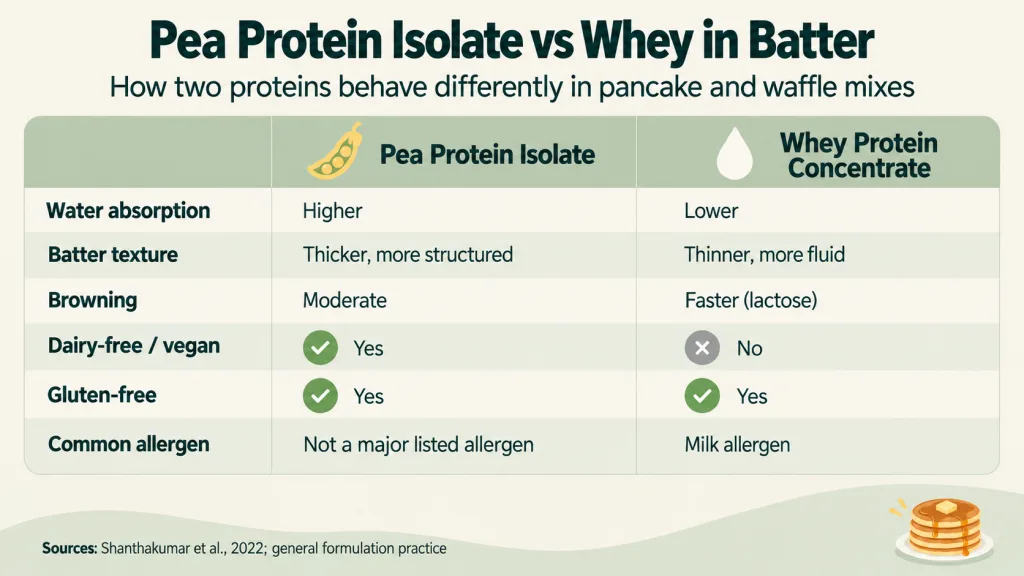
In the mixing bowl, though, the two behave differently. Whey concentrate dissolves readily and browns quickly thanks to its lactose, while pea protein absorbs more water and builds a denser, more structured batter. Neither is simply better. They call for different hydration, leavening, and cooking adjustments, which is exactly where thoughtful formulation earns its keep.
Understanding Pea Protein Functionality in Batters
Pancake and waffle batters are surprisingly demanding systems. They need to flow, trap gas, set quickly on a hot griddle, and stay tender rather than rubbery. Pea protein functionality in batters touches every one of those steps, so it helps to understand three behaviors before you run your first bench trial.
Pea Protein Water Absorption in Batter
Pea protein isolate binds a lot of water. Reported water-holding capacity values sit around 2.7 to 3.4 grams of water per gram of protein, depending on how the isolate was produced (Shanthakumar et al., 2022). In practice, a high-protein batter usually needs more liquid than a standard mix, plus a short rest so hydration finishes before cooking.
Solubility also depends on pH. Pea protein is least soluble between roughly pH 4 and 6, close to its isoelectric point. Acidic ingredients such as buttermilk powder or certain leavening acids can push a batter into that zone, so measure pH early rather than discovering the issue at scale-up.
Pea Protein Texture in Pancakes
Push protein too high and pancakes turn dense, dry, or chewy. In bread, replacing 20% of wheat flour with pea protein weakened the gluten network, reduced loaf volume, and hardened the crumb (Shanthakumar et al., 2022). Pancakes follow similar logic, so most formulators balance pea protein with a tender starch base and a soluble fiber that holds moisture.
Egg Replacement with Pea Protein in Baking
Eggs contribute emulsification, foaming, and heat-set structure. Pea protein can cover part of that job because it emulsifies and forms heat-induced gels, making it a practical tool in vegan pancake mix formulation. It works best alongside a small amount of hydrocolloid. For more detail, see our guide to plant-based egg replacer ingredients.
How to Reduce Beany Flavor in Pea Protein
Ask any developer about pea protein and flavor comes up within minutes. Beany, green, or earthy notes come mainly from volatile aldehydes, alcohols, and ketones, while bitterness is linked to saponins and phenolic compounds (Roland et al., 2017). Some of these are inherent to the pea, and others form during harvesting, processing, or storage.
The good news? Pancakes are a forgiving format. Warm, toasty, vanilla-forward flavors mask off-notes well, and griddle heat helps too. Practical strategies include:
- Start clean: choose a refined isolate with a neutral flavor and ask your pea protein isolate supplier for a sensory specification.
- Lean on browning: Maillard-type reactions can soften beany notes, and glycation has been shown to reduce them in pea protein (Shanthakumar et al., 2022).
- Layer complementary flavors: vanilla, cinnamon, malt, buttermilk-style notes, and cocoa all work well.
- Protect during storage: lipid oxidation drives new off-flavors, so control oxygen and moisture in packaging.
- Blend proteins: pairing pea with rice protein dilutes pea-specific notes while improving nutrition.
Building Complete Nutrition with a Pea and Rice Protein Blend
No single plant protein is perfect. Pea protein is relatively low in the sulfur amino acids methionine and cysteine (Shanthakumar et al., 2022), while rice protein tends to be limited in lysine. Put them together and their weaknesses largely offset each other, which is why the pea and rice protein blend amino acid profile is so popular in sports and clinical nutrition.
A broad analysis of commercial protein isolates found that plant proteins generally carry less methionine and lysine than animal proteins, and that blending plant isolates can deliver a profile close to animal-based proteins (Gorissen et al., 2018). For a pancake mix, that means a stronger nutrition story without adding dairy.
This matters for protein quality scores too. The PDCAAS of pea protein is held back mainly by its sulfur amino acids, so a well-designed blend usually scores higher than pea alone. If quality claims matter in your market, test the finished blend rather than relying on single-ingredient values. Our plant-based nutrition bar case study explores this pairing in more depth.
A Starting Framework for High Protein Pancake Mix Formulation
Every brand’s target is different, but a starting framework saves plenty of trial and error. The ranges below are illustrative percentages of the dry mix, meant for early bench trials rather than as a finished recipe. Your final numbers will depend on your protein target, base flour, and the claims you want to make.
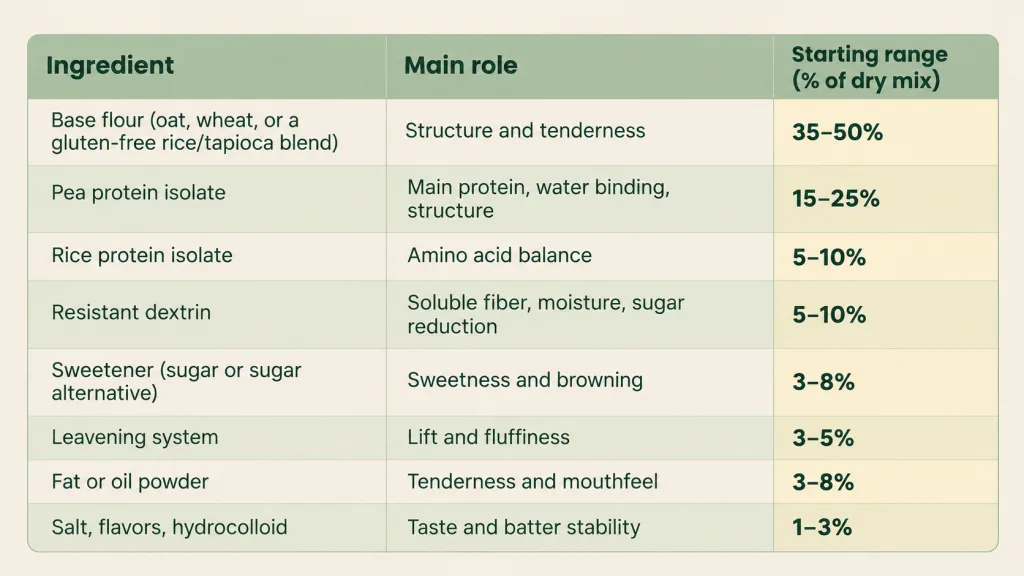
For a just add water protein pancake mix, the fat source and egg-replacing functionality must already sit inside the powder, which usually means a fat powder and a slightly higher hydrocolloid level. Waffle versions often benefit from a little extra fat for crisp edges and clean release from the iron, so plan separate trials for protein waffles rather than assuming one batter does both.
Fiber, Sugar Reduction, and Gluten-Free Variants
Protein is only part of the modern breakfast brief. Shoppers increasingly expect more fiber and less sugar too, and the WHO recommends keeping free sugars below 10% of total energy intake, ideally under 5% (World Health Organization, 2015). That is a strong reason to treat sugar reduction in bakery mixes as a core design goal rather than an afterthought.
Using resistant dextrin in pancake mix is one of the simplest ways to get there. It is a soluble, non-viscous fiber that blends easily, adds body, and replaces some sugar solids without making batter gummy. A review of resistant maltodextrin also reports potential benefits for markers linked to metabolic syndrome (Astina & Sapwarobol, 2019). The result is a high fiber high protein pancake mix with a cleaner panel.
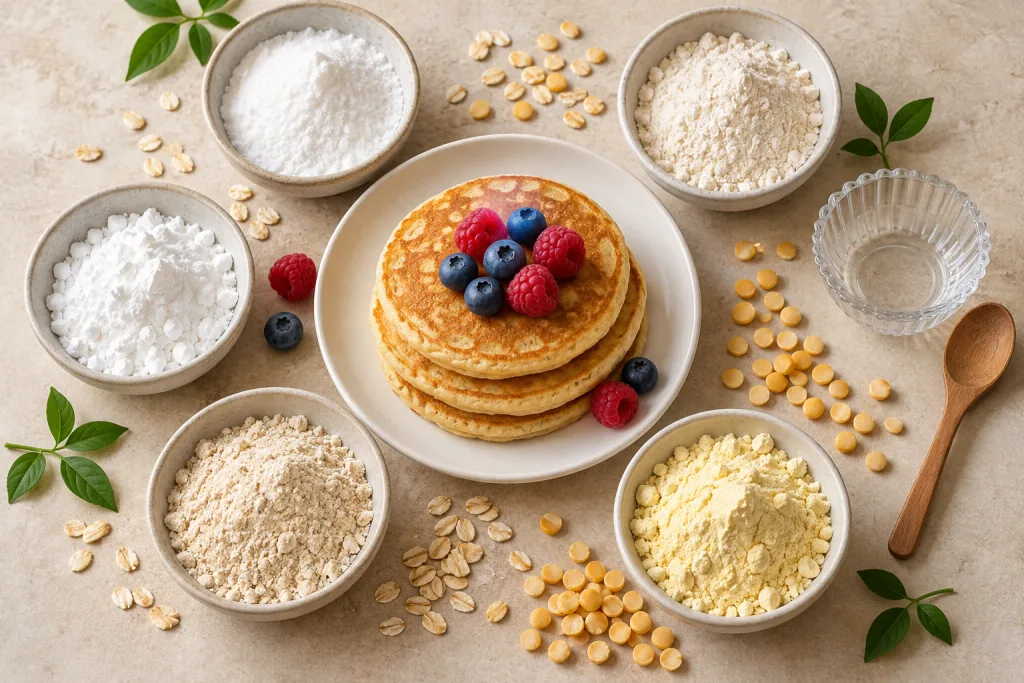
A gluten-free high protein pancake mix is also within reach. Because pea protein contains no gluten, it pairs naturally with rice flour, tapioca starch, or certified gluten-free oat flour. Expect to adjust hydration and binders once gluten is removed. Our article on high-protein pasta formulation covers similar protein-starch interactions if you are building a wider range.
What to Look for in a Pea Protein Isolate Supplier
Ingredient quality shows up directly in the finished pancake. Functionality varies with extraction method and processing conditions (Lam et al., 2018), so two isolates with the same protein percentage can perform very differently in a batter. Before committing to a supplier, ask a few practical questions:
- Protein content and consistency: confirm dry-basis protein and lot-to-lot variation.
- Sensory profile: request flavor and color specifications, ideally with a tasting sample.
- Functional data: ask for solubility, water-holding capacity, and particle size.
- Certifications: look for halal, kosher, non-GMO, and food safety systems such as FSSC 22000.
- Complementary ingredients: sourcing protein and fiber from one partner simplifies formulation and logistics.
These details matter whether you own the brand or work as a high protein waffle mix manufacturer producing for others. A clean label protein pancake mix depends on short, recognizable ingredient lists, and every masking agent or stabilizer added to fix a weak isolate chips away at that promise.
Unleash the Potential of Your Next Protein Pancake Mix
Building a high-protein pancake & waffle mix using pea protein isolate is part science, part craft. With the right protein, a smart fiber and sweetener strategy, and patient bench testing, you can deliver pancakes that are fluffy, satisfying, and genuinely nutritious. That is a combination today’s breakfast shoppers are actively looking for.
Satoria Nutrisentials supplies Pea Protein & Pea Protein Isolate, Rice Protein Isolate, Resistant Dextrin, and SweetSentials from manufacturing that follows halal, FSSC 22000, and GMP standards. Together, they cover the protein, fiber, and sugar-reduction pieces of a modern pancake mix, and sourcing them from one partner keeps specifications, certifications, and logistics simpler as you scale.
Ready to put these ideas into a bench trial? Consult your needs with our team to request samples and technical specifications to explore the full range. Where cutting-edge science meets delicious possibilities, your next breakfast bestseller may be closer than you think.
References
- Astina, J., & Sapwarobol, S. (2019). Resistant maltodextrin and metabolic syndrome: A review. Journal of the American College of Nutrition, 38(4), 380–385. https://doi.org/10.1080/07315724.2018.1523028
- Babault, N., Païzis, C., Deley, G., Guérin-Deremaux, L., Saniez, M.-H., Lefranc-Millot, C., & Allaert, F. A. (2015). Pea proteins oral supplementation promotes muscle thickness gains during resistance training: A double-blind, randomized, placebo-controlled clinical trial vs. whey protein. Journal of the International Society of Sports Nutrition, 12(1), 3. https://doi.org/10.1186/s12970-014-0064-5
- Boukid, F., Rosell, C. M., & Castellari, M. (2021). Pea protein ingredients: A mainstream ingredient to (re)formulate innovative foods and beverages. Trends in Food Science & Technology, 110, 729–742. https://doi.org/10.1016/j.tifs.2021.02.040
- Gorissen, S. H. M., Crombag, J. J. R., Senden, J. M. G., Waterval, W. A. H., Bierau, J., Verdijk, L. B., & van Loon, L. J. C. (2018). Protein content and amino acid composition of commercially available plant-based protein isolates. Amino Acids, 50(12), 1685–1695. https://doi.org/10.1007/s00726-018-2640-5
- Lam, A. C. Y., Can Karaca, A., Tyler, R. T., & Nickerson, M. T. (2018). Pea protein isolates: Structure, extraction, and functionality. Food Reviews International, 34(2), 126–147. https://doi.org/10.1080/87559129.2016.1242135
- Roland, W. S. U., Pouvreau, L., Curran, J., van de Velde, F., & de Kok, P. M. T. (2017). Flavor aspects of pulse ingredients. Cereal Chemistry, 94(1), 58–65. https://doi.org/10.1094/CCHEM-06-16-0161-FI
- Shanthakumar, P., Klepacka, J., Bains, A., Chawla, P., Dhull, S. B., & Najda, A. (2022). The current situation of pea protein and its application in the food industry. Molecules, 27(16), 5354. https://doi.org/10.3390/molecules27165354
- World Health Organization. (2015). Guideline: Sugars intake for adults and children. https://www.who.int/publications/i/item/9789241549028
Featured News
Category
Get a Promo and Keep Updated