
Puffed Rice Snack & Rice Cake Fortification: A B2B Formulator’s Guide to Functional Ingredients
Puffed Rice Snack & Rice Cake Fortification: A B2B Formulator’s Guide to Functional Ingredients
September 28, 2026
Functional Rice - Articles
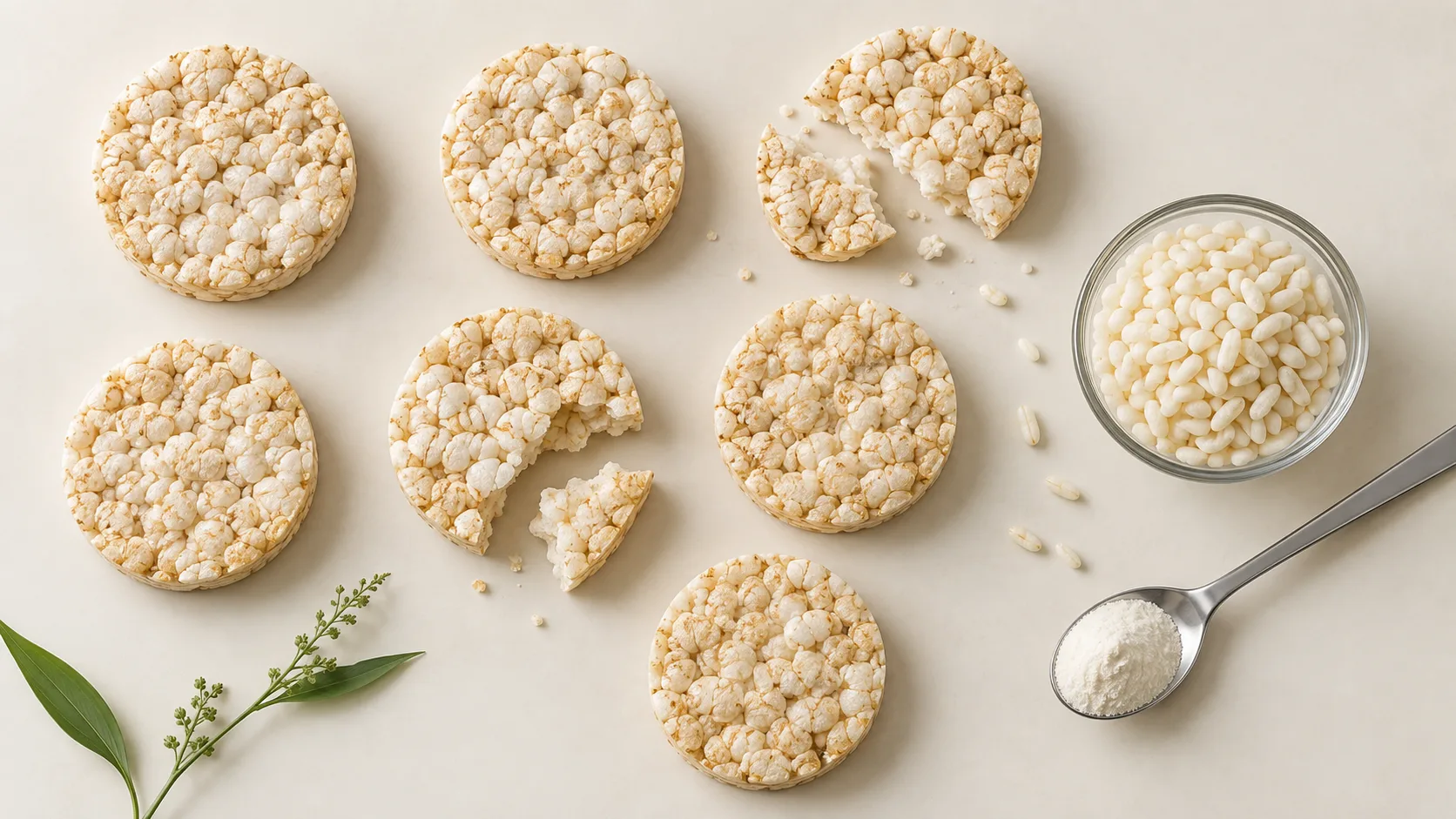
Puffed rice snacks and rice cakes have a marketing problem: they’re the snack aisle’s blank canvas, but too many still deliver little beyond crunch and calories. As shoppers scrutinize labels for protein, fiber, and clean ingredients, this gap has turned puffed rice snack & rice cake fortification from a nice-to-have into a genuine point of differentiation for manufacturers competing on nutrition claims, and one that’s increasingly reachable without a full line redesign.
Why Rice Cakes and Puffed Rice Snacks Need a Nutritional Upgrade
Rice cakes and puffed rice snacks have earned a permanent spot in the better-for-you snacking aisle, prized for being naturally gluten-free, light, and endlessly stackable with toppings. But convenience shouldn’t be confused with nutrition, and that’s exactly where the category has fallen short for years.
Independent research on puffed rice products consistently shows a glycemic index well above 70, sometimes climbing past 90 for cooked white rice, because the puffing and cooking process breaks starch down into a form the body digests almost instantly (Apirattananusorn, 2025). Pair that with a typical rice cake’s modest protein and fiber content, and you get a snack that fills a hand but not much else nutritionally.
This is precisely the opportunity behind puffed rice snack & rice cake fortification: taking a category built on texture and convenience and rebuilding its nutritional backbone without sacrificing the crunch consumers expect. For F&B manufacturers and private-label brands, that means looking closely at rice cake fortification ingredients that can raise protein, add soluble fiber, and soften the blood sugar impact, while still running cleanly through existing extrusion lines. Done well, the result is a genuinely high-fiber puffed rice snack rather than a reformulated afterthought.
Consumer research firms have tracked steady growth in shoppers checking protein and fiber content before checking flavor, and rice-based snacks are a natural fit for that shift given how neutral their base flavor already is. A brand that gets there first with a credible, claim-ready formulation has a real head start over competitors still selling the plain version.
Rice Cake Fortification Ingredients: The Functional Toolkit
Not every functional ingredient behaves the same way inside a puffed, extruded matrix. Some dissolve invisibly into the base, some change mouthfeel, and some need careful dosing to avoid affecting expansion. Three ingredient categories consistently deliver on both nutrition and manufacturability: soluble fiber, plant protein, and functional rice alternatives. Together, they form the core toolkit for any team approaching functional ingredients for rice cakes for the first time.

Soluble Prebiotic Fiber for Gut Health and Blood Sugar Support
Resistant dextrin in rice cakes is one of the more straightforward wins available to formulators. As a soluble, low-viscosity fiber, it blends into rice-based batters and doughs without disrupting puff or crumb structure, which is why it shows up so often among prebiotic fiber snack ingredients. Clinical research backs its functional claims: a four-week trial found that daily resistant dextrin intake reshaped gut microbiota toward more fermentative, short-chain-fatty-acid-producing pathways, an effect that persisted even after supplementation stopped (Barber et al., 2022).
Earlier randomized work reported measurable shifts in beneficial colonic bacteria within just two weeks of daily intake (Guerin-Deremaux et al., 2012), and separate research found resistant dextrin improved insulin sensitivity markers in diet-induced insulin resistance models (Hu et al., 2020). For a fiber-fortified rice snack aiming at a “supports digestive health” or “source of fiber” claim, resistant dextrin is typically the first ingredient formulators reach for, and it doubles as one of the more effective gut health snack ingredients on the market. Dosing usually sits in a moderate range per serving, since going too high too quickly can trigger the transient bloating and gas that early-stage fiber consumption is known to cause before the gut adapts.
Plant Protein for High-Protein Rice Cake Formulation
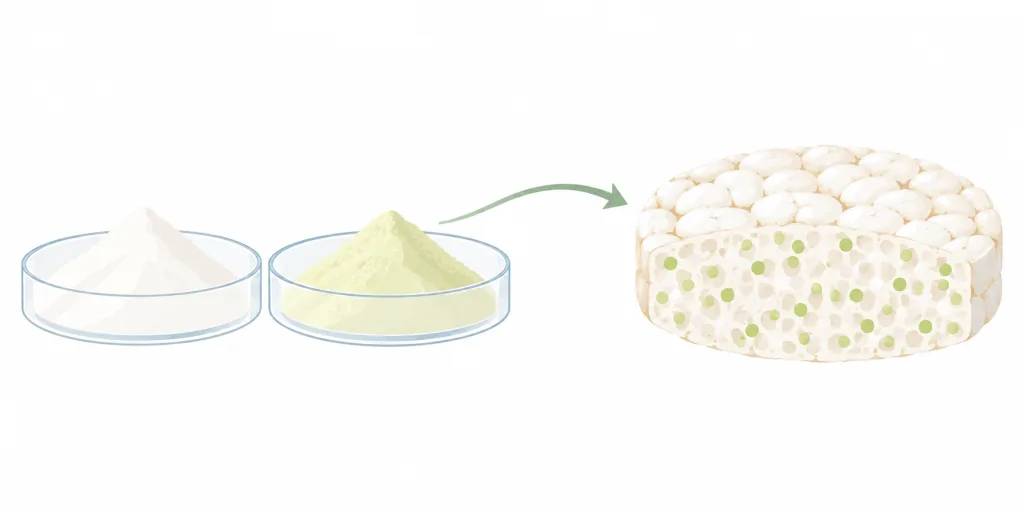
Plain rice cakes rarely clear even one gram of protein per serving, which is a hard ceiling when shoppers increasingly shop by protein grams. Rice protein fortified snacks and pea protein puffed rice snack formats solve this by incorporating plant isolates directly into the base mix before extrusion, rather than relying on a protein coating that flakes off in the bag.
Extrusion research on comparable starch-based snacks shows that legume and grain protein additions can be incorporated without compromising sensory acceptance, and the cooking process itself has been shown to meaningfully improve protein digestibility in the finished product (Patil et al., 2016). Rice and pea proteins are particularly well suited here because they’re allergen-friendlier than dairy or egg-based proteins, a detail worth highlighting on pack for protein-enriched puffed rice aimed at flexitarian or vegan shoppers. The result is a high-protein rice cake formulation that doesn’t ask consumers to compromise on the format they already know. Blending rice and pea protein isolates together is a common move too, since the two complement each other’s amino acid profiles and can smooth out the slightly chalky mouthfeel that some single-source plant proteins bring to a light, airy base.
Functional Rice for Lower-Glycemic, Nutrient-Dense Snacks
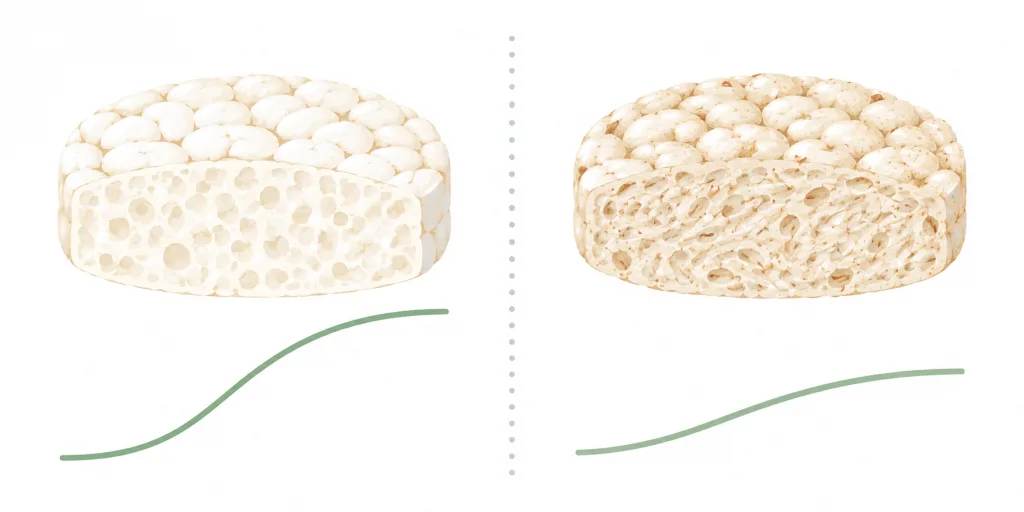
Sometimes the fix isn’t an additive at all, it’s the rice itself. Swapping a portion of the base for a konjac rice cake formulation introduces glucomannan, a highly viscous soluble fiber that slows gastric emptying and naturally dilutes the available carbohydrate per serving. Combined with brown or wholegrain rice bases, which testing shows carry a meaningfully lower glycemic index and glycemic load than standard puffed white rice (Apirattananusorn, 2025), this approach tackles the category’s biggest weakness at the source rather than patching it after the fact.
This ingredient category is where low-GI rice cake ingredients and nutrient-dense snack formulation goals overlap most cleanly, since a lower starting glycemic load means less fortification is needed elsewhere to hit a finished-product claim.
Puffed Rice Snack Formulation: What Changes When You Fortify
Adding functional ingredients to a puffed rice base isn’t a simple substitution. Extrusion conditions need re-validation once the formula changes, since heat-sensitive fibers and proteins can behave differently under high-shear processing, and dosing levels that work well in a beverage or bakery application often need adjustment for a puffed matrix’s lower moisture and higher processing temperature.
Fiber-rich flour blends, in particular, tend to raise dough viscosity and reduce expansion ratio, producing a denser, chewier extrudate unless the formulation and extrusion parameters are rebalanced together (Abraham et al., 2025). Resistant dextrin’s heat stability up to roughly 180°C makes it comparatively forgiving in most extrusion setups, but plant proteins and functional rice fractions typically call for pilot-scale trials to confirm expansion, bulk density, and texture haven’t shifted. Keeping a simple trial log of moisture content, screw speed, and barrel temperature against each fortification level makes it far easier to reproduce a winning batch at full scale later, rather than trying to reverse-engineer it from memory.
A few practical checkpoints tend to separate a smooth fortification project from a frustrating one:
- Pilot-batch trials before full-scale runs, since even a small change in fiber or protein level can shift expansion ratio and bite
- A shorter, cleaner ingredient list where possible, since one well-chosen soluble fiber or functional rice base often beats stacking several minor additives for clean label rice snack ingredients
- A full review of glazes, coatings, and flavor dustings, since sugar reduction in rice snacks only holds up if the whole formulation, not just the base, is checked before the claim goes on pack
Positioning Fortified Snacks for Global, Compliant Markets
Nutrition claims only travel as far as the regulatory paperwork behind them, and rice cake fortification regulations vary meaningfully by market. A soluble fiber that qualifies for a “good source of fiber” claim under one country’s rules may need different substantiation elsewhere, so formulators exporting fortified snacks should confirm claim language market by market before finalizing packaging, ideally with local regulatory counsel rather than relying on a competitor’s pack copy as a template. This matters more than usual for the category, given that dietary fiber has been flagged as a nutrient of public health concern for two decades, with most adults still falling well short of recommended intake (Thompson, 2021).
Halal rice snack ingredients are another consideration that’s easy to underestimate until a shipment is held at customs. Sourcing plant-based proteins, fibers, and functional rice from suppliers with halal, kosher, and food-safety certification already in hand, rather than promised, removes one of the more common bottlenecks in cross-border snack launches, particularly across GCC, Southeast Asian, and broader Muslim-majority markets.
The commercial upside is real: functional snack ingredients export market activity has grown alongside rising consumer demand for gut-health and high-protein positioning, and fortified snack food trends across Asia increasingly favor formats, like puffed rice and rice cakes, that were previously seen as nutritionally unremarkable. Manufacturers who fortify early are positioned to capture that shift with a claim-ready product rather than scrambling to reformulate later.
Choosing the Right Rice Snack Ingredient Supplier for Your Formulation
Once the formulation direction is set, the ingredient supplier relationship determines how smoothly it scales. A rice snack ingredient supplier should be able to provide documentation without back-and-forth delay, since these are exactly the pieces that unlock retail listings and export shipments:
- Certificates of analysis and allergen statements for every functional ingredient
- Halal, kosher, and relevant food-safety certifications, current rather than pending
- Heavy metal, microbial, and nutrient-content testing consistent from batch to batch
Consistency matters just as much as documentation. Bulk fiber ingredients for snack food need to perform the same way in month twelve of production as they did in the pilot batch, which means working with a manufacturer that controls its own supply chain rather than reselling a commodity ingredient. Suppliers offering snack food fortification solutions alongside OEM puffed rice snack manufacturing or toll manufacturing services can also compress development timelines considerably, since formulation, pilot trials, and scale-up happen under one roof instead of across multiple vendors.
For brands without in-house extrusion capability, this combination, a functional food ingredient manufacturer Indonesia-based teams can reach directly, paired with contract manufacturing, often turns a fortified rice snack from a lab concept into a shelf-ready product in a fraction of the usual timeline, without the brand needing to build its own production line first. It also shortens the feedback loop between a formulation tweak and a producible batch, which matters when a claim, a cost target, and a launch date all need to line up at once.
Ready to Formulate Your Next Fortified Rice Snack?
Puffed rice snack & rice cake fortification works best when it’s built in from the first trial batch rather than bolted on afterward. Satoria NutriSentials’ functional ingredient range, including Resistant Dextrin, Rice Protein Isolate, Pea Protein & Pea Protein Isolate, and Konjac Rice, was developed for exactly this kind of reformulation work, backed by HACCP, ISO, Halal, Kosher, and FDA-recognized certifications to support both domestic and export launches.
Whether you’re adding soluble fiber to an existing rice cake line or building a new high-protein puffed snack from scratch, Satoria’s OEM and Toll Manufacturing services can take a formulation from pilot batch to full-scale production without you needing to manage multiple suppliers. Explore the full functional ingredient range to find the right fit for your next formulation, or get in touch with the team to discuss samples, documentation, and manufacturing capacity for your project.
References
- Abraham, B., Shakeela, H., Ajayan, P. P., Brennan, C., Mantri, N., Adhikari, B., & Nisha, P. (2025). Nutrient-rich puffed snacks developed using blended flours and lignin Pickering emulsions containing curcumin and vitamin D3. Sustainable Food Technology. https://doi.org/10.1039/D4FB00378K
- Barber, C., Sabater, C., Ávila-Gálvez, M. Á., Vallejo, F., Bendezu, R. A., Guérin-Deremaux, L., Guarner, F., Espín, J. C., Margolles, A., & Azpiroz, F. (2022). Effect of resistant dextrin on intestinal gas homeostasis and microbiota. Nutrients, 14(21), 4611. https://doi.org/10.3390/nu14214611
- Guerin-Deremaux, L., Li, S., Pochat, M., Wils, D., Mubasher, M., Reifer, C., & Miller, L. E. (2012). Impact of a resistant dextrin on intestinal ecology: How altering the digestive ecosystem with NUTRIOSE, a soluble fibre with prebiotic properties, may be beneficial for health. Journal of International Medical Research, 40(1), 211–224. https://doi.org/10.1177/147323001204000122
- Hu, F., Niu, Y., Xu, X., Hu, Q., Su, Q., & Zhang, H. (2020). Resistant dextrin improves high-fat-high-fructose diet induced insulin resistance. Nutrition & Metabolism, 17, 36. https://pmc.ncbi.nlm.nih.gov/articles/PMC7227367
- Patil, S. S., Brennan, M. A., Mason, S. L., & Brennan, C. S. (2016). The effects of fortification of legumes and extrusion on the protein digestibility of wheat based snack. Foods, 5(2), 26. https://doi.org/10.3390/foods5020026
- Thompson, H. J. (2021). The Dietary Guidelines for Americans (2020–2025): Pulses, dietary fiber, and chronic disease risk—A call for clarity and action. Nutrients, 13(11), 4034. https://doi.org/10.3390/nu13114034
Featured News
Category
Get a Promo and Keep Updated