
Oat Fiber vs Resistant Dextrin: Which Soluble Fiber Ingredient Is Right for Your Formulation?
Sugar Reduction in Ice Cream: A Formulator’s Guide to Fiber, Syrup, and Sweetener Solutions
July 20, 2026
Natural Sweeteners - Articles
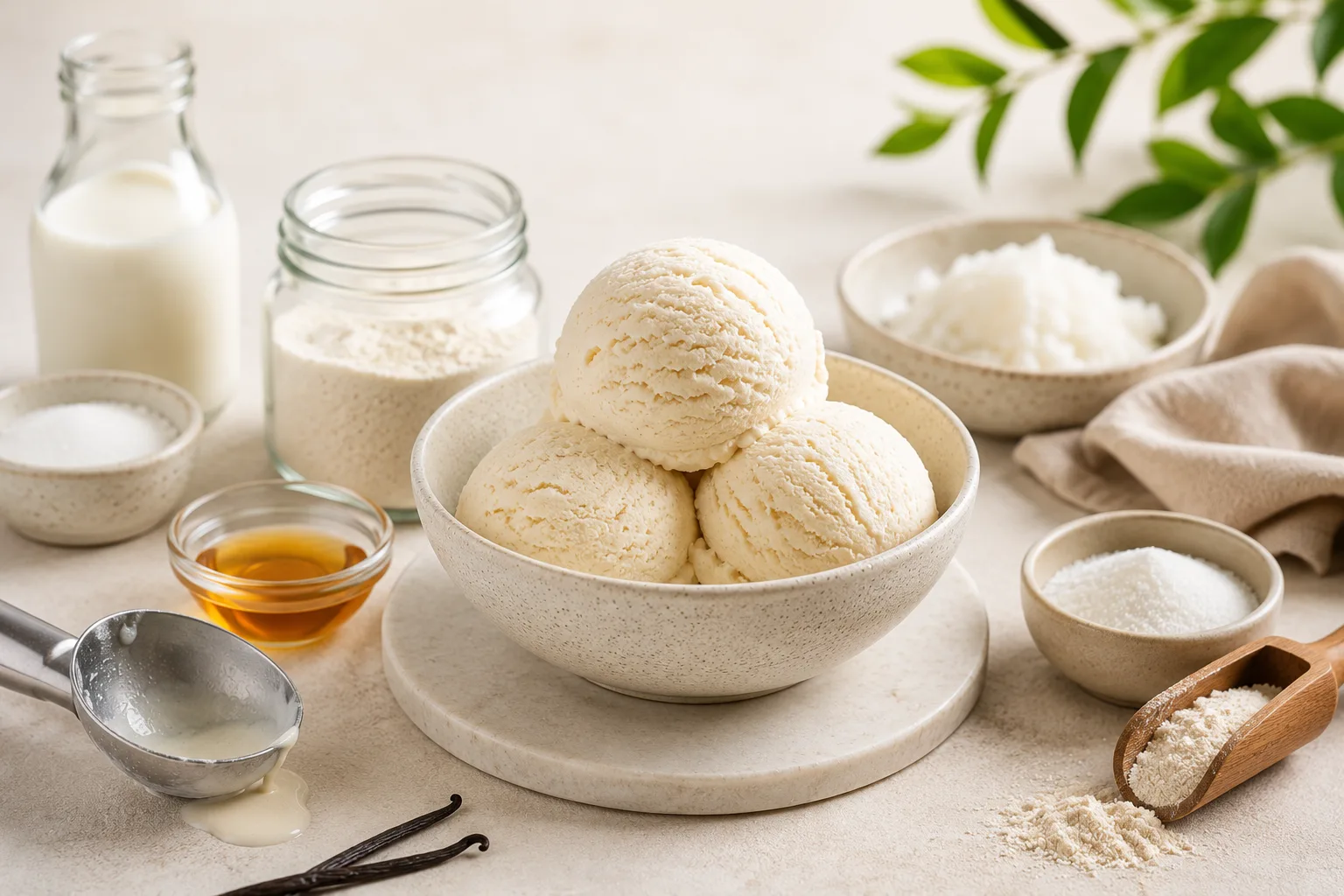
Ice cream manufacturers face a difficult balancing act: consumers want less sugar, but they still expect the same creamy, indulgent scoop they have always loved. Sugar is not just a sweetener in ice cream. It is a functional ingredient that controls freezing point, texture, and mouthfeel, which means removing it changes more than just the nutrition label. Cut it out carelessly and the result is often a hard, icy, flat-tasting product that fails in consumer testing before it ever reaches a shelf.
Successful sugar reduction in ice cream depends on combining the right functional ingredients, not swapping in a single substitute. Fiber, natural syrups, and bulk sweeteners each replace a different piece of what sugar used to do, and formulators who understand how those pieces fit together can cut sugar substantially without asking consumers to accept a lesser product. This guide walks through the main ingredient categories food manufacturers can use to reduce sugar in ice cream while protecting taste, texture, and shelf appeal, and outlines how to combine them into a workable formulation strategy.
Why Sugar Reduction in Ice Cream Is a Growing Priority
Global demand for reduced sugar dairy desserts continues to climb as consumers connect everyday sugar intake with long-term health concerns such as obesity and diabetes. The global market for reduced sugar food and beverages is projected to reach well over 100 billion USD within the next several years, with dairy and dessert products, including ice cream, identified as one of the fastest-growing segments as buyers look for indulgent options that still fit a health-conscious lifestyle.
Regulatory pressure is reinforcing this shift. Sugar-sweetened beverage levies in markets such as the United Kingdom and South Africa have already pushed manufacturers toward reformulation, and similar sugar-focused policies are expanding into broader food categories across Europe and Asia-Pacific. Front-of-pack labeling requirements in several regions are also making sugar content more visible to shoppers at the point of purchase, adding commercial pressure on top of regulatory pressure.
For ice cream specifically, this creates a two-sided challenge. Manufacturers need to cut sugar to meet consumer and regulatory expectations, but ice cream remains an indulgence category where taste and texture cannot be sacrificed. This is why formulators are increasingly turning to functional fiber, natural syrups, and blended sweetener systems rather than a single sugar substitute, since no single ingredient can fully replicate everything sugar contributes to a frozen dessert.
The Formulation Challenge: Sugar’s Multiple Roles in Ice Cream
Sugar performs at least four jobs inside an ice cream mix: it sweetens, it lowers the freezing point of the mix, it adds bulk and body, and it contributes to smooth texture by limiting ice crystal growth during freezing and storage. Each of these functions matters independently, which is why formulators cannot treat sugar reduction as a simple one-for-one sweetness swap.
Removing sugar without replacing these functions typically results in a harder, icier product with a flatter taste. Sweeteners used in ice cream formulation include cane sugar, corn syrup solids, dextrose, and lactose, each contributing differently to sweetness, freezing point depression, and body, and each leaving a different gap behind when it is reduced or removed.
This is why a single-ingredient swap rarely works well on its own. A workable sugar reduction strategy usually layers a fiber-based bulking agent, a natural syrup, and a bulk sweetener together, with each ingredient covering a different function that sugar used to perform alone. Formulators who try to solve the problem with one ingredient often end up compromising on either texture or taste, while a layered system lets each ingredient do the job it is best suited for.
Resistant Dextrin: The Fiber-Based Bulking Foundation
Resistant dextrin is one of the most efficient starting points for sugar reduction because it replaces the bulk and body that sugar contributes, without contributing significant sweetness or calories itself. As a soluble prebiotic fiber, it lets formulators pull back on total sugar solids while keeping the mix balanced for freezing and scooping, which is often the first hurdle that trips up a reduced-sugar formulation.
Research on inulin-type soluble fibers shows that adding fiber to ice cream formulations can support meaningful reductions in both sugar and fat while maintaining acceptable sensory quality, which reflects the same functional role resistant dextrin plays in a formulation. Beyond its structural function, resistant dextrin also carries a dietary fiber claim, giving manufacturers a positive label callout to pair with the reduced-sugar positioning.
In a multi-ingredient sugar reduction system, resistant dextrin typically anchors the formulation: it is added first to rebuild body and viscosity, then paired with a syrup and sweetener to restore the sweetness and freezing behavior that sugar removal takes away. Inclusion levels should be tested against the specific fat content and overrun target of the base mix, since bulking needs shift with formulation type.
Tapioca Syrup and Rice Syrup as Natural Sweetener Alternatives
Tapioca syrup and rice syrup work differently from resistant dextrin. Instead of replacing bulk, they replace part of the sweetness and freezing point control that sugar provides, while carrying a clean label, plant-derived positioning that appeals to health-conscious consumers seeking recognizable, minimally processed ingredients on a label.
Both syrups can partially substitute for sucrose or corn syrup in an ice cream mix, contributing mild sweetness and helping manage water activity and texture during freeze-thaw cycles. Because they are milder in sweetness than sucrose, they allow formulators to reduce total added sugar while still meeting flavor targets when paired with a complementary sweetener, rather than forcing an abrupt drop in perceived sweetness.
This makes tapioca syrup and rice syrup a practical middle layer in a reduced-sugar formulation: they smooth out the transition between a fiber-based bulking agent and a concentrated sweetener, preventing the flat or thin mouthfeel that can occur when sugar is removed too aggressively in one step. They also tend to perform well across a range of fat levels, which is useful when the same base formulation needs to serve both premium and light product lines.
SweetSentials for Balanced Sweetness Without the Sugar Load
Once bulk and body are addressed with fiber and a portion of sweetness is covered by natural syrups, formulators still need a way to hit the final sweetness target without reintroducing a large sugar load. This is where a sugar alternative such as SweetSentials fits into the system, closing the sweetness gap left by the other two ingredient categories.
Bulk sweeteners used for this purpose typically deliver sweetness close to sucrose while contributing minimal calories, and many also help depress the freezing point in a way that supports the same spoonability consumers expect from full-sugar ice cream. This freezing point contribution is especially important in ice cream, where an overly hard or overly soft mix at serving temperature can undo an otherwise well-formulated recipe.
Used at the right inclusion level, this type of sweetener closes the gap left after fiber and syrup substitution, giving the finished product a rounded, familiar sweetness profile rather than the flat or artificial aftertaste that can come from relying on a single high-intensity sweetener alone. Sensory testing at each inclusion step remains important, since sweetener perception can shift depending on the flavor system and mix-in ingredients used in the final product.
Building a Multi-Ingredient Sugar Reduction Strategy
The most reliable approach to sugar reduction in ice cream combines all three ingredient categories rather than relying on any single one. A typical formulation strategy might replace a portion of total sugar solids with resistant dextrin for bulk, layer in tapioca or rice syrup for mild natural sweetness and freezing control, and finish with a bulk sweetener to close the final sweetness gap.
This layered approach mirrors how many commercial reduced-sugar ice creams are formulated today, using combinations of fiber, bulking agents, and sweeteners rather than a single substitute to preserve spoonability, prevent ice crystal formation, and maintain a sucrose-like taste profile. Commercial examples in the market already demonstrate that this combination approach can achieve sugar reductions in the range of 30 to 50 percent while keeping sensory scores close to full-sugar benchmarks.
Because each ingredient contributes a different function, ratios need to be tested and adjusted for each specific formulation, fat content, and inclusion type. A formulation built for a premium full-fat base will not necessarily transfer directly to a light or low-fat line, since fat itself also contributes body and mouthfeel that has to be accounted for alongside the sugar reduction. Working with a manufacturer that supplies multiple complementary ingredients under one roof simplifies this process, since bulking, sweetening, and texture functions can be sourced, tested, and adjusted together rather than coordinated across separate suppliers.
Sourcing Considerations for Reduced-Sugar Formulations
Ingredient sourcing matters as much as formulation technique when developing a reduced-sugar ice cream line intended for multiple export markets. Certifications such as Halal, Kosher, Non-GMO, and ISO 22000 are frequently required by international buyers and retailers before a reformulated product can even be considered for listing, particularly in markets across the Middle East, Europe, and North America.
Selecting fiber, syrup, and sweetener ingredients from a single certified supplier reduces the compliance burden of managing multiple certificates, specification sheets, and audit trails across different vendors. It also simplifies technical support during formulation trials, since a supplier familiar with how its own ingredients interact can offer more specific guidance on inclusion levels than a generic technical data sheet allows.
For manufacturers evaluating new suppliers, it is worth confirming not only certification coverage but also manufacturing capacity and consistency, since reduced-sugar formulations are often more sensitive to batch-to-batch ingredient variation than traditional full-sugar recipes.
Meeting Consumer Expectations for Indulgence in Reduced-Sugar Ice Cream
Consumers largely accept sugar reduction as a path to better health, but in indulgent categories like ice cream, they are unwilling to trade away taste and texture to get there. Research on global consumer attitudes toward sugar reduction consistently finds that shoppers hold indulgent categories such as ice cream, confectionery, and desserts to a higher taste bar than everyday staples, even when they actively support the idea of lower sugar content.
This means reduced-sugar ice cream needs to be marketed and formulated around the same indulgent cues as full-sugar versions, including a creamy texture, rounded sweetness, and clean flavor release, rather than positioned purely as a diet product. Layering flavor and highlighting premium mix-ins can also help reinforce an indulgent experience alongside the reduced-sugar claim.
A multi-ingredient formulation approach supports this positioning directly. Because fiber, natural syrups, and bulk sweeteners each restore a different function that sugar used to provide, the finished product can carry a reduced-sugar or added-fiber claim while still delivering the scoopable, creamy experience consumers expect from ice cream.
Formulating Reduced-Sugar Ice Cream That Still Tastes Indulgent
Reducing sugar in ice cream is rarely about removing one ingredient. It is about rebuilding the bulk, sweetness, and freezing behavior that sugar provided, using a combination of functional ingredients suited to the task. Manufacturers who approach reformulation this way are better positioned to meet consumer demand for healthier indulgence without compromising on the eating experience.
Satoria Nutrisentials supplies resistant dextrin, tapioca syrup, rice syrup, and SweetSentials as complementary ingredients for food and beverage manufacturers developing reduced-sugar formulations. Explore the full ingredient range at satorianutrisentials.com/products to find the right combination for your next formulation.
References
- Alsiano A/S. (n.d.). Sugar reduction in ice cream. Alsiano Solutions. https://www.alsiano.com/solutions/sugar-reduced-sugar-free-ice-cream/
- Farias, T. C., et al. (2021). Development of ice cream with reduction of sugar and fat by the addition of inulin, Spirulina platensis or phycocyanin. LWT, 149. https://www.sciencedirect.com/science/article/abs/pii/S1878450X2100144X
- Food Business News. (2017, November 20). Less sugar per scoop, but same taste and texture. https://www.foodbusinessnews.net/articles/10915-less-sugar-per-scoop-but-same-taste-and-texture
- Ice Cream Science. (2024, July 6). Sugar in ice cream. https://www.icecreamscience.com/blog/sugar-in-ice-cream
- Innova Market Insights. (2025, August 27). Global consumer approaches to sugar reduction. https://www.innovamarketinsights.com/trends/global-consumer-approaches-to-sugar-reduction/
- Mordor Intelligence. (2026). Sugar-free food and beverage market: Size and industry report. https://www.mordorintelligence.com/industry-reports/sugar-free-food-and-beverage-market
- ScienceDirect / Preparation and evaluation of sucrose-reduced ice cream: Optimization via physiochemical and sensory study. (2025). https://www.sciencedirect.com/science/article/pii/S095869462500158X
Featured News
Category
Get a Promo and Keep Updated