
Explanation About Probiotic: A Strategic Guide for Food & Beverage Manufacturers
What Is Toll Manufacturing: Smarter Scaling for the Modern Food & Beverage Industry
December 9, 2025
General - Articles
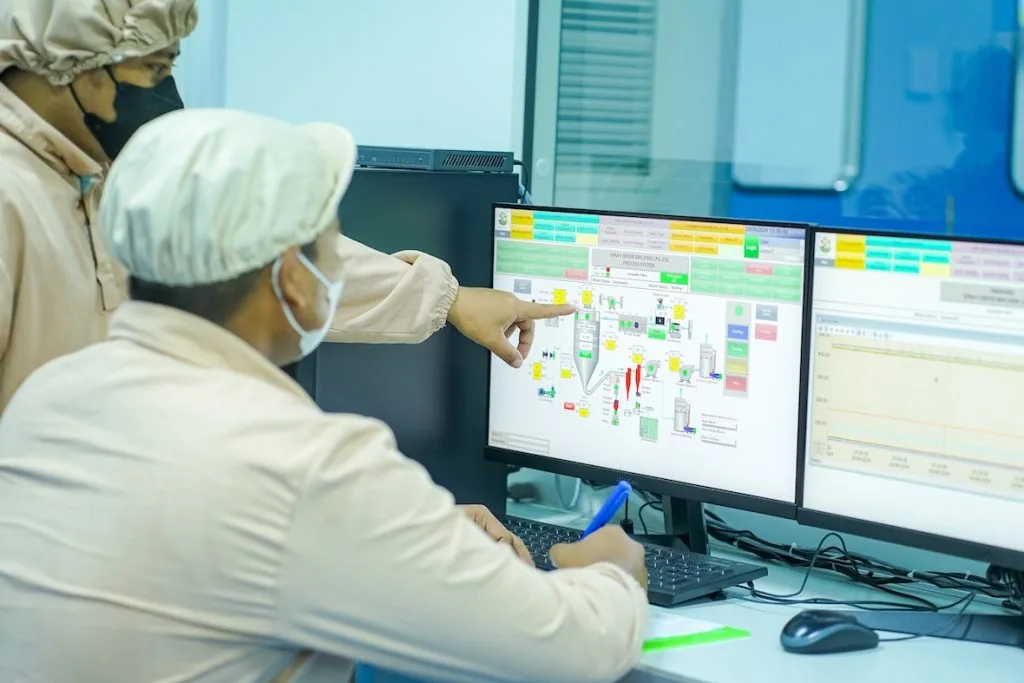
Toll manufacturing has quietly become the backbone of agile food and beverage production. While trends in formulation shift overnight, operational strategies that enable companies to move faster and build smarter supply chains stay constant. That’s exactly where toll manufacturing sits—as infrastructure, not a passing industry buzzword.
For ingredient solution providers like Satoria Nutrisentials, toll manufacturing represents more than outsourcing. It opens new doors for manufacturers to scale production without sacrificing formula ownership, product integrity, or market differentiation.
In the context of nutrition-responsive product development, toll manufacturing allows brands to create high-fiber, protein-enhanced, gut-friendly products using stable, clean-label ingredients without heavy upfront investment in production facilities.
This guide will explore toll manufacturing in depth, explain why it matters today, outline real workflow applications, and connect it directly to Satoria Nutrisentials’ field-proven toll manufacturing offerings.
Why Manufacturers Are Turning to Toll Manufacturing for Better Scaling
Toll manufacturing creates a production partnership where one company owns the product’s recipe and supplies key ingredients, while the toller contributes the operational side—plant infrastructure, machinery, process execution, quality assurance, production compliance, and often even packaging-ready workflow.
This model is especially valued across the food industry in areas that require strong industrial tolerance, ingredient solubility, pH stability, acid-heat resilience, allergen-controlled environments, and neutral sensory impact at scale.
Companies not only gain scalability, but they gain predictability—being able to plan long-term distribution and growth without locking in huge capital for new equipment or internal production plants. This is why toll manufacturing has become popular among brands aiming to combine functional nutrition products with efficient production models.
Unlike white-label production systems that hand over control of the formula to the manufacturer, toll manufacturing ensures that the brand retains full formulation ownership while benefiting from the toller’s execution rigor.
For B2B manufacturers, this means faster product cycles, more flexibility in R&D, and less operational bottleneck, especially for products built around specialist nutritional inputs like resistant fibers, plant protein isolates, or gut-friendly formulation systems.
What Is Toll Manufacturing in Practice? Breaking It Down for Food & Beverage Manufacturers
Toll manufacturing is a structured outsourcing model where both sides play equally important roles, but in different territory.
The brand owner leads with the recipe, sourcing roadmap, nutritional direction, trade-market strategy, and supply chain structure. Meanwhile, the toller owns execution infrastructure such as production lines, equipment, batch processing, quality checks, packaging uptime, regulatory compliance, food safety certifications, and industrial environment standards.
In many toll arrangements, the brand supplies high-value ingredients such as resistant dextrin or isolate proteins, while the toller ensures those materials are processed into finished goods at scale through pre-approved, certified manufacturing plants.
Toll manufacturing is most commonly used for baked goods, beverages, industrial dry mixes, nutrition bars, sauces, condiments, alternative protein snacks, supplements, fiber-fortified drinks, and R&D product pilots that demand scale without sensory compromise.
For manufacturers operating within health-driven product segments, ingredient stability is just as important as production reliability. With Satoria Nutrisentials toll manufacturing offerings, manufacturers can integrate industrial-tolerant fibers and proteins into partner-owned recipes seamlessly—whether for beverage filling lines or industrial snack forming.
This gives manufacturers the best of both worlds: movement, control, stability, compliance, and sensory confidence at scale.
Key Differences: Toll Manufacturing, Contract Manufacturing & OEM Manufacturing
Toll manufacturing is often grouped into the same family as other production outsourcing services, but it plays a different game entirely.
In contract manufacturing, the manufacturer usually provides both the production facilities and the raw materials, giving the brand moderate control of the formula but sometimes lower consistency in CapEx planning and ingredient sourcing.
OEM manufacturing leans one step further, where the manufacturer owns not just the production infrastructure but also the formula itself. This enables faster deployment but gives the brand very limited formulation ownership or differentiation strength.
The toll manufacturing model, however, positions the brand as the owner of the recipe while reducing internal expense for production execution. This structure becomes ideal if manufacturers want to retain nutritional positioning or ingredient differentiation while tollers manage process hand-off, QC, compliance, certifications, and packaging-ready productivity.
Food manufacturers increasingly choose tolling if they want to test or scale formulations using specialist ingredient stacks like prebiotic fibers or pea protein isolates without production run limitations.
That formula-first ownership is exactly why toll manufacturing has lasting appeal in the nutrition-driven food & beverage sector.
Who Uses Toll Manufacturing Most? A Quick Snapshot for B2B Advertisers & Manufacturers
Toll manufacturing has especially high adoption among manufacturers or brands in the following sectors:
Beverage producers launching fiber-fortified RTDs, bakery brands scaling clean-label production, snack companies developing protein-dense nutrition bars, sauce manufacturers needing heat-acid stability at industrial pH range, supplement brands producing gut-benefit drink mixes, companies testing new formulations without heavy infrastructure costs, and international brands scaling regional distribution through compliance-optimized tollers.
These manufacturers typically seek tolling partners who don’t just handle production execution, but can also support advanced R&D alignment, industrial ingredient behavior, allergen segmentation, supply predictability, and certification adherence at global level.
With Satoria Nutrisentials, toll manufacturing becomes a natural path forward because its portfolio includes processing-stable fibers and allergen-controlled pea protein isolates engineered for CapEx-free scaling—critical for manufacturers optimizing product R&D cycles, texture stability, or glycemic control in formulation pipelines.
When manufacturers ask, “what is toll manufacturing?” they’re increasingly asking a deeper follow-up question: how can tolling scale with nutritional ingredients and not compromise on texture, taste, solubility, or compliance?
This article answers that—and shows exactly where Satoria fits in that journey.
Toll Manufacturing Workflow
A toll manufacturing partnership succeeds when ownership is clearly defined and both sides operate from mutual commercial goals. This workflow is how toll manufacturing runs in practice across the food industry, reformatted naturally as requested:
It begins with the manufacturer sharing its product formulation and its precise ingredient requirements. This includes not only nutritional direction, but industrial conditions like acidity level, heating tolerance, moisture index, extrusion pressure, forming line behavior, and sensory neutrality targets.
After the formula is finalized, the brand owner typically supplies the core raw materials. These may include resistant dextrin for fiber-enhanced or low-glycemic pipelines, or isolate protein systems like pea protein isolate when allergen behavior or non-soy protein scale-up performance are important.
Once ingredients arrive at the toll manufacturing plant, the toller begins rigorous quality intake checks. This includes verifying solubility tolerance, contamination control, ingredient behavior under heat-acid conditions, prebiotic consistency, batch formulation reproducibility, and ensuring regulatory compliance across certifications such as halal, vegan, non-GMO, or allergen-controlled environments.
The tolling partner then initiates the production process, managing industrial mixing lines, forming lines, baking or extrusion equipment, moisture-pH-temperature stability production, and transformation into packaging-ready food or beverage finished goods.
Finally, the finished product is validated for shelf-stability, production reproducibility, and packaging uptime. Post-production distribution control stays with the brand owner or manufacturer, preserving market differentiation beyond production lines, and supporting retail or B2B product deployment without CapEx-heavy infrastructure expansion.
This entire model allows large-scale batch commercialization without sacrificing the originality of the formulation or the global certification handler required for long-term product continuity.
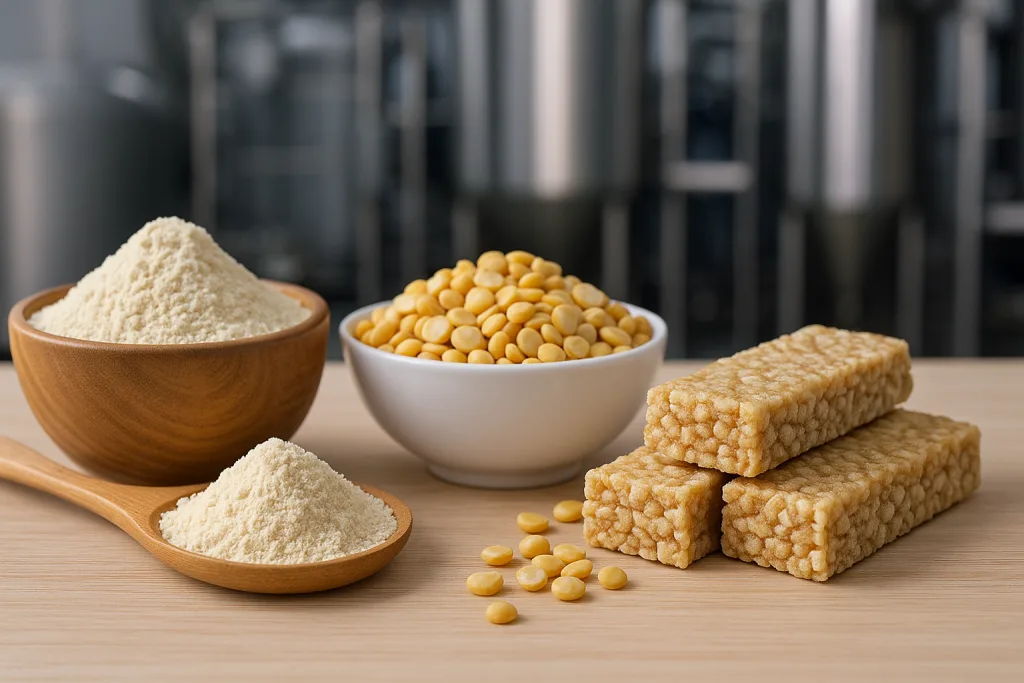
Why Ingredient-Tolerant Portfolio Matters More Than Production Lines Alone
Toll manufacturing is only half of the story if the ingredients themselves don’t scale with production systems. That’s where most partnerships fall apart.
Industrial food manufacturing increasingly prioritizes fibers and plant protein isolates with heat-acid tolerance, neutral taste, high solubility, low viscosity disruption, allergen segmentation behavior, moisture-heat stability ranging, and clean-label registry for global market tolerance.
Stable fibers like resistant dextrin excel in toll manufacturing because they don’t collapse, clump, or interfere with taste, mouthfeel, or filling lines at beverage pH or during baking or product forming—making it preferred stack over fast-ferment alternatives.
Pea protein isolate offers strong production-scale density without soy-based allergen risks. That allergen friendship makes it strategic for B2B manufacturers scaling snacks, bars, baked goods, or beverages with global compliance needs.
Satoria Nutrisentials bridges both sides: toll execution + ingredient infrastructure for scale so manufacturers don’t need to choose between nutrition claims or production reliability during batch commercialization.
Why Asia Pacific Manufacturers Are Unlocking Australian Market-Scale Fibers Through Tolling
Manufacturers across Asia Pacific increasingly need tolling partners who can support both regional production cycles and international certification frameworks while scaling ingredients that resonate with new global markets such as Australia.
This region is uniquely positioned for toll manufacturing because many partners already need: predictable scalability, sensory neutrality at industrial fortification, allergen-segmented non-soy protein systems, globally compliant halal & vegan ingredient stack, and CapEx-light production hand-off that doesn’t require internal plant development.
At Satoria Nutrisentials facilities, manufacturers can integrate Australian market-ready fiber infrastructure using resistant dextrin or allergen-friendly pea protein isolate toll-input stacks without infrastructure compromise or taste disruption.
If a manufacturer is scaling into Australia or launching nutrition-responsive products across APAC, toll manufacturing partnerships built around stable, neutral-impact fiber and protein portfolios create a smoother path to commercialization.
This intersection is why toll manufacturing is quickly becoming operational infrastructure across global nutrition-focused product pipelines.
How to Evaluate Toll Manufacturing Partners Without Guesswork
B2B manufacturers typically audit toll manufacturing partners through consistency, regulatory readiness, and ability to scale unique formulations without compromising ingredient tolerance or sensory expectations.
The most reliable audit checkpoints include: availability of long-term batch reproducibility, production line uptime + QA predictability, ability and track record in handling fiber-responsive formulations, availability of allergen-complete non-soy protein systems, pre-approved halal + non-GMO + vegan registration states, technical R&D collaboration for formulation iterations, and packaging integration reliability at scale.
Satoria Nutrisentials performs strongly across these areas because its ingredient infrastructure has been engineered specifically for modern health-driven industrial food-scale formulation behavior.
What Is Toll Manufacturing From a Brand-Strategy Angle?
Toll manufacturing is about territory—not delegation alone.
Brands that choose toll manufacturing partners don’t do it because it’s easier. They do it because it gives them control over the formula while removing internal CapEx weight for production execution.
It changes scaling from fixed infrastructure to flexible ecosystem, allowing manufacturers to test improved R&D cycles, scale production, embed functional fibers, deploy allergen-responsive protein systems, and align distribution strategies independently, in production-ready facilities with industrial tolerance confidence.
That strategy-first nature is where toll manufacturing becomes a competitive advantage for the food industry.
Scale Without Compromise with Satoria Toll Manufacturing Solutions
When your consumer asks for better gut health, improved glycemic control, neutral taste, cleaner labels, better protein density without soy, beverage stability under acid-heat forming lines, and global compliance registrations—you need infrastructure for scale. Not experimentation at small batches.
That’s exactly where Satoria Nutrisentials toll manufacturing plays best.
Whether you’re producing sauces, RTDs, instant dry mixes, baked goods, snacks, or nutrition bars, Satoria enables manufacturers to preserve formulation ownership and scale production faster using its:
✔ Neutral-taste resistant fibers
✔ Heat-acid stable dextrin systems
✔ Allergen-controlled pea protein isolates
✔ Halal-vegan-non-GMO ready facilities
✔ Packaging-integrated runtimes
Tolling removes the machinery bottleneck. Smart ingredients remove the formulation bottleneck. Together, they remove most bottlenecks at scale.
Now is the moment to scale—not to simplify.
Partner with Satoria Nutrisentials to turn your formulations into scalable production infrastructure, and enter your next commercialization cycle with CapEx-light confidence.
References
- Anderson, J.W., et al. (2009). Health benefits of dietary fiber. Nutrition Reviews, 67(4), 188-205.
- Gibson, G. R., et al. (2017). Dietary modulation of gut microbiota. Nutrients, 9(12), 1357.
- Slavin, J. L. (2013). Position of the Academy of Nutrition & Dietetics. Journal of the Academy of Nutrition and Dietetics, 113(6), 818-833.
- Satoria Nutrisentials. (2025). OEM & toll manufacturing solutions for food and beverage manufacturers.
- Weaver, C.M., et al. (2014). Functional ingredients impact at scale. Advances in Nutrition, 5(3), 306-315pp.
Featured News
Category
Get a Promo and Keep Updated