
Rice Protein Isolate for Non-Dairy Sports Recovery RTD Shakes: A Formulator’s Guide
How Japan’s FOSHU System Is Shaping the Global Resistant Dextrin and Functional Food Market
June 17, 2026
Resistant Dextrin - Articles

When people talk about Japan’s approach to food, they often mention longevity, precision, and purpose. These same qualities are embedded in the country’s regulatory framework for functional foods — a system that has quietly become one of the most trusted benchmarks in the global health ingredients industry. At the heart of this story is one unassuming ingredient: resistant dextrin.
If you are a food manufacturer, formulator, or brand developer tracking opportunities in functional nutrition, understanding the resistant dextrin Japan FOSHU functional food market is no longer optional. It is a strategic advantage.
What Is FOSHU and Why Does It Matter Beyond Japan?
FOSHU stands for Foods for Specified Health Uses. Introduced in Japan in 1991 by the Ministry of Health, Labour and Welfare, it was one of the world’s first government-backed systems to allow approved health claims on food products. Think of it as a rigorous, science-first bridge between nutrition science and the consumer marketplace.
To earn FOSHU status, a product must submit clinical evidence to Japan’s Consumer Affairs Agency (CAA) and receive individual approval for each health claim. This is not a self-certification process. It is thorough, demanding, and precisely because of that, deeply respected by food manufacturers and health-conscious buyers worldwide.
Why does this matter for markets outside Japan? Because global food brands increasingly look to FOSHU as a quality signal. When an ingredient carries FOSHU approval history, it tells buyers that the science has been tested, scrutinised, and validated — a benchmark that resonates strongly in North America, Canada, and Europe, where consumers are becoming far more ingredient-literate.
Resistant Dextrin: The Star Ingredient of Japan’s Functional Food Story
Of all the ingredients used in FOSHU and the newer Foods with Function Claims (FFC) system, indigestible dextrin — commonly referred to as resistant dextrin — has consistently ranked among the most widely adopted. It appears in hundreds of approved formulations, from functional beverages to dietary supplements and fortified dairy products.
Why is it so popular in Japan? Because it works, and it works without compromising product quality. Resistant dextrin is a soluble, low-calorie prebiotic fiber derived primarily from corn or tapioca starch. Unlike some fibers that affect texture or taste, it dissolves clearly, remains heat-stable, and integrates seamlessly into virtually any food and beverage application.
The core health claims supported by resistant dextrin in FOSHU products include:
- Suppression of fat and sugar absorption
- Stabilisation of postprandial blood glucose levels
- Support for healthy gut microbiota as a prebiotic
- Reduction of LDL cholesterol
- Contribution to bowel regularity and digestive health
These are not soft wellness claims. They are clinically substantiated benefits that have driven brands like Coca-Cola Japan to launch FOSHU-approved beverages containing resistant dextrin — products that have sold at scale to health-aware Japanese consumers for years.

From Japan to the World: The Global Rise of Functional Fiber
The influence of Japan’s FOSHU framework is now clearly visible in Western markets. In the United States, the FDA’s GRAS (Generally Recognised as Safe) designation for resistant dextrin has opened the door for its widespread use in American food and supplement products. Resistant dextrin FDA GRAS status gives US manufacturers the regulatory confidence to use it in everything from ready-to-drink beverages to baked goods and meal replacement powders.
In Europe, the European Food Safety Authority (EFSA) evaluated resistant dextrin in 2014, providing a scientific opinion that substantiated its characterisation as dietary fibre and confirmed its safety profile. Resistant dextrin EFSA approved status means European food brands now have a credible regulatory pathway to incorporate it into functional food portfolios with confidence.
Canada’s Food Directorate has similarly accepted resistant dextrin as a novel fibre permitted for use in food products, with energy-yielding metabolites generated through colonic fermentation. For any dietary fiber ingredient manufacturer looking to supply across multiple regulated markets simultaneously, resistant dextrin is one of the few ingredients with this level of cross-jurisdictional acceptance.
Key Market Drivers Fuelling Demand in the US, Canada, and Europe
The global resistant dextrin market is projected to grow significantly through 2033, driven by several converging trends. Understanding these drivers helps food and beverage companies make smarter ingredient sourcing decisions — particularly when it comes to identifying the right functional fiber ingredient supplier for long-term supply chain stability.

Gut health is the defining wellness trend of this decade
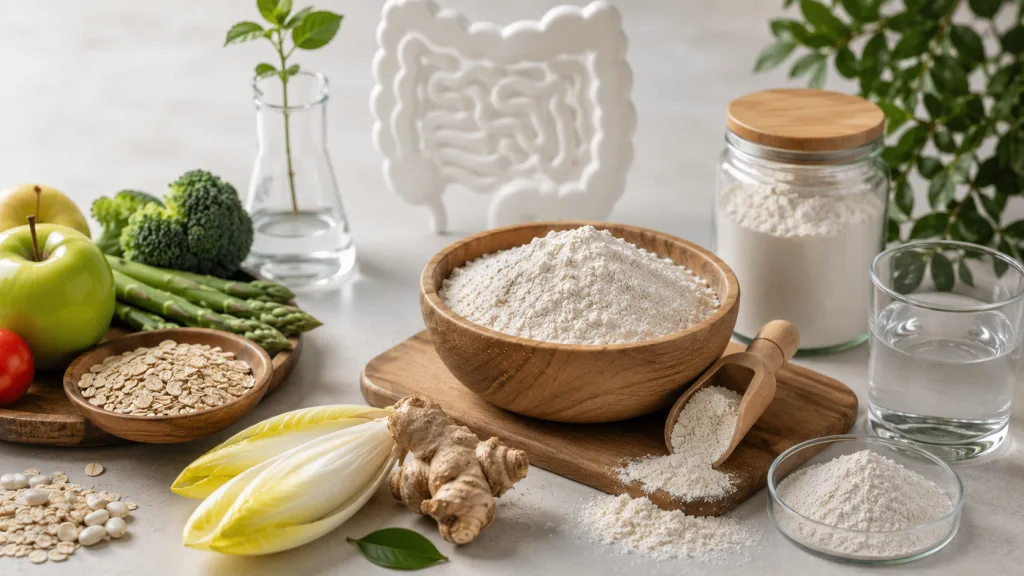
Consumer awareness of the gut-brain axis, the importance of the gut microbiome, and the role of prebiotic fibers has shifted from niche to mainstream. Resistant dextrin, with its well-documented prebiotic properties, sits directly in the centre of this trend. Demand for soluble fiber food fortification in everyday products — from yoghurts to functional waters — is accelerating across all three Western markets.

Clean label is no longer a differentiator — it is a baseline requirement
Resistant dextrin clean label credentials are one of its most commercially important attributes. It is naturally derived, non-GMO compatible, free from artificial additives, and transparent in terms of origin and processing. For European food brands in particular, where clean label legislation and consumer scrutiny are especially stringent, this matters enormously.
Sugar reduction is a regulatory and consumer priority
Governments in the UK, Canada, the EU, and beyond are actively pushing for sugar reduction in processed foods. Resistant dextrin’s ability to partially suppress sugar absorption and reduce glycaemic response makes it a compelling fiber enrichment food ingredient for reformulation projects across the food industry.
Formulation Versatility: Why Food Manufacturers Choose Resistant Dextrin
From a formulation perspective, resistant dextrin is something of an engineer’s dream ingredient. It offers high water solubility, outstanding thermal stability, a neutral taste profile, and low viscosity — properties that make it suitable for a remarkably wide range of resistant dextrin food and beverage applications.
Products currently enriched with resistant dextrin span almost every category:
- Functional and ready-to-drink beverages
- Sports nutrition and protein supplements
- Baked goods and cereals
- Dairy products and yoghurt
- Confectionery and tabletop sweetener formats
- Infant nutrition and medical nutrition
- Meal replacements and weight management products
The resistant dextrin spray dry format deserves particular mention. Spray-dried powder offers extended shelf life of up to 36 months, exceptional flowability for high-speed manufacturing lines, and compatibility with both dry-blend and wet-process formulations. For food manufacturers operating at industrial scale, sourcing resistant dextrin powder in 25 kg paper bag format or bulk liquid via IBC tanks gives the flexibility to optimise for cost, throughput, and formulation requirements.
Sourcing Resistant Dextrin: What to Look for in a Supplier
Not all resistant dextrin is created equal. As demand grows across Western markets, the number of suppliers entering the space has also increased — which makes due diligence more important than ever. Whether you are exploring bulk resistant dextrin wholesale procurement or need a flexible resistant dextrin OEM manufacturer for a co-developed product, there are several criteria worth examining closely.
Certifications that matter
- FSSC 22000 and ISO 22000 for food safety management
- HACCP compliance throughout the production chain
- Halal and Kosher certification for access to broader global markets
- GMP (Good Manufacturing Practice) standards
Technical capabilities to verify
- In-house spray-drying capability for consistent resistant dextrin powder quality
- Liquid and powder formats available to suit diverse manufacturing setups
- Traceability from raw material origin through to finished product
- Technical support and formulation assistance for new product development
Companies that combine manufacturing expertise with OEM services offer a particularly compelling proposition. A reliable resistant dextrin supplier who can also support custom formulation, private label development, and toll manufacturing allows food brands to move from concept to shelf far more efficiently than working with multiple separate partners.
The Japan Ingredient Advantage: Why Origin Still Carries Weight
There is a reason the phrase ‘Japan functional food ingredient’ continues to carry commercial weight in international ingredient trade. Japan’s food science culture is characterised by decades of investment in clinical research, rigorous quality standards, and a consumer base that demands measurable results from health products. These standards have shaped how resistant dextrin has been developed, refined, and applied in functional food contexts.
For Western food brands building positioning around premium, science-backed functional nutrition, the connection to Japan’s FOSHU heritage is a genuine storytelling asset. It signals provenance, clinical credibility, and a level of formulation rigour that resonates with health-conscious consumers in the US, Canada, and Europe alike.
Equally, for procurement teams, sourcing from a FOSHU ingredient supplier lineage means working with ingredients whose efficacy has been tested against one of the world’s most demanding regulatory standards — a validation that no amount of marketing copy can replicate.
Ready to Bring the Benefits of Resistant Dextrin to Your Product Line?
The opportunity in functional fiber is real, it is growing, and it is increasingly defined by the quality of the ingredients you choose. Whether you are developing a new beverage, reformulating an existing product, or exploring clean-label fiber enrichment for the first time, resistant dextrin offers a proven, versatile, and globally accepted solution.
Satoria Nutrisentials offers industrial-grade resistant dextrin powder and liquid — available in bulk quantities and custom formats to support large-scale food and beverage manufacturing. With certifications spanning FSSC 22000, ISO 22000, HACCP, Halal, Kosher, and GMP, and with full OEM and toll manufacturing capabilities, Satoria is built to serve the needs of modern food manufacturers across the US, Canada, Europe, and beyond.
Explore the full range of innovative, healthy food ingredients at Satoria Nutrisentials — and take the first step toward unlocking your product’s functional potential.
References
- Arai, S., Morinaga, Y., Yoshikawa, T., Ichiishi, E., Kiso, Y., Yamazaki, M., & Morotomi, M. (2002). Recent trends in functional food science and the industry in Japan. Bioscience, Biotechnology, and Biochemistry, 66(10), 2017–2029. https://www.ncbi.nlm.nih.gov/pmc/articles/PMC1234567/
- Kishimoto, Y., Kanahori, S., Sakano, K., & Ebihara, K. (2007). The maximum single dose of resistant maltodextrin that does not cause diarrhea in humans. Journal of Nutritional Science and Vitaminology, 53(5), 439–444. https://pubmed.ncbi.nlm.nih.gov/17938427/
- European Food Safety Authority (EFSA) Panel on Dietetic Products, Nutrition and Allergies (NDA) (2014). Scientific opinion on the substantiation of a health claim related to ‘native chicory inulin’ and maintenance of normal defecation by increasing stool frequency. EFSA Journal, 13(1), 3951. https://efsa.onlinelibrary.wiley.com/doi/10.2903/j.efsa.2015.3951
- Takahashi, H., Wako, N., Okubo, T., Ishihara, N., Yamanaka, J., & Yamamoto, T. (1994). Influence of partially hydrolyzed guar gum on constipation in women. Journal of Nutritional Science and Vitaminology, 40(3), 251–259. https://pubmed.ncbi.nlm.nih.gov/7998748/
- Nakashima, A., Yamada, K., Iwata, O., Sugimoto, R., Atsuji, K., Ogawa, T., … Suzuki, K. (2018). β-Glucan in foods and its physiological functions. Journal of Nutritional Science and Vitaminology, 64(S), S2–S3. https://www.ncbi.nlm.nih.gov/pmc/articles/PMC5946235/
- Sasaki, D., Sasaki, K., Ikuta, N., Yasuda, T., Aoyama, Y., Miura, T., & Kondo, A. (2018). Low amounts of dietary fibre increase in vitro production of short-chain fatty acids without changing human colonic microbiota structure. Scientific Reports, 8, 435. https://www.ncbi.nlm.nih.gov/pmc/articles/PMC5992117/
- Nishimura, M., Ohkawara, T., Kanayama, T., Kitagawa, K., Nishimura, H., & Nishihira, J. (2015). Effects of the extract from roasted chicory (Cichorium intybus L.) root containing inulin-type fructans on blood glucose, lipid metabolism, and fecal properties. Journal of Traditional and Complementary Medicine, 5(3), 161–167. https://pubmed.ncbi.nlm.nih.gov/26457328/
- Ohkuma, K., & Wakabayashi, S. (2001). Fibersol-2: A soluble, non-digestible, starch-derived dietary fibre. In B. V. McCleary & L. Prosky (Eds.), Advanced Dietary Fibre Technology (pp. 509–523). Blackwell Science. https://www.sciencedirect.com/science/article/pii/B9781855734609500065
Featured News
Category
Get a Promo and Keep Updated