
Dietary Fiber Health Claim Regulation: A Formulator’s Guide to FDA, EFSA, and Global Compliance
Plant Protein for Healthy Aging: A Manufacturer’s Guide to Formulating for an Aging Population
July 11, 2026
Protein & Nutritional Enhancers - Articles
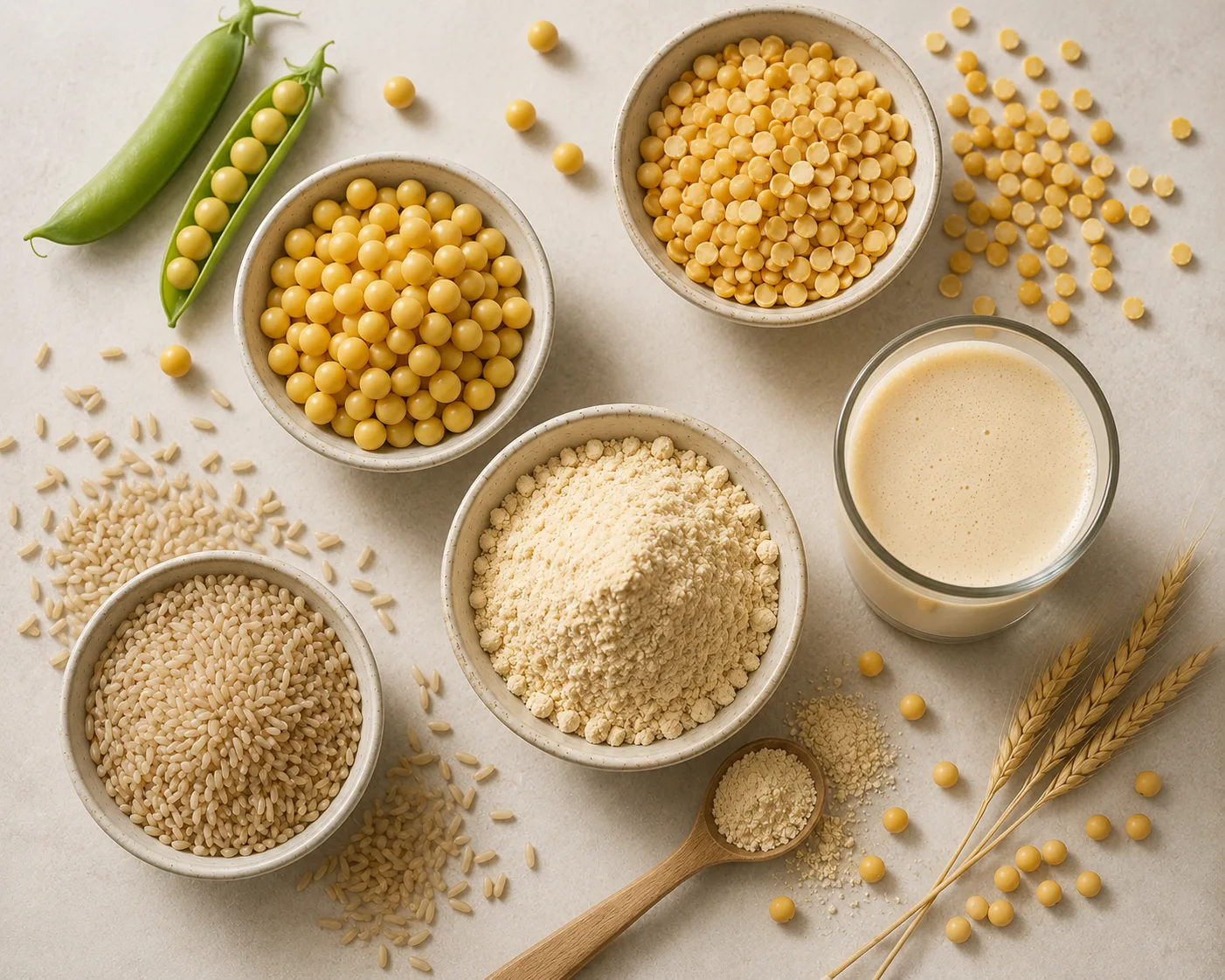
Aging populations are reshaping the food and beverage industry, and protein sits right at the center of that shift. Plant protein for healthy aging has moved from a niche wellness topic into a mainstream formulation priority, as consumers over 50 look for products that support strength, mobility, and independence. For manufacturers and brand owners, understanding this shift isn’t optional — it’s the foundation of a smart, future-ready product roadmap.
Why Aging Bodies Need More Protein, Not Less
Muscle loss is one of the quieter costs of getting older. Starting around age 40, adults can lose roughly 3–8% of muscle mass per decade, a decline that accelerates after 60. Left unaddressed, this contributes to sarcopenia — a condition affecting anywhere from 5% to 50% of older adults depending on age, setting, and diagnostic criteria.
This is exactly why protein intake for sarcopenia prevention has become such a central research focus. Adequate, well-distributed protein intake — paired with physical activity — helps preserve lean mass, supports mobility, and reduces fall and fracture risk. For product developers, this creates a clear opportunity: formulations built around high-quality plant protein can directly address a documented, growing nutritional gap.
It’s worth asking: is this just a supplement-aisle trend, or a broader shift? The data suggests the latter. As the World Health Organization’s Decade of Healthy Ageing initiative highlights, functional ability — not just lifespan — is now the metric that matters, and nutrition is one of the few levers people can control daily.
The demographic pressure behind this shift is hard to ignore. Populations aged 60 and above are projected to grow substantially over the coming decades, and that growth is reshaping what ‘everyday nutrition’ looks like on supermarket shelves. Products that once targeted a narrow supplement audience are now being reformulated for a much broader, mainstream older-adult consumer base.
How Much Plant Protein Do Older Adults Need?
So, how much plant protein do older adults need? Guidance from geriatric nutrition researchers generally recommends 1.0 to 1.5 grams of protein per kilogram of body weight per day for older adults, notably higher than the standard adult baseline. The exact figure depends on activity level, muscle mass, and overall health status.
What matters as much as the total amount is how it’s distributed. Research on healthy aging points to a synergistic effect between protein and physical activity — spreading intake evenly across meals appears to support muscle protein synthesis more effectively than concentrating it in one sitting. This is a useful formulation insight: multiple smaller-format, protein-fortified products (beverages, bars, fortified staples) may serve older consumers better than a single large dose.
For formulators, this translates into practical product design. Ready-to-drink beverages, fortified porridge or cereal bases, and protein-enriched bakery items each offer a way to help older consumers hit protein targets without relying on one large meal or supplement.
It’s also worth remembering that appetite naturally declines with age, which makes protein density more important than protein volume. A smaller, more concentrated serving — a fortified shake or a protein-enriched soup base, for example — can often deliver a meaningful protein contribution more reliably than asking someone to eat a larger conventional meal.
Plant Protein vs Animal Protein: What the Research Shows on Aging
The plant protein vs animal protein aging question has drawn serious scientific attention in recent years. A widely cited analysis of the Nurses’ Health Study, published in the American Journal of Clinical Nutrition, followed nearly 49,000 women over three decades and found that higher plant protein intake in midlife was linked to a 46% greater likelihood of healthy aging.
The same research found the opposite pattern for animal protein: women who drew most of their protein from meat, dairy, and other animal sources were about 6% less likely to remain healthy into older age. Harvard T.H. Chan School of Public Health, which contributed to the analysis, noted that plant protein from foods like beans, peas, and grains was associated with benefits across multiple domains — including physical function and cognitive health.
This doesn’t mean animal protein has no place in an aging diet. But it does support a strong case for plant protein muscle health seniors positioning in food and beverage development — particularly for brands targeting the 50+ demographic with functional, everyday products rather than clinical supplements.
Separately, qualitative research among adults aged 55 and older found that taste and clearly communicated health benefits were the two biggest factors driving acceptance of protein-rich, plant-based diets — a useful reminder that formulation and flavor matter just as much as the nutrition label.
Best Plant Protein Sources for Muscle Preservation
Not all plant proteins are created equal when it comes to supporting plant protein and muscle mass preservation. The best plant protein sources for muscle preservation tend to share a few traits: a complete or near-complete amino acid profile, high digestibility, and a neutral flavor that works across product formats. Commonly used sources include:
- Pea protein and pea protein isolate — rich in branched-chain amino acids (BCAAs) that support muscle recovery
- Rice protein isolate — hypoallergenic and easily digestible, ideal for sensitive consumer groups
- Legumes such as lentils and chickpeas — accessible, fiber-rich whole-food sources
- Quinoa and other pseudo-grains — naturally complete amino acid profiles
- Blended plant proteins — combining two or more sources to offset individual amino acid gaps
For manufacturers, isolates and blends offer the most formulation flexibility. They deliver concentrated protein without the fiber, starch, or off-notes that can complicate texture and taste in finished products aimed at an aging demographic.
Texture and mouthfeel deserve particular attention in this category. Many older consumers manage dental or swallowing sensitivities, so a protein source that disperses smoothly and avoids grittiness isn’t just a nice-to-have — it can be the difference between a product someone finishes and one they set aside after a few sips.
Formulating with Pea and Rice Protein for Elderly Nutrition
Amino acid completeness and digestibility are non-negotiable when formulating for older consumers, many of whom already manage reduced appetite, chewing difficulty, or digestive sensitivity. Two ingredients consistently rise to the top of formulators’ shortlists, and understanding how each performs — individually and together — makes the difference between an average product and one that genuinely supports muscle health.

Pea Protein Isolate for Elderly Nutrition
Pea protein isolate for elderly nutrition offers a compelling profile: it’s a complete protein containing all nine essential amino acids, particularly rich in BCAAs that support muscle growth and recovery. It’s also hypoallergenic, non-GMO, and easily digestible — important for older consumers who may be managing sensitivities or reduced digestive efficiency. Its neutral flavor and good solubility make it adaptable across beverages, bars, and dairy-alternative applications.

Rice Protein Isolate and Healthy Aging
Rice protein isolate healthy aging applications benefit from a different but complementary strength. Extracted from brown rice, it’s hypoallergenic and well-suited to consumers avoiding soy, gluten, or dairy. While slightly lower in lysine than some other plant proteins, it pairs exceptionally well with pea protein isolate — together forming a more complete amino acid profile than either ingredient alone, which is why blended formulations are increasingly common in senior-focused product development.
Why Clean-Label, Non-GMO Sourcing Matters for This Category
Consumers formulating their own diets around healthy aging tend to read labels carefully, and the brands serving them are expected to match that scrutiny. Clean-label protein ingredients for elderly nutrition products aren’t just a marketing preference — they reflect genuine consumer demand for transparency, simplicity, and traceability in what they eat.
This is especially true in plant protein for medical nutrition formulation, where ingredients often support consumers managing chronic conditions, post-surgical recovery, or age-related nutritional deficiencies. In these applications, allergen status, certification, and consistent quality aren’t optional extras — they’re baseline requirements.
Working with a non-GMO pea protein isolate supplier that maintains rigorous certification standards (Non-GMO, Halal, Kosher, FSSC 22000, HACCP) gives formulators the documentation and consistency needed to move confidently from concept to shelf, particularly in regulated categories like medical nutrition and infant or senior-specific product lines.
Certification also opens doors commercially. A single, well-documented ingredient specification sheet can support multiple export markets at once — from Halal-certified regions across Southeast Asia and the Middle East to Kosher-conscious buyers in North America and Europe — without requiring a separate sourcing relationship for each.
Partnering with a Reliable Plant-Based Protein Ingredient Supplier
Sourcing decisions matter as much as formulation decisions. A plant-based protein ingredient manufacturer Indonesia-based, with integrated processing from raw material to finished ingredient, offers advantages in cost stability, supply chain traceability, and consistent quality — all critical when scaling a healthy-aging product line from pilot batch to commercial volume.
For brands developing products aimed at plant-based protein ingredients for aging population, reliable access to bulk pea protein isolate for F&B manufacturers is often the deciding factor between a promising concept and a scalable product. Consistent particle size, solubility, and amino acid profile batch-to-batch reduce reformulation risk and keep production timelines on track.
Whether the end product is a fortified beverage, a senior nutrition bar, or a medical nutrition formula, the ingredient partner behind it matters just as much as the recipe itself.
It also pays to think beyond the current product cycle. A supplier who can scale volume as demand grows, hold specifications steady across seasons, and support formulation troubleshooting directly saves considerable time compared to managing multiple smaller vendors across a single supply chain.
Formulate Your Next Healthy-Aging Product with Satoria Nutrisentials
Healthy aging is one of the food industry’s clearest long-term growth categories, and getting the protein foundation right is where every successful product starts. Satoria Nutrisentials manufactures and supplies Rice Protein Isolate and Pea Protein & Pea Protein Isolate — non-GMO, hypoallergenic, and backed by certifications including FSSC 22000, HACCP, ISO 22000, Halal, Kosher, and Non-GMO.
If you’re developing a product for the aging consumer — whether a fortified beverage, a senior-focused snack, or a medical nutrition formula — our team can help you find the right protein solution for your formulation, volume, and certification needs.
Ready to talk through your next formulation? Consult your needs with our team today.
References
- Ardisson Korat, A. V., Shea, M. K., Jacques, P. F., et al. (2024). Dietary protein intake in midlife in relation to healthy aging — results from the prospective Nurses’ Health Study cohort. American Journal of Clinical Nutrition. https://pubmed.ncbi.nlm.nih.gov/38309825/
- Boirie, Y., & Guillet, C. (2018). Fast digestive proteins and sarcopenia of aging. Current Opinion in Clinical Nutrition and Metabolic Care. Referenced via https://www.ncbi.nlm.nih.gov/pmc/articles/PMC7282252/
- Da Boit, M., et al. (2025). Perspectives of adults aged 55+ on plant-based diets rich in protein. https://pmc.ncbi.nlm.nih.gov/articles/PMC12391368/
- Deer, R. R., & Volpi, E. (2015). Protein and healthy aging. American Journal of Clinical Nutrition. https://pubmed.ncbi.nlm.nih.gov/25926511/
- Harvard T.H. Chan School of Public Health. (2024). Eating plant protein in midlife may help women stay healthy as they age. https://hsph.harvard.edu/news/plant-protein-women-healthy-aging/
- Silva, R., et al. (2025). Strength training and nutrition help prevent sarcopenia in older adults. https://www.ncbi.nlm.nih.gov/pmc/articles/PMC12295157/
- World Health Organization. (2021). Decade of Healthy Ageing 2021–2030. https://www.who.int/initiatives/decade-of-healthy-ageing
Featured News
Category
Get a Promo and Keep Updated