
Rice Protein Isolate for Non-Dairy Sports Recovery RTD Shakes: A Formulator’s Guide
USDA Organic Food Ingredients for Clean-Label Brands: A Strategic Guide for Modern Food Innovation
June 26, 2026
General - Articles
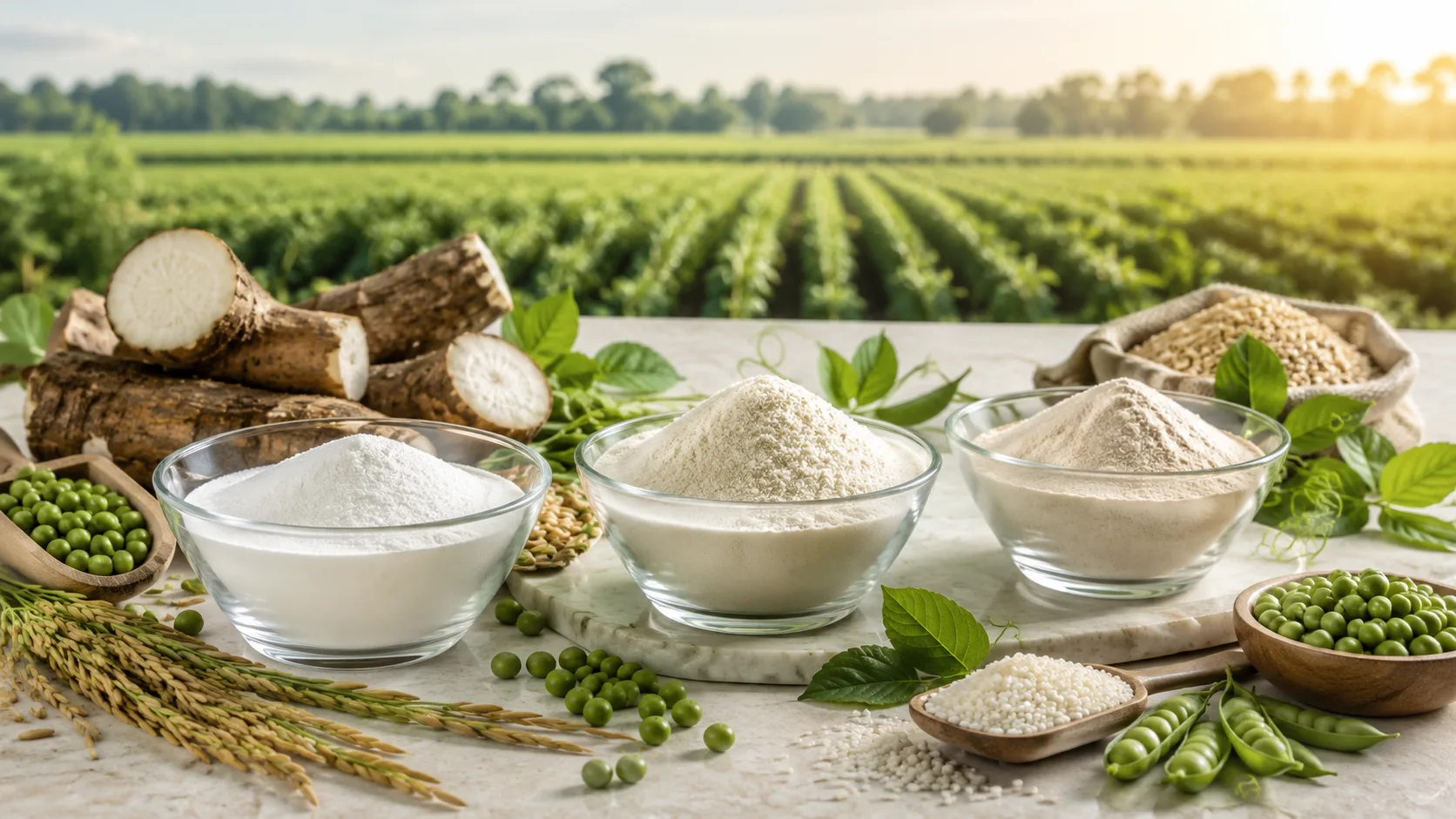
Consumers today are reading ingredient labels more closely than ever. They want products that feel natural, transparent, and aligned with their health and sustainability values. As a result, food and beverage manufacturers are increasingly seeking USDA organic food ingredients for clean-label brands that support both consumer expectations and formulation performance.
The challenge is that clean label and organic are not identical concepts. A product can be organic without being truly clean label, and a clean-label product may not necessarily qualify as organic. Understanding how these two movements intersect is becoming essential for brands that want to remain competitive in a rapidly evolving market.
For manufacturers, choosing the right ingredients is no longer just about functionality. It is about creating products that deliver nutritional value, regulatory compliance, and consumer trust simultaneously.
Understanding the Relationship Between Organic and Clean Label
The terms “organic” and “clean label” are often used together, but they represent different aspects of food formulation.
USDA certified organic ingredients must comply with strict standards established by the United States Department of Agriculture. These standards regulate how ingredients are grown, processed, handled, and certified. Organic certification prohibits the use of most synthetic pesticides, genetic engineering, and certain artificial additives.
Clean label, on the other hand, is largely consumer-driven. It refers to products made with recognizable ingredients, minimal processing, and transparent sourcing practices. While there is no official regulatory definition, consumers generally associate clean label food ingredients with simplicity and authenticity.
When combined, organic and clean-label positioning can create a powerful value proposition. Products formulated with certified organic food ingredients often align naturally with clean-label expectations because they avoid many of the ingredients consumers are actively trying to avoid.
This overlap explains why demand for USDA organic food ingredients continues to grow across multiple food categories.
Why Consumers Are Driving Demand for Organic Ingredients
Health-conscious consumers are increasingly looking beyond nutrition facts panels and focusing on ingredient sourcing.
Research consistently shows that consumers value transparency when making purchasing decisions. They want to understand where ingredients come from, how they are produced, and whether they align with their personal values.
Several factors are contributing to this trend:
- Growing interest in minimally processed foods
- Increased awareness of ingredient sourcing
- Preference for non-GMO and plant-based options
- Interest in sustainable agricultural practices
- Demand for products with shorter ingredient lists
For food manufacturers, this shift creates both opportunities and challenges. Brands must balance consumer expectations with product functionality, shelf stability, and cost considerations.
Working with an experienced organic ingredient supplier can help manufacturers navigate these complexities while maintaining product quality and consistency.
The result is a formulation strategy that supports both operational requirements and evolving consumer preferences.
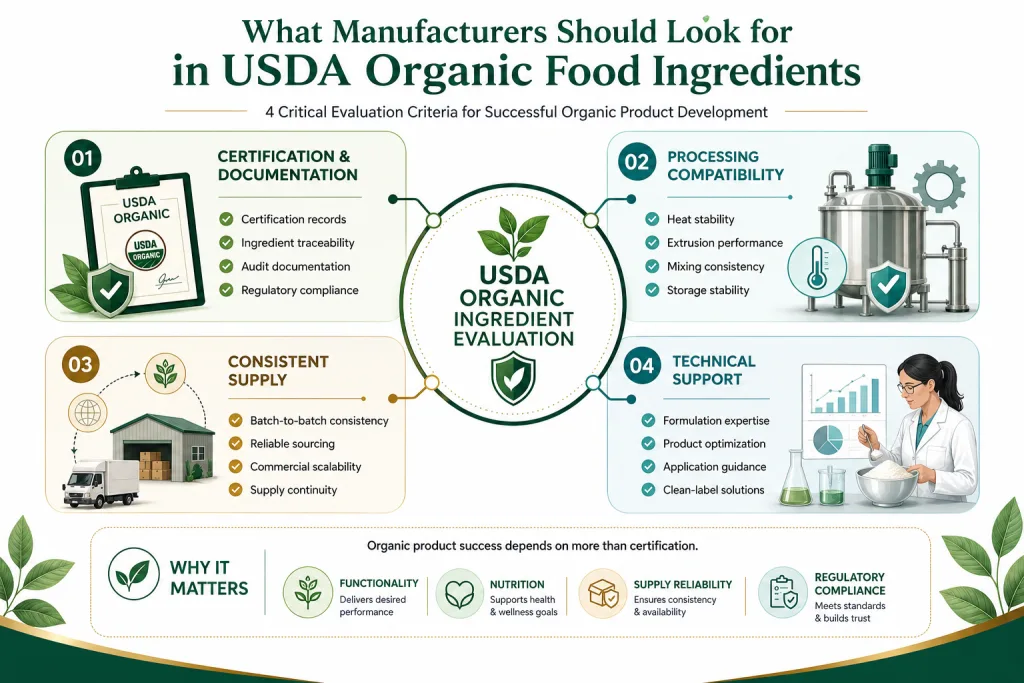
What Manufacturers Should Look for in USDA Organic Food Ingredients
Selecting ingredients for organic formulations requires more than simply verifying certification status.
Successful product development depends on evaluating ingredients from multiple perspectives, including functionality, nutritional value, supply reliability, and regulatory compliance.
Certification and Documentation
USDA organic certification should always be supported by complete documentation. Manufacturers should request certification records, traceability information, and audit documentation from suppliers.
Processing Compatibility
Not all organic ingredients perform equally across manufacturing environments. Ingredients must remain stable during processing conditions such as heating, extrusion, mixing, and storage.
Consistent Supply
Reliable sourcing is essential for commercial-scale production. An organic food ingredients supplier should be capable of maintaining consistency across batches and ensuring uninterrupted availability.
Technical Support
Many clean-label formulations require formulation adjustments. Suppliers that provide technical expertise can help manufacturers optimize ingredient performance while maintaining label-friendly positioning.
These factors become increasingly important as brands scale from product development to full commercial production.
Organic Functional Ingredients Are Expanding Product Possibilities
One reason organic formulations have become more sophisticated is the growing availability of organic functional ingredients.
Historically, formulators often faced a tradeoff between clean labels and functionality. Today, innovative ingredient technologies are helping bridge that gap.
Organic functional ingredients can contribute to:
- Texture enhancement
- Protein fortification
- Fiber enrichment
- Sweetness optimization
- Mouthfeel improvement
- Nutritional positioning
This evolution is particularly important for manufacturers developing products within categories such as functional beverages, sports nutrition, meal replacements, dairy alternatives, and healthy snacks.
As consumers increasingly seek products that offer both wellness benefits and recognizable ingredients, functional ingredients are becoming central to clean-label innovation.
The ability to combine performance and transparency is helping redefine how modern products are formulated.
The Growing Importance of Organic Plant-Based Ingredients
Plant-based foods continue to gain momentum globally, creating additional demand for organic plant-based ingredients.
Consumers increasingly view plant-based products as healthier, more sustainable, and better aligned with environmental goals. However, expectations extend beyond simply replacing animal-derived ingredients.
Today’s consumers want plant-based products that also meet clean-label standards.
This has created opportunities for ingredients such as:
- Organic pea protein
- Organic rice protein
- Organic starches
- Organic fiber systems
- Organic natural sweeteners
Protein remains one of the most important formulation priorities. Manufacturers seeking an organic pea protein supplier often prioritize factors such as amino acid profile, digestibility, sensory performance, and supply reliability.
The success of plant-based products depends heavily on ingredient quality. Texture, taste, and nutritional value all influence consumer acceptance, making ingredient selection a strategic decision rather than a simple sourcing exercise.

Organic Dietary Fiber Ingredients and the Rise of Gut Health
Interest in digestive wellness continues to influence food innovation worldwide.
Consumers increasingly recognize the importance of dietary fiber, yet fiber intake remains below recommended levels in many regions. This gap creates opportunities for manufacturers to incorporate organic dietary fiber ingredients into everyday products.
Fiber-enriched products can support multiple formulation objectives:
- Increased nutritional value
- Improved satiety
- Better digestive health positioning
- Support for wellness-focused marketing claims
- Enhanced product differentiation
Fiber ingredients are particularly attractive because they can be incorporated across diverse product categories, including beverages, bakery products, snack bars, cereals, and nutritional products.
Among food innovators, interest is growing in soluble fiber systems that deliver nutritional benefits without negatively affecting taste or texture.
As clean-label expectations continue to evolve, fiber ingredients that combine functionality, consumer-friendly positioning, and processing stability are becoming increasingly valuable.
Organic Ingredient Sourcing Challenges Manufacturers Must Address
While consumer demand is clear, organic ingredient sourcing presents unique challenges.
Certification requirements, supply chain complexity, and market volatility can all affect procurement decisions. Manufacturers must therefore approach sourcing strategically.
Common sourcing considerations include:
- Certification verification
- Supply chain traceability
- Geographic sourcing risks
- Price fluctuations
- Regulatory compliance
- Long-term supplier reliability
Choosing a clean label ingredient supplier with strong quality systems can help mitigate many of these risks.
Manufacturers should also evaluate suppliers based on their ability to support future growth. A supplier that meets today’s volume requirements may not necessarily support tomorrow’s expansion plans.
Strategic sourcing decisions often have long-term implications for product quality, consistency, and profitability.
How Organic Ingredients Support Nutritional Product Development
The nutritional products sector is one of the fastest-growing markets for organic ingredients.
Consumers seeking nutritional products increasingly expect clean ingredient declarations alongside measurable health benefits. This expectation is influencing product development across categories such as:
- Protein powders
- Meal replacement beverages
- Clinical nutrition products
- Sports nutrition formulations
- Functional foods
- Dietary supplements
Organic ingredients for nutritional products must satisfy both technical and consumer requirements.
For example, protein ingredients must provide strong nutritional performance while maintaining desirable texture and flavor. Fiber ingredients must support digestive health without creating formulation challenges. Sweetening systems must balance taste with clean-label expectations.
Manufacturers that successfully integrate these factors are often better positioned to meet evolving market demands while maintaining product differentiation.
How Ingredient Innovation Is Supporting Modern Food Manufacturers
Today’s organic ingredients for food manufacturers extend far beyond basic commodity ingredients.
Advances in ingredient technology are enabling greater functionality while maintaining alignment with clean-label principles. This innovation is helping manufacturers create products that satisfy multiple consumer expectations simultaneously.
Examples include:
- Plant-based protein systems for alternative proteins
- Soluble fiber ingredients for digestive wellness
- Natural sweetener solutions for sugar reduction
- Functional carbohydrate systems for texture enhancement
These ingredient categories are increasingly important across beverage, bakery, dairy alternative, snack, and nutritional applications.
Manufacturers evaluating an organic ingredient supplier should therefore consider not only certification credentials but also innovation capabilities. Suppliers that understand formulation science can often provide greater value than those focused solely on ingredient distribution.
This collaborative approach is becoming a key driver of successful product innovation.
Building the Next Generation of Clean-Label Products
The future of food formulation is increasingly centered on transparency, functionality, and trust.
Consumers no longer view organic certification as a niche attribute. Instead, they see it as part of a broader commitment to ingredient quality and responsible sourcing. At the same time, clean-label expectations continue to influence purchasing decisions across virtually every food category.
This convergence creates significant opportunities for manufacturers willing to invest in better ingredients and smarter formulation strategies.
Companies developing products with USDA organic food ingredients for clean-label brands are positioned to address multiple consumer priorities simultaneously—from sustainability and transparency to nutrition and functionality.
For brands seeking innovative ingredient solutions, categories such as resistant dextrin, pea protein, rice protein isolate, natural sweeteners, and functional carbohydrate systems demonstrate how modern ingredient technology can support both clean-label objectives and product performance. These ingredient platforms increasingly play an important role in beverage, nutrition, bakery, and plant-based applications while maintaining alignment with consumer expectations for recognizable ingredients and transparent sourcing.
Partner with a Trusted Ingredient Supplier for Clean-Label Innovation
The success of a clean-label product starts long before production—it begins with choosing the right ingredients and the right supplier. As consumer demand for transparency, functionality, and sustainability continues to grow, manufacturers need ingredient partners that can support both product performance and evolving market expectations.
Whether you are developing high-fiber beverages, plant-based nutrition products, reduced-sugar formulations, or functional foods, access to high-quality ingredients and technical expertise can help streamline product development while maintaining regulatory compliance and supply reliability.
Satoria Nutrisentials offers a portfolio of functional ingredient solutions, including resistant dextrin, pea protein, rice protein isolate, and natural sweetening systems designed to support modern food and beverage innovation. Backed by international certifications and manufacturing expertise, Satoria helps brands develop products that align with today’s clean-label and wellness-focused market trends.
Explore Satoria Nutrisentials’ ingredient portfolio and discover how the right ingredient solutions can help bring your next product to market with confidence.
References
- Aschemann-Witzel, J., Varela, P., & Peschel, A. O. (2019). Consumers’ categorization of food ingredients. Food Quality and Preference, 71, 117–128. https://doi.org/10.1016/j.foodqual.2018.06.003
- United States Department of Agriculture. (2025). National Organic Program. https://www.ams.usda.gov/about-ams/programs-offices/national-organic-program
- Food and Agriculture Organization. (2024). Sustainable food systems and consumer trends. https://www.fao.org
- U.S. Food and Drug Administration. (2025). Guidance for industry: Labeling and nutrition. https://www.fda.gov/food
- Slavin, J. L. (2013). Fiber and prebiotics: Mechanisms and health benefits. Nutrients, 5(4), 1417–1435. https://www.ncbi.nlm.nih.gov/pmc/articles/PMC3705355/
- World Health Organization. (2024). Healthy diet fact sheet. https://www.who.int/news-room/fact-sheets/detail/healthy-diet
- Dreher, M. L. (2018). Whole fruits and dietary fiber in health promotion. Nutrients, 10(12), 1833. https://www.ncbi.nlm.nih.gov/pmc/articles/PMC6315720/
- Melini, V., & Melini, F. (2019). Plant-based foods: Trends and opportunities. Foods, 8(11), 547. https://www.ncbi.nlm.nih.gov/pmc/articles/PMC6893642/
Featured News
Category
Get a Promo and Keep Updated