
Reduced-Sugar Sweet Soy Sauce Formulation: A Formulator’s Guide for US, Canadian, and European Markets
Reduced-Sugar Sweet Soy Sauce Formulation: A Formulator’s Guide for US, Canadian, and European Markets
November 23, 2026
Natural Sweeteners - Articles
Sweet soy sauce has quietly become a global pantry staple. It glazes wings in Chicago, dresses noodle bowls in Toronto, and sits beside satay in Amsterdam. Yet a single tablespoon can carry roughly two teaspoons of sugar, and Western shoppers are reading labels more closely than ever.
That puts product developers in a tricky spot. How do you keep the glossy body, deep color, and rounded sweetness people love while cutting the sugar that creates them? This guide walks through reduced-sugar sweet soy sauce formulation step by step, from functional ingredient choices to the claim rules in the US, Canada, the EU, and the UK.
What Is Kecap Manis and How Is It Different from Dark Soy Sauce?
Kecap manis is Indonesian sweet soy sauce. It starts with fermented soybeans and brine, then palm sugar is cooked in until the sauce turns thick, glossy, and almost syrupy. The result tastes sweet, savory, and lightly caramelized at the same time, which is why it works as a marinade, glaze, and table condiment.
Chinese dark soy sauce often gets confused with it, but the two behave very differently in a recipe. Here is the quick comparison:
- Kecap manis: high sugar content from palm sugar, syrup-like viscosity, sweetness leads the flavor.
- Dark soy sauce: aged longer and often colored with caramel or molasses, thicker than light soy sauce but still mostly salty.
- Light soy sauce: thin, salty, and used mainly for seasoning rather than glazing.
For Western readers, “reduced sugar kecap manis” and “low sugar sweet soy sauce” describe the same goal. Because sugar makes up so much of the original sauce, removing it changes far more than sweetness alone.
Why Sugar Reduction in Sauces and Condiments Matters Now
Condiments have become a sugar-reduction priority because they are “hidden” sources. The WHO recommends keeping free sugars below 10% of daily energy, with further benefits below 5%. It also uses ketchup as an example of sugar hidden in foods people don’t think of as sweet (World Health Organization, 2015).
Regulators have followed. In the US, the added sugars Nutrition Facts panel now shows grams and a % Daily Value for added sugars, so a sweet glaze can’t hide behind “total carbohydrates” anymore. Canada’s front-of-package “high in sugars” symbol became mandatory on January 1, 2026. Across Europe, Nutri-Score has tightened how it treats sugar.
Consumer demand points the same way. Better-for-you Asian condiments are moving from specialty aisles into mainstream retail, and the keto and low-carb condiment trend in the US keeps pulling sugar-free sweet soy sauce, low calorie soy sauce, and keto sweet soy sauce searches upward.
For manufacturers, that adds up to a clear message. Low sugar Asian sauces are no longer a niche. They are fast becoming the price of entry for shelf space in North America and Europe.
What Does Sugar Actually Do in Sweet Soy Sauce?
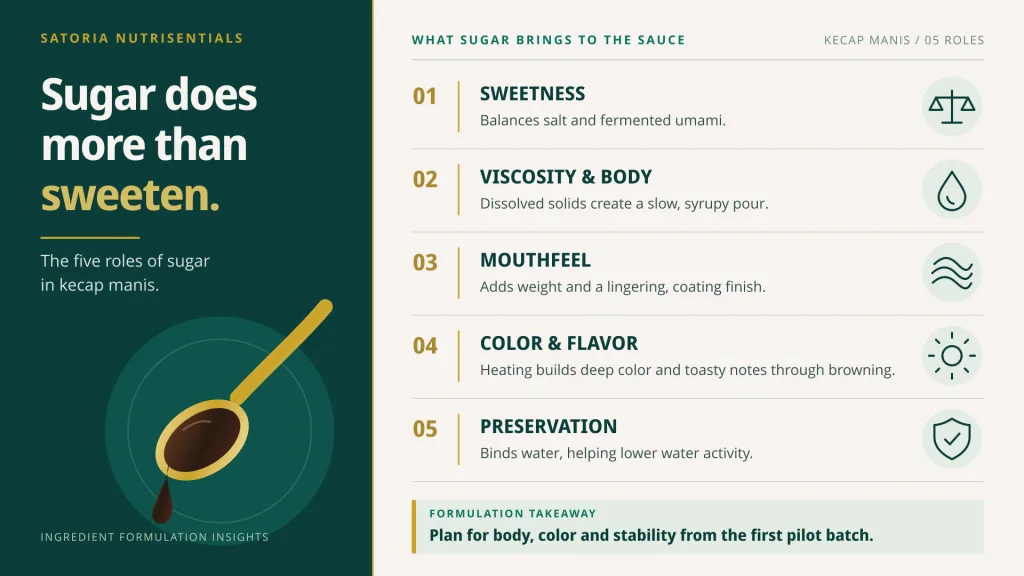
Before you choose a replacement, it helps to list every job sugar is doing. In kecap manis, it is working on at least five fronts at once:
- Sweetness: the obvious one, balancing salt and fermented umami.
- Viscosity and body: dissolved sugar solids create the slow, syrupy pour.
- Mouthfeel: sugar gives the sauce weight and a lingering, coating finish.
- Color and flavor: heated sugars take part in Maillard browning and caramelization, building dark color and toasty notes.
- Preservation: sugar binds water, lowering water activity and supporting shelf life.
This is why simple sweetener swaps often fail in savory applications. A high-intensity sweetener can replace the sweetness in milligram amounts, but it leaves behind a thin, pale, watery sauce. Researchers studying stevia have noted the same problem across foods: sweetness quality, thin mouthfeel, and matrix fit all have to be solved together.
The practical takeaway is simple. Successful sugar reduction treats sweetener choice as only one piece of a larger system. You need to plan for body, color, and stability from day one, rather than patching problems after the first pilot batch comes out thin and pale.
How Do You Reduce Sugar in Sweet Soy Sauce Without Losing Thickness?
Maintaining viscosity in reduced sugar sauces starts with replacing the solids you removed. If 40 grams of sugar leaves a 100-gram batch, something needs to fill that space, or the sauce will pour like regular soy sauce.
Rebuild the Solids with a Sauce Bulking Agent
Soluble fiber for sugar reduction is the most practical starting point. Resistant dextrin dissolves fully, tastes neutral, and has good thermal stability (Wu et al., 2024). Made from corn or tapioca starch, it also works as a soluble corn fiber alternative. It restores much of the body and mouthfeel that sugar provided while contributing dietary fiber instead of free sugar.
Satoria’s Resistant Dextrin is a useful example of a fiber-based sugar replacer for this work. It is pH stable from 2 to 7, heat resistant during processing, and colorless, with condiments listed among its applications. It also comes in liquid form, which simplifies blending into a cooked sauce.
Add Viscosity Separately
Here is the honest catch. Resistant dextrin is known for low viscosity, so it builds body and solids but not that slow, syrupy pour on its own. Most formulators pair bulking agents for sugar reduction with a small amount of hydrocolloid, such as xanthan gum, to restore the thickness consumers expect. Run viscosity checks at both room and refrigerated temperatures.
What Can Replace Sugar in Asian Sauces?
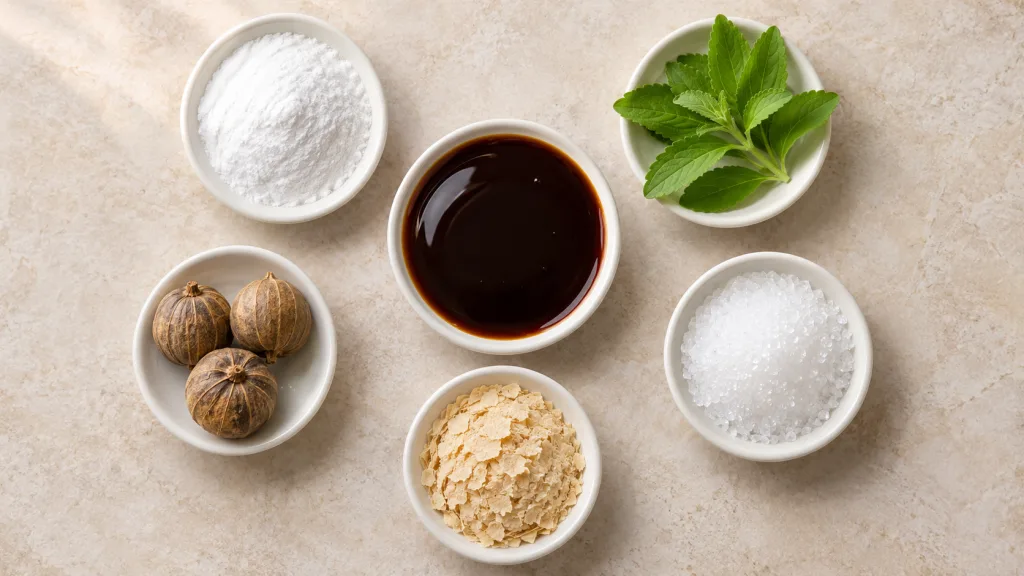
Once the solids are rebuilt, the sweetness itself needs a plan. A stevia and fiber sweetener system is often the most balanced approach, because each ingredient covers the other’s weakness. Stevia delivers intense sweetness, while fiber smooths out bitterness and adds body. Other options include:
- Monk fruit: clean sweetness that works well in monk fruit sweetened sauces when blended with stevia.
- Erythritol: adds sugar-like bulk with near-zero calories, though high levels can cause cooling notes or crystallization in cold storage. Erythritol alternatives for sauces, such as soluble fiber, help avoid that problem.
- Allulose: behaves like sugar and browns readily, which makes allulose in sauces appealing for color. Check its labeling and novel food status market by market before you build around it.
- Yeast extracts: round out flavor and mask the “missing sugar” gap, rather than adding sweetness themselves.
Can Soluble Fiber Replace Sugar in Condiments?
Partly. Soluble fiber can replace sugar’s bulk, body, and mouthfeel, but not its sweetness. That’s why a blended system works best. Satoria’s SweetSentials takes this approach: a 1:1 sugar replacement blend combining sweetness with dietary fiber, with sauces and marinades among its intended uses. Pairing a blend like this with resistant dextrin lets formulators tune sweetness and body independently.
How Do You Solve Maillard Browning, Color, and Shelf Stability?
Maillard Browning and Color Without Sugar
Color is often the hardest piece of sugar replacement in savory applications. Traditional kecap gets its deep brown from sugars reacting with soy proteins and amino acids during cooking. Non-reducing ingredients like resistant dextrin and erythritol don’t join that reaction, so a straight swap can leave the sauce looking pale.
A few levers help restore the color:
- Extend cooking time slightly to build more Maillard color from the soy base itself.
- Keep a small portion of palm or rice-based sugar if your claim target allows it.
- Use allulose where it’s permitted, since it browns more readily than sucrose.
- Add caramel color only if it fits your clean label sauces Europe positioning.
Water Activity and Shelf Stability
Shelf stability of reduced sugar sauces deserves extra attention. Sugar binds water, so removing it can raise water activity in reduced sugar sauces and create more room for microbial growth. Soluble fiber and polyols help rebuild solids that hold water. Still, every new formula needs measured water activity, pH checks, and real shelf-life testing before launch.
How Do You Get a “Reduced Sugar” Claim in the US vs the EU?
The answer depends on where the bottle lands. Each market sets its own threshold, its own reference point, and its own labeling conditions, so a formula that qualifies in one region may fall short in another. It pays to choose your target markets before you finalize the sugar level.
United States
Under the “reduced sugar” claim FDA requirements in 21 CFR 101.60, a product needs at least 25% less sugar per serving than an appropriate reference food. The label must also name that reference and state the percentage difference.
The “no added sugar” claim rules are stricter, because no sugars or sugar-containing ingredients can be added during processing. Rice and tapioca syrups still count as added sugars under FDA added sugars labeling. The updated FDA “healthy” claim for condiments also caps added sugars, though sodium is usually the harder hurdle for soy-based sauces.
Canada
The “reduced in sugars” claim in Canada is a comparative claim with a 25% minimum reduction, set out in Health Canada’s Table of Permitted Nutrient Content Statements and Claims.
The bigger issue is the Health Canada front-of-package nutrition symbol. Condiments with small reference amounts trigger the “high in sugars” FOP label in Canada at 10% of the Daily Value, about 10 grams per serving. Traditional kecap can sit close to that line, which makes sugar reduction reformulation in Canada a practical priority.
European Union
Under the EU nutrition and health claims regulation (EC 1924/2006), the “reduced sugar” claim EU requirements call for at least a 30% reduction versus a similar product. Fiber claims in the EU are a bonus: “source of fibre” needs 3 grams per 100 grams, and “high fibre” needs 6 grams.
How Does Nutri-Score Treat Sauces, and What About the UK?
Nutri-Score sauces and condiments are scored per 100 grams, which works against dense, sweet sauces. The 2023 algorithm update raised the maximum penalty points for sugar and salt, while fiber continues to earn favorable points (Merz et al., 2024). For a sweet soy sauce, that means cutting sugar and adding soluble fiber can move the score in two directions at once.
In the UK, the picture is a little different. The UK HFSS regulations on condiments matter mostly indirectly today, since standalone table sauces generally fall outside the product categories currently restricted for promotion and placement. However, retailers apply their own HFSS-style targets, and meal kits or ready meals that include a sauce can fall in scope.
The UK sugar reduction programme for sauces also shaped expectations. Public health targets encouraged gradual reformulation across sweet categories, and many retailers carried that thinking into their own-label condiments. For exporters, designing to UK expectations from the start is usually easier than reformulating later.
Is Low Sugar Soy Sauce Keto Friendly?
It can be, but “low sugar” and “keto” aren’t the same thing. Keto shoppers usually count net carbohydrates, so a sauce sweetened with digestible syrups or maltodextrin may be lower in sugar yet still too high in carbs for their needs.
A no added sugar soy sauce built on fiber and non-nutritive sweeteners gets much closer. Resistant dextrin is a soluble fiber that the body largely doesn’t digest, and research links it to prebiotic effects and better glycemic control (Włodarczyk & Śliżewska, 2021). The FDA has also recognized resistant maltodextrin/dextrin as meeting its dietary fiber definition based on physiological benefits (U.S. Food and Drug Administration, 2018).
That opens a useful positioning angle. Prebiotic fiber in condiments lets a brand talk about what the sauce adds, not only what it removes. A keto sweet soy sauce that also delivers fiber has a stronger story on shelf. Just keep any gut health messaging within the claims each market allows.
Unleash Your Next Better-for-You Sweet Soy Sauce with Satoria Nutrisentials
Reformulating a beloved sauce is never just a sweetener swap. It takes the right mix of bulk, sweetness, color, and stability, plus a clear view of the claim you want to make in each market. The good news? With the right ingredient partner, you don’t have to solve every piece alone or trade flavor for a cleaner label.
If you’re developing a reduced-sugar kecap manis, a keto-friendly glaze, or a fiber-enriched Asian condiment, Satoria Nutrisentials can help you build the ingredient system behind it. Explore Resistant Dextrin for body and fiber enrichment, and SweetSentials for balanced, fiber-backed sweetness. Both are made in certified facilities with the documentation export teams need for North American and European buyers.
Working on a full sugar-reduction pipeline? Satoria’s guide to resistant dextrin in reduced-sugar chocolate and nut spreads covers related techniques. When you’re ready, consult your needs with the Satoria team and start shaping a sauce that delivers on taste and on the label.
References
- Dong, K., Perreau, C., Thabuis, C., Yu, S., & Hasjim, J. (2025). Physicochemical properties and health benefits of resistant starch, resistant dextrin, and polydextrose: Similarities and differences. Grain & Oil Science and Technology, 8(3), 221–234. https://doi.org/10.1016/j.gaost.2025.04.001
- European Commission. (n.d.). Nutrition claims. Food Safety. https://food.ec.europa.eu/food-safety/labelling-and-nutrition/nutrition-and-health-claims/nutrition-claims_en
- Health Canada. (n.d.). Front-of-package nutrition symbol. Government of Canada. https://www.canada.ca/en/health-canada/services/food-nutrition/nutrition-labelling/front-package.html
- Merz, B., Temme, E., Alexiou, H., Beulens, J. W. J., Buyken, A. E., Bohn, T., Ducrot, P., Falquet, M.-N., García Solano, M., Haidar, H., Infanger, E., Kühnelt, C., Rodríguez-Artalejo, F., Sarda, B., Steenbergen, E., Vandevijvere, S., & Julia, C. (2024). Nutri-Score 2023 update. Nature Food, 5(2), 102–110. https://doi.org/10.1038/s43016-024-00920-3
- U.S. Food and Drug Administration. (2018). Review of the scientific evidence on the physiological effects of certain non-digestible carbohydrates. https://www.fda.gov/media/113659/download
- U.S. Government Publishing Office. (2026). 21 CFR § 101.60: Nutrient content claims for the calorie content of foods. Electronic Code of Federal Regulations. https://www.ecfr.gov/current/title-21/chapter-I/subchapter-B/part-101/subpart-D/section-101.60
- Włodarczyk, M., & Śliżewska, K. (2021). Efficiency of resistant starch and dextrins as prebiotics: A review of the existing evidence and clinical trials. Nutrients, 13(11), 3808. https://doi.org/10.3390/nu13113808
- World Health Organization. (2015). Guideline: Sugars intake for adults and children. National Library of Medicine. https://www.ncbi.nlm.nih.gov/books/NBK285538/
- Wu, X., Zhang, J., Yan, X., Wu, X., Zhang, Q., & Luan, M. (2024). An in-depth overview of the structural properties, health benefits, and applications of resistant dextrin. Journal of Food Processing and Preservation, 2024, 8055063. https://doi.org/10.1155/2024/8055063
Featured News
Category
Get a Promo and Keep Updated