
Rice Protein Isolate for Non-Dairy Sports Recovery RTD Shakes: A Formulator’s Guide
Resistant Dextrin for Medical Clinical Enteral Nutrition: Why Modern Enteral Formulas Are Embracing Soluble Prebiotic Fiber
June 24, 2026
Resistant Dextrin - Articles
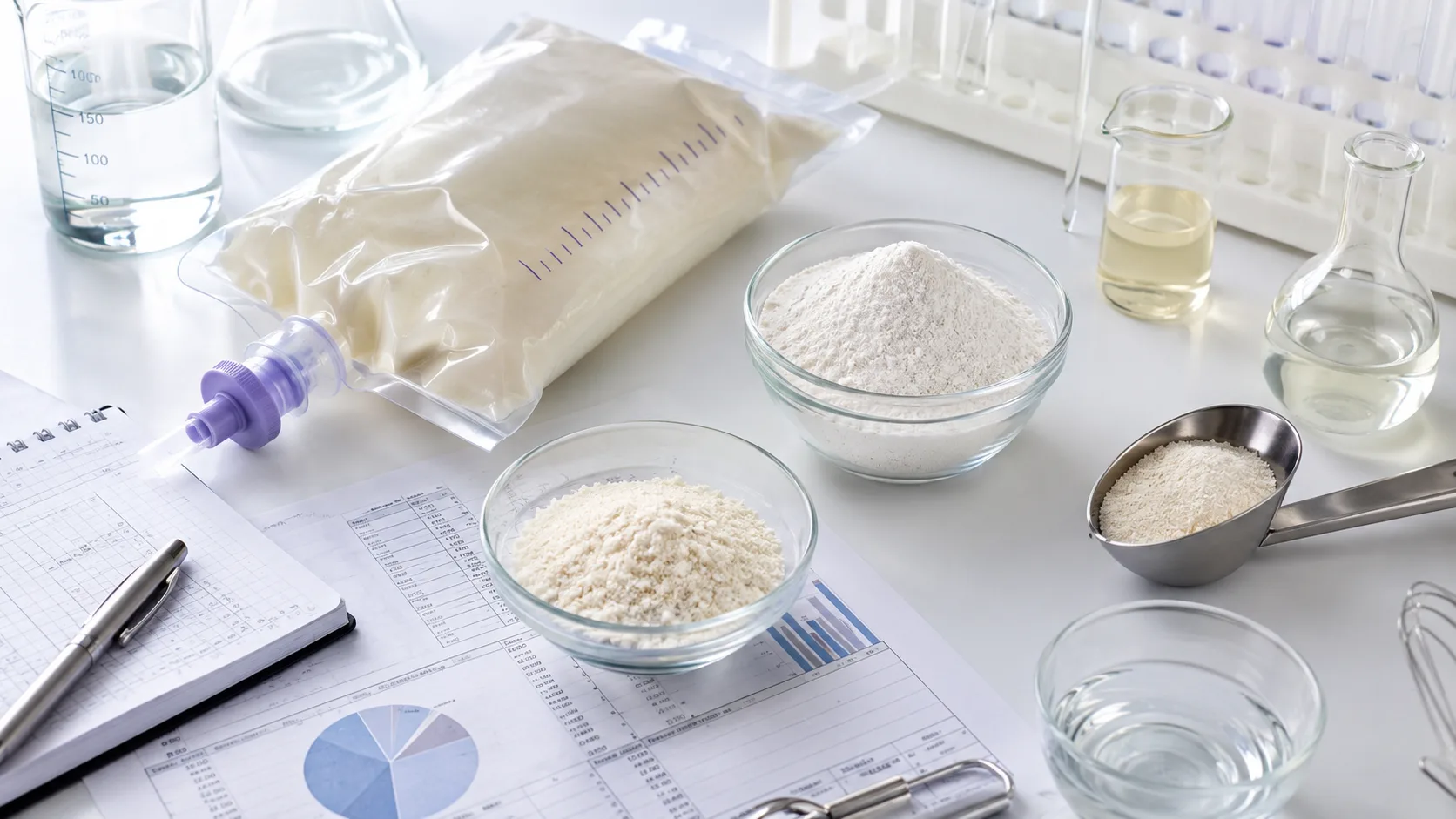
Enteral nutrition has evolved significantly over the past decade. Today’s formulas are no longer designed solely to deliver calories and protein. Healthcare providers, clinical nutrition specialists, and medical food manufacturers increasingly recognize that digestive tolerance is just as important as nutritional adequacy.
This shift has brought greater attention to functional ingredients that can support gastrointestinal health without compromising formula performance. Among these ingredients, resistant dextrin for medical clinical enteral nutrition has emerged as one of the most promising soluble fibers available for modern tube-feeding formulations.
Unlike traditional fibers that may increase viscosity or create formulation challenges, resistant dextrin offers a unique combination of digestive benefits, excellent process stability, and patient-friendly tolerance. For manufacturers developing next-generation medical nutrition products, understanding the role of resistant dextrin has become increasingly important.
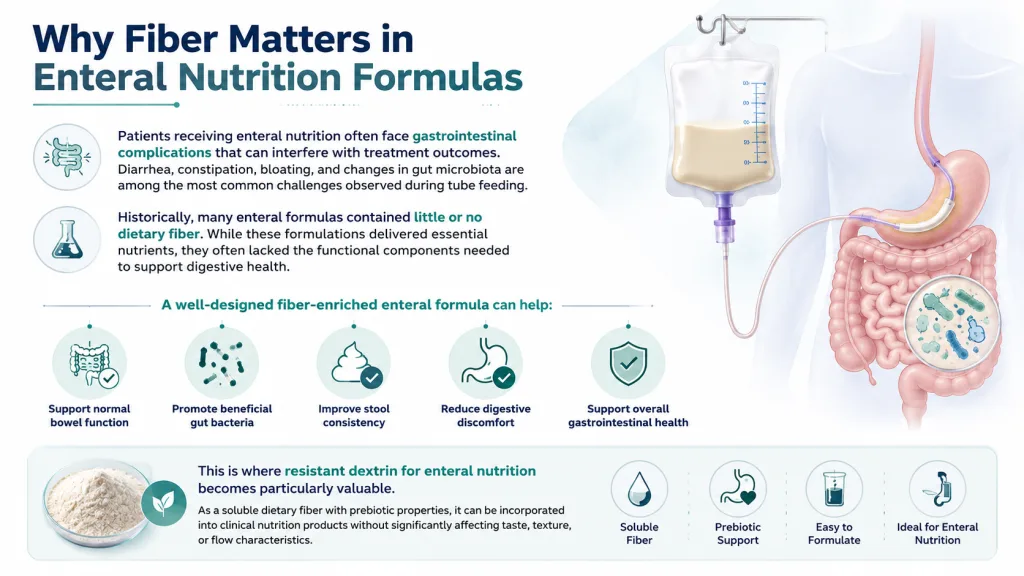
Why Fiber Matters in Enteral Nutrition Formulas
Patients receiving enteral nutrition often face gastrointestinal complications that can interfere with treatment outcomes. Diarrhea, constipation, bloating, and changes in gut microbiota are among the most common challenges observed during tube feeding.
Historically, many enteral formulas contained little or no dietary fiber. While these formulations delivered essential nutrients, they often lacked the functional components needed to support digestive health.
A well-designed fiber-enriched enteral formula can help:
- Support normal bowel function
- Promote beneficial gut bacteria
- Improve stool consistency
- Reduce digestive discomfort
- Support overall gastrointestinal health
This is where resistant dextrin for enteral nutrition becomes particularly valuable. As a soluble dietary fiber with prebiotic properties, it can be incorporated into clinical nutrition products without significantly affecting taste, texture, or flow characteristics.
Understanding Resistant Dextrin in Clinical Nutrition
Resistant dextrin is a soluble dietary fiber produced from starch sources such as corn or tapioca through controlled processing that creates digestion-resistant bonds. Because it resists digestion in the small intestine, it reaches the colon where it can be fermented by beneficial gut bacteria.
In the context of resistant dextrin clinical nutrition, this mechanism offers several advantages.
First, the fiber serves as a substrate for microbial fermentation, supporting the production of short-chain fatty acids (SCFAs) such as acetate, propionate, and butyrate. These compounds play important roles in maintaining gut health and supporting the intestinal environment.
Second, resistant dextrin exhibits excellent gastrointestinal tolerance compared with some traditional fiber ingredients. This characteristic is especially important for medically vulnerable patients who may already be experiencing digestive sensitivity.
Many formulators consider resistant dextrin a practical prebiotic fiber clinical nutrition formula ingredient because it delivers functional benefits while remaining highly compatible with modern manufacturing processes.
The Importance of Low Viscosity in Tube Feeding Applications
One of the biggest formulation challenges in enteral nutrition is maintaining proper flow through feeding tubes.
Some fiber ingredients increase viscosity substantially, creating risks of tube clogging or requiring adjustments to administration protocols. Healthcare providers generally prefer formulations that maintain predictable flow characteristics.
Low Viscosity Supports Reliable Delivery
A major advantage of resistant dextrin is its naturally low viscosity.
This characteristic makes it a highly attractive low viscosity soluble fiber tube feeding ingredient because it can contribute meaningful fiber content without significantly altering formula rheology.
For manufacturers, low viscosity provides benefits such as:
- Easier processing during production
- Improved pump compatibility
- Reduced risk of tube obstruction
- Better handling across different feeding systems
- Greater formulation flexibility
These practical advantages explain why resistant dextrin is increasingly being evaluated as a preferred soluble fiber for tube feeding applications.
Resistant Dextrin and Enteral Nutrition Diarrhea Prevention Strategies
Diarrhea remains one of the most frequently reported complications among enterally fed patients.
Although multiple factors may contribute—including medications, infection, antibiotic use, and disease state—formula composition can also influence gastrointestinal tolerance.
Supporting Gut Microbiota Balance
Research suggests that prebiotic fibers may help support a healthier intestinal environment by selectively stimulating beneficial bacterial populations.
Because resistant dextrin undergoes fermentation in the colon, it may contribute to microbiome support while producing SCFAs associated with intestinal health.
Improving Stool Consistency
Clinical nutrition formulators often investigate fiber inclusion as part of broader enteral nutrition diarrhea prevention fiber strategies.
While fiber alone cannot eliminate all causes of diarrhea, soluble fibers such as resistant dextrin may help improve stool consistency and support more predictable bowel function in appropriate patient populations.
This makes resistant dextrin an increasingly attractive option when designing enteral products focused on digestive tolerance.
Why Resistant Dextrin Works Well in Medical Food Formulation
Medical nutrition products demand a higher standard of ingredient functionality than conventional foods.
Every ingredient must deliver nutritional value while remaining stable throughout manufacturing, storage, transportation, and clinical use.
Excellent Processing Stability
Resistant dextrin performs well across a wide range of conditions, including:
- Heat processing
- Pasteurization
- UHT systems
- Varying pH environments
- Extended shelf-life applications
Neutral Sensory Profile
Another advantage is its neutral taste profile.
Unlike some fibers that introduce bitterness, sweetness, or textural changes, resistant dextrin integrates into formulas with minimal sensory impact.
For formulators seeking a versatile resistant dextrin medical food ingredient, these characteristics can simplify product development and improve formulation efficiency.
Soluble Corn Fiber Enteral Nutrition Applications
Many clinical nutrition developers are already familiar with soluble corn fiber as a fiber source for medical products.
In fact, resistant dextrin is frequently categorized within the broader family of soluble dietary fibers and is often compared alongside other soluble corn fiber technologies.
When evaluating soluble corn fiber enteral nutrition ingredients, formulators commonly assess:
- Digestive tolerance
- Viscosity
- Fermentation profile
- Regulatory acceptance
- Manufacturing compatibility
- Cost efficiency
Resistant dextrin consistently performs well across these criteria, which explains its growing adoption in nutritional beverages, tube-feeding products, and specialized medical nutrition formulas.
Depending on regional regulatory requirements and product objectives, manufacturers may choose resistant dextrin derived from either corn or tapioca sources.
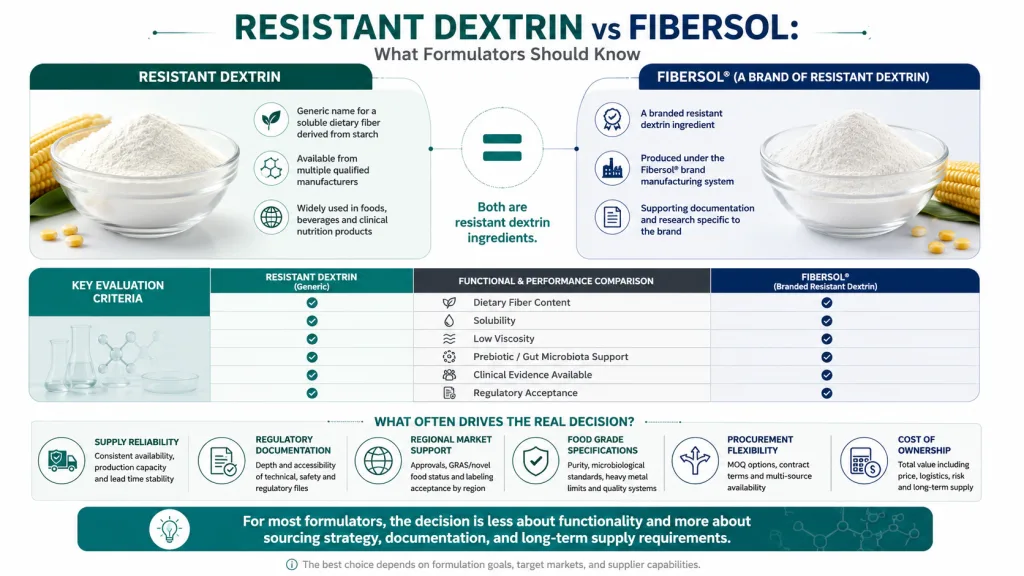
Resistant Dextrin vs Fibersol: What Formulators Should Know
Comparisons between fiber ingredients are common during product development.
When evaluating resistant dextrin vs Fibersol, it is important to understand that Fibersol is itself a branded resistant dextrin ingredient. The comparison is therefore often less about functionality and more about sourcing, specifications, regulatory documentation, and supply-chain considerations.
Key evaluation criteria typically include:
- Fiber content
- Solubility
- Clinical evidence
- Supply reliability
- Regional regulatory support
- Cost of ownership
Many manufacturers exploring resistant dextrin vs Fibersol options are seeking greater sourcing flexibility while maintaining similar functional performance.
Ultimately, the best choice depends on formulation goals, target markets, and supplier capabilities.
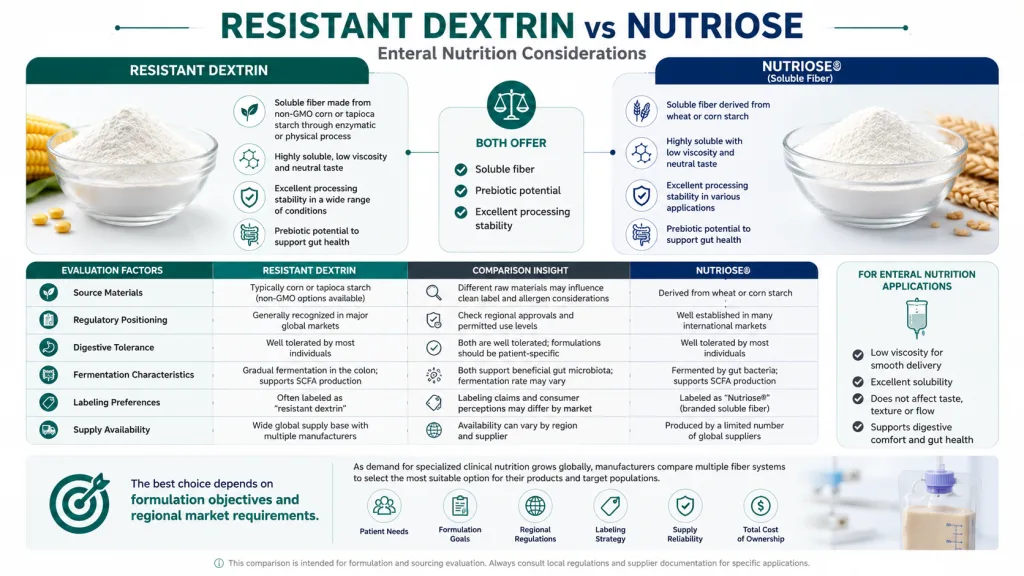
Resistant Dextrin vs Nutriose Enteral Nutrition Considerations
Another frequent formulation discussion involves resistant dextrin vs Nutriose enteral nutrition applications.
Nutriose is a well-known soluble fiber derived from wheat or corn and is often used in nutritional products. Both ingredients offer prebiotic potential and excellent processing stability.
However, formulators may evaluate differences in:
- Source materials
- Regulatory positioning
- Digestive tolerance
- Fermentation characteristics
- Labeling preferences
- Supply availability
For enteral nutrition products, the decision often comes down to formulation objectives and regional market requirements.
As demand for specialized clinical nutrition continues to grow globally, manufacturers increasingly compare multiple fiber systems before selecting the most suitable option.
Selecting the Right Resistant Dextrin Manufacturer for Clinical Nutrition
Ingredient sourcing becomes particularly important in medical and clinical nutrition.
Manufacturers must have confidence that every batch meets strict quality and safety requirements.
When evaluating a resistant dextrin manufacturer, consider the following factors:
- Consistent batch-to-batch quality
- Comprehensive technical documentation
- Food safety certifications
- Regulatory support
- Traceability systems
- Long-term supply stability
In addition, a qualified resistant dextrin supplier B2B should be able to provide detailed technical information, including food grade resistant dextrin specification documentation covering:
- Dietary fiber content
- Solubility
- Moisture levels
- Microbiological standards
- Heavy metal compliance
- Stability characteristics
For global medical nutrition brands, access to a non-GMO resistant dextrin ingredient may also be an important procurement requirement depending on target market expectations.
How Resistant Dextrin Fits Within Modern Medical Nutrition Portfolios
Clinical nutrition products increasingly combine multiple functional ingredients to support comprehensive nutritional outcomes.
Resistant dextrin is often paired with high-quality protein sources, specialized carbohydrates, vitamins, and minerals to create balanced formulations for diverse patient populations.
For example, medical nutrition developers may combine resistant dextrin with highly digestible protein ingredients such as rice protein isolate or pea protein isolate when designing specialized nutritional products. This reflects a broader trend toward more functional, patient-centered formulations that support both nutritional delivery and digestive tolerance.
As healthcare systems place greater emphasis on quality of life and patient outcomes, ingredients that support gastrointestinal comfort are likely to play an increasingly important role in enteral nutrition innovation.
Explore High-Quality Functional Ingredients for Next-Generation Clinical Nutrition
Developing successful enteral nutrition products requires more than simply meeting nutritional targets. Today’s healthcare providers and patients expect formulas that deliver both clinical performance and digestive tolerance.
Resistant dextrin has emerged as a valuable tool for formulators seeking a low-viscosity, highly soluble prebiotic fiber that supports gastrointestinal health while maintaining excellent manufacturing performance. Whether evaluating resistant dextrin for enteral nutrition, comparing resistant dextrin vs Nutriose enteral nutrition options, or sourcing a reliable non-GMO resistant dextrin ingredient, selecting the right ingredient partner is critical.
Satoria Nutrisentials supports food, beverage, and nutrition manufacturers with a portfolio of functional ingredients, including resistant dextrin, plant-based proteins, and specialty carbohydrate solutions designed to help bring innovative nutritional products to market. Explore the available ingredient solutions and discover how functional nutrition ingredients can support your next clinical nutrition development project.
References
- AOAC International. (2022). Dietary fiber definition and methods. https://www.aoac.org
- Bouhnik, Y., Flourie, B., Riottot, M., Bisetti, N., Gailing, M. F., Guibert, A., & Bornet, F. (2004). Effects of fructooligosaccharides ingestion on fecal bifidobacteria and selected metabolic indexes of colon carcinogenesis in healthy humans. Nutrition and Cancer, 26(1), 21–29. https://pubmed.ncbi.nlm.nih.gov
- McRorie, J. W., & McKeown, N. M. (2017). Understanding the physics of functional fibers in the gastrointestinal tract. Nutrients, 9(9), 895. https://doi.org/10.3390/nu9090895
- O’Keefe, S. J. D. (2019). Diet, microorganisms and their metabolites, and colon cancer. Nature Reviews Gastroenterology & Hepatology, 13(12), 691–706. https://www.nature.com/articles/nrgastro.2016.165
- World Health Organization. (2023). Healthy diet factsheet. https://www.who.int/news-room/fact-sheets/detail/healthy-diet
- U.S. Food and Drug Administration. (2024). Dietary fiber guidance for industry. https://www.fda.gov/food/food-labeling-nutrition/dietary-fiber
- National Institutes of Health. (2024). Dietary fiber and health outcomes. https://ods.od.nih.gov/factsheets/Fiber-HealthProfessional
- Slavin, J. (2013). Fiber and prebiotics: Mechanisms and health benefits. Nutrients, 5(4), 1417–1435. https://doi.org/10.3390/nu5041417
Featured News
Category
Get a Promo and Keep Updated