
Rice Protein Isolate in Rice Noodles and Vermicelli: A Formulator’s Guide to High-Protein, Gluten-Free Noodles
Rice Protein Isolate in Rice Noodles and Vermicelli: A Formulator’s Guide to High-Protein, Gluten-Free Noodles
November 13, 2026
Protein & Nutritional Enhancers - Articles
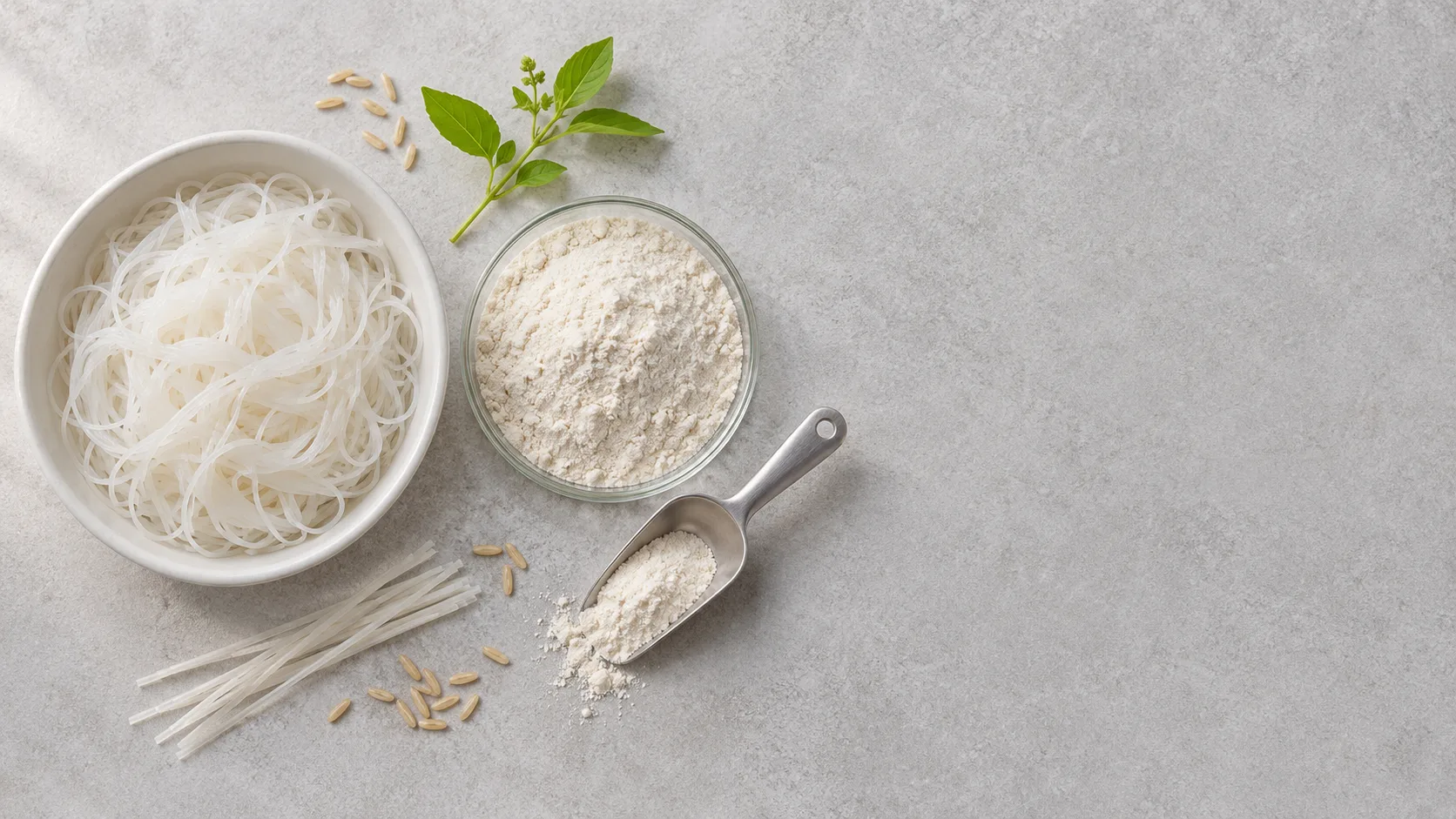
Rice noodles are everywhere. Bihun in Indonesian stir-fries, kwetiau at hawker stalls, pho in a steaming Hanoi broth, and rice vermicelli tucked into fresh spring rolls. They’re light, naturally gluten-free and loved by millions. But ask a nutritionist what’s missing, and the answer comes quickly: protein.
That gap is exactly why rice protein isolate in rice noodles and vermicelli has become such an interesting formulation conversation. Can you raise the protein without losing the slippery, springy bite that makes rice noodles worth eating? The short answer is yes, with the right dosage and process. This guide walks you through the science, the trade-offs and the practical steps.
Why Do Rice Noodles Lack Protein?
It starts with the grain. Milled white rice is mostly starch, and the flour used for noodles inherits that profile. A typical serving of rice noodles delivers only a few grams of protein, noticeably less than wheat noodles. For consumers who build several meals a week around bihun or pho, that shortfall adds up quietly.
Rice protein itself isn’t poor quality. The issue is quantity and balance. Like most cereal proteins, rice protein is limited by lysine, the essential amino acid that legumes supply in abundance (WHO/FAO/UNU, 2007). That’s why rice has traditionally been eaten alongside beans, tofu or fish.
Then there’s texture. Rice flour contains no gluten, so the dough lacks the cohesive, stretchy network that wheat noodles rely on. Researchers identify this as a core reason rice noodles can turn out soft, sticky or prone to breakage (Ojukwu et al., 2021). Starch gelatinization and retrogradation do most of the structural work instead.
So formulators face a double challenge. Adding protein should improve nutrition, but any new ingredient also changes how the starch network forms, and noodle quality is judged heavily on processing behavior, appearance and color (Fu, 2008). Getting both nutrition and texture right is where rice protein isolate earns its place.
What Rice Protein Isolate Brings to Rice Noodle Formulation
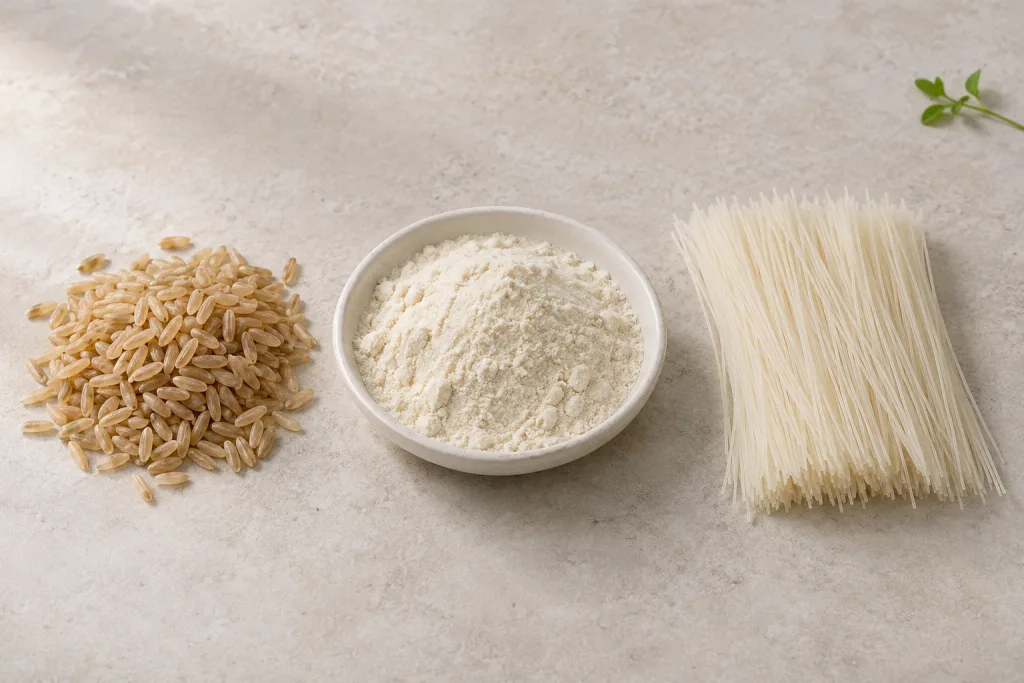
Rice protein isolate is a concentrated plant protein extracted from rice, usually brown rice, with most of the starch and fat removed. Commercial grades typically contain 80% protein or more, and the ingredient is increasingly studied for gluten-free food applications (Jayaprakash et al., 2022). For rice noodle makers, the appeal is simple: you’re adding protein from the same grain your consumers already trust.
That “same-grain” logic has real advantages:
- Label harmony. “Rice flour, rice protein” reads clean and familiar, which supports a clean label noodle protein story.
- Allergen profile. Rice protein is widely regarded as a hypoallergenic plant protein, and hydrolysed rice proteins are already used in hypoallergenic infant formulas (Amagliani et al., 2017).
- Gluten-free integrity. It keeps gluten-free noodles and gluten-free vermicelli free of wheat, soy and dairy, making celiac-friendly noodles easier to position (subject to testing and local labeling rules).
- Neutral sensory impact. Compared with soy or legume flours, rice protein is less likely to add beany notes or darken the strand.
Satoria Nutrisentials produces its rice protein isolate from brown rice through enzymatic extraction, with protein content above 80%, and holds Halal, Kosher and Non-GMO certifications. Those details matter when you’re specifying allergen-free noodle ingredients for export markets.
One honest caveat: intact rice proteins have limited water solubility (Amagliani et al., 2017). In a beverage, that’s a hurdle. In a noodle dough, where protein is dispersed through a starch matrix rather than dissolved, it matters far less, though particle size and hydration still deserve attention.
Rice Noodle Texture Improvement: How Protein–Starch Interaction Works
Here’s where things get interesting. When protein enters a rice noodle system, it doesn’t just sit there. During steaming or extrusion, proteins unfold and interact with gelatinizing starch, competing for water and partly coating starch granules. This protein–starch interaction in noodles shapes firmness, stickiness and how much solid material leaches into the cooking water.
Research on gluten-free rice pasta shows what’s possible. When rice flour was partly replaced with 5–10% rice protein concentrate in extruded spaghetti, both cooking time and cooking loss dropped significantly (Detchewa et al., 2022). Lower rice noodle cooking loss means clearer broth, less sticky strands and better yield, which matters to street vendors and instant-noodle plants alike.
Higher protein also tends to firm the cooked strand. A study using high-protein rice flour found the resulting pasta was firmer than commercial rice pasta, with cooking loss closer to wheat pasta (Marana et al., 2023). That firmness can support better noodle tensile strength, reducing breakage during packing, transport and cooking.
But more isn’t automatically better. Too much protein can dilute the continuous starch gel that holds a rice noodle together. When that gel weakens, strands lose elasticity and snap more easily. The goal is a protein level that reinforces the structure rather than interrupting it.
How Much Rice Protein Can Be Added to Vermicelli?
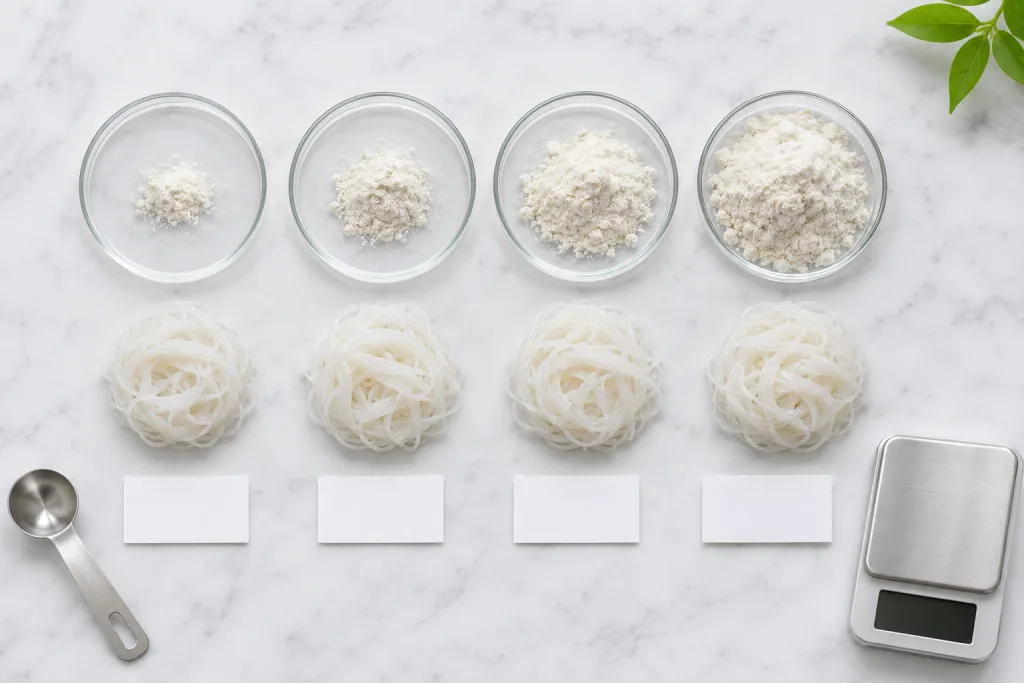
There’s no universal number, but published work offers a sensible starting window. In the rice spaghetti study, panelists rated samples with 2.5% and 5% rice protein about as highly as wheat spaghetti, while 5–10% delivered the biggest cooking-quality gains (Detchewa et al., 2022). That makes roughly 2.5–10% flour replacement a practical bench-trial range for rice protein dosage in noodles.
Extruded Rice Noodles and Vermicelli
For extruded rice noodles and thin vermicelli, start around 5% rice flour substitution with rice protein and adjust upward. Watch three variables closely:
- Dough hydration. Protein absorbs water differently from starch, so recalibrate moisture before extrusion.
- Die pressure and temperature. Protein can change dough viscosity and the strand’s surface finish.
- Drying and rehydration. High protein vermicelli may dry and rehydrate differently, so recheck soaking or cooking time.
Steamed and Sheeted Noodles: Kwetiau, Pho and Rice Sticks
Sheeted products rely on a steamed rice batter setting into a smooth, elastic film, which makes them more sensitive to gel disruption. Begin at the lower end, around 2.5–5%, and test stretch and tear resistance before going higher.
Overdosing is a well-documented risk. In a Thai study, rice noodles fortified with 20% cottonseed flour reached higher protein but broke down easily under texture testing (Tangkanakul et al., 1994). Fortify gradually, and let texture data guide each step.
Rice Protein vs Soy Protein Isolate in Noodles, and Where Pea Fits
Soy has long been the go-to protein for fortifying noodles, so it’s a fair question: is rice protein better than soy protein for gluten-free noodles? It depends on what you’re optimizing for.
Soy is powerful but can be tricky on texture. In a recent Indonesian kwetiau study, adding 10% soy protein isolate raised protein from 2.67% to 5.75%, yet texture scores fell significantly as gel strength and elasticity declined (Karim et al., 2025). Other researchers rebuilt soy-fortified rice noodle structure with transglutaminase and glucono-δ-lactone (Ojukwu et al., 2021), which works but adds ingredients and steps.
Here’s how the main plant protein for noodles options compare:
- Rice protein: hypoallergenic, neutral taste, same-grain label story; lower in lysine on its own.
- Soy protein isolate: strong gelling and high protein, but a major allergen in many markets and prone to beany notes.
- Pea protein: rich in lysine with good functionality, though it can carry a pulse flavor at higher doses.
The rice protein vs pea protein noodles debate doesn’t have to be either/or. Rice and pea protein blend noodles can balance amino acids and spread the flavor load, an approach Satoria explores in its guide to achieving a complete amino acid profile. Satoria’s Pea Protein & Pea Protein Isolate pairs naturally with rice protein for exactly this reason.
Nutrition Positioning: Protein, Fiber and Low GI Claims
Protein fortification of staple foods is one of the most practical ways to improve everyday nutrition, because it reaches people through meals they already eat. Rice noodles are a prime candidate in Southeast Asia, where they appear at breakfast, lunch and dinner.
When building your protein enriched rice noodles story, keep these points in mind:
- Amino acid profile. The amino acid profile of rice protein is limited by lysine (WHO/FAO/UNU, 2007). Blending with pea protein helps close that gap.
- Protein claims. Thresholds for “source of protein” or “high protein” differ by market, so calculate per serving against your target rules, whether BPOM, FDA or EU.
- Fiber. Plain rice noodles are low in dietary fiber. A soluble fiber such as Resistant Dextrin is a practical route to fiber-enriched noodles.
- Low GI rice noodles. Protein and fiber may slow starch digestion, but a low GI claim must be confirmed through standardized glycemic index testing, never assumed from the formula.
Done well, this turns a humble rice noodle into a genuinely better-for-you staple. And for health-conscious shoppers who already love rice noodles, that’s an easy upgrade to say yes to.
Regional Opportunities: High Protein Bihun, Kwetiau and Pho
The biggest market for protein rice vermicelli is right where rice noodles are eaten daily. In Indonesia, shoppers searching for bihun tinggi protein or kwetiau tinggi protein are signaling exactly the demand formulators can meet, while R&D teams sourcing ingredients will often look for isolat protein beras.
Across the region, formats shift but the opportunity stays similar:
- High protein bihun and mee hoon protein upgrades for Indonesian, Malaysian and Singaporean shoppers
- High protein kwetiau and protein rice sticks for stir-fry and soup formats
- Pho noodles high protein variants for Vietnamese-inspired retail and foodservice
- Gluten-free pasta protein crossovers for Western consumers already buying rice-based pasta
Each format needs its own trial, since a thin vermicelli and a wide, flat kwetiau behave very differently. The underlying principle holds, though: rice protein keeps the product recognizably “rice” while lifting its nutritional value.
Choosing a Rice Protein Isolate Supplier
Ingredient quality can make or break a noodle reformulation. When evaluating a rice protein isolate supplier, ask for a technical data sheet and samples, then compare:
- Protein content and particle size, which affect hydration and dough handling
- Microbiological and contaminant testing, including heavy metals such as arsenic, which regulators monitor in rice-derived ingredients
- Certifications, including halal rice protein isolate status, Kosher, non-GMO rice protein and food safety standards such as FSSC 22000
- Reliable capacity for bulk rice protein isolate orders
For Southeast Asian brands, a rice protein isolate manufacturer in Indonesia can shorten lead times and simplify logistics. Satoria Nutrisentials runs an integrated 14-hectare facility in Pasuruan, East Java, certified to HACCP, ISO, FSSC 22000 and Halal standards. Brands weighing noodle OEM manufacturing can also explore Satoria’s OEM and toll manufacturing services, which cover spray-dried products and biscuits, for custom protein or fiber premixes.
Frequently Asked Questions
How do you increase protein in rice noodles?
Replace part of the rice flour with a concentrated protein such as rice protein isolate, typically starting at 2.5–5%, then fine-tune hydration and processing conditions.
Does adding protein affect rice noodle texture?
Yes. Moderate levels can firm strands and reduce cooking loss, while excessive levels can weaken the starch gel and increase breakage.
Can rice protein reduce cooking loss in noodles?
Research on extruded gluten-free rice pasta found that 5–10% rice protein significantly reduced cooking loss (Detchewa et al., 2022).
How much rice protein can be added to vermicelli?
Most bench trials start at 2.5–5% flour replacement. Levels up to around 10% are achievable when hydration, extrusion and drying are adjusted, but texture testing should guide every step up.
Is rice protein better than soy protein for gluten-free noodles?
For allergen-sensitive, clean-label products, it’s often the better fit. Soy gels strongly, but rice protein avoids a major allergen and keeps the label rice-based.
Build Healthier Rice Noodles With Ingredients Tailored to Your Needs
Rice noodles don’t have to choose between tradition and nutrition. With the right rice protein isolate, careful dosage and a little bench-trial patience, you can create high protein rice noodles and vermicelli that still taste, slurp and cook like the real thing.
Satoria Nutrisentials helps F&B businesses do exactly that, combining innovative, healthy food ingredients with world-class integrated manufacturing. Start with Satoria’s Rice Protein Isolate, pair it with pea protein for balanced amino acids, or add resistant dextrin for fiber, all from one certified source. Each ingredient is produced under the same food safety system, which keeps specification, documentation and supply planning simpler for your team.
Ready to put it to the test? Contact the Satoria team to request samples, technical data sheets or the product catalogue, and take your next protein fortified rice noodles project from bench trial to shelf.
References
- Amagliani, L., O’Regan, J., Kelly, A. L., & O’Mahony, J. A. (2017). The composition, extraction, functionality and applications of rice proteins: A review. Trends in Food Science & Technology, 64, 1–12. https://doi.org/10.1016/j.tifs.2017.01.008
- Detchewa, P., Prasajak, P., Phungamngoen, C., Sriwichai, W., Naivikul, O., & Moongngarm, A. (2022). Substitution of rice flour with rice protein improved quality of gluten-free rice spaghetti processed using single screw extrusion. LWT – Food Science and Technology, 153, 112512. https://doi.org/10.1016/j.lwt.2021.112512
- Fu, B. X. (2008). Asian noodles: History, classification, raw materials, and processing. Food Research International, 41(9), 888–902. https://doi.org/10.1016/j.foodres.2007.11.007
- Jayaprakash, G., Bains, A., Chawla, P., Fogarasi, M., & Fogarasi, S. (2022). A narrative review on rice proteins: Current scenario and food industrial application. Polymers, 14(15), 3003. https://doi.org/10.3390/polym14153003
- Karim, F., Rahmawati, F., & Widihastuti, W. (2025). The effect of adding soybean protein isolate (SPI) to rice flour dough on the sensory properties and protein content of rice noodles (kwetiau). Teknologi Pangan: Media Informasi dan Komunikasi Ilmiah Teknologi Pertanian, 16(2), 176–183. https://doi.org/10.35891/tp.v16i2.6437
- Marana, A., Morris, A., Prinyawiwatkul, W., Xu, Z., & King, J. (2023). High-protein rice flour in the development of gluten-free pasta. Journal of Food Science, 88(4), 1268–1279. https://doi.org/10.1111/1750-3841.16522
- Ojukwu, M., Ofoedu, C., Seow, E. K., & Easa, A. M. (2021). Optimization of soy protein isolate, microbial transglutaminase and glucono-δ-lactone in gluten-free rice noodles. Journal of the Science of Food and Agriculture. https://doi.org/10.1002/jsfa.11004
- Tangkanakul, P., Onhem, S., Ruamrux, M., & Hengsawadi, D. (1994). Production of protein fortified rice noodles from glandless cottonseed flour. Kasetsart Journal (Natural Science), 28(3). https://li01.tci-thaijo.org/index.php/anres/article/view/241431
- World Health Organization, Food and Agriculture Organization of the United Nations, & United Nations University. (2007). Protein and amino acid requirements in human nutrition: Report of a joint WHO/FAO/UNU expert consultation (WHO Technical Report Series No. 935). World Health Organization. https://iris.who.int/handle/10665/43411
Featured News
Category
Get a Promo and Keep Updated